UAE exits OPEC after nearly 60 years
Move driven by production limits, aiming for 5mn barrels/day capacity
Exit may weaken OPEC control and reshape global oil supply dynamics
India could gain flexible oil deals but faces short-term volatility
The United Arab Emirates (UAE) sat at the table of one of the most powerful commodity cartels in the world for nearly six decades. Yesterday, it pushed back its chair and left.
The UAE announced its departure from OPEC — the Organisation of the Petroleum Exporting Countries — along with the broader OPEC+ alliance, with the exit taking effect on May 1. The decision ended a membership that stretched back to 1967, when Abu Dhabi joined the group just seven years after the cartel was founded.

1 September 2026
Get the latest issue of Outlook Business

When the UAE was formed as a sovereign nation in 1971, the membership carried over. Since then, it had been one of the group's most consequential producers, sitting third in the bloc's output rankings behind only Saudi Arabia and Iraq.
A Long Time in the Making
The exit certainly did not come out of nowhere. For years, the UAE has been quietly expanding its oil infrastructure and pushing its national energy company, Adnoc, to scale up production. By its own targets, the UAE is aiming to reach a production capacity of 5mn barrels per day by 2027 — but OPEC's quota system has kept it constrained far below that ceiling, at around 3.4mn barrels per day.
Advertisement
That gap between what the UAE could produce and what it was allowed to produce seemed to become a growing source of frustration. Abu Dhabi had been sitting on capacity it was not permitted to use, watching revenue disappear into a collective agreement built for a different era.
Requests to raise its quota periodically stalled or were watered down, often due to pushback from Riyadh.
UAE Energy Minister Suhail Mohamed al-Mazrouei described the exit as a policy decision taken after "a very careful and long review," adding that the UAE wanted to ensure it could respond to market conditions at the right time and pace, without constraints.
Advertisement
The longer view also drives an economic logic. China, one of the great engines of global oil demand, is electrifying its vehicle fleet at a serious pace, and other major economies are following. The window in which oil producers can expect strong, reliable demand is narrowing. For Abu Dhabi, the calculus was straightforward: monetise your reserves now, while demand holds, rather than hold back in deference to a cartel's collective interest.

The Saudi Factor
The split is not only about barrels. Political relations between Saudi Arabia and the UAE — once close allies — have grown strained for reasons that go well beyond oil. The two countries have backed opposing forces in Yemen and have increasingly been in competition for foreign investment and tourism, particularly as Riyadh has pursued its Vision 2030 economic transformation strategy.
Analysts told NPR that the UAE's departure may signal a realignment broader than oil production, with the deteriorating relationship between the Gulf's two biggest economies potentially affecting cohesion across Arab states in the region, with lasting consequences for security coordination and cross-border business.
Raj Nair, Chairman of Avalon Consulting, reads the UAE's exit as a carefully engineered geopolitical move rather than a purely commercial one. Washington, he argues, had every reason to encourage Abu Dhabi to walk out — Riyadh had been drifting too far, cutting non-dollar oil deals with China and coordinating with Russia to keep prices elevated. "This disruption in OPEC will show OPEC+ who is the boss," he says. Saudi Arabia, despite being one of the world's lowest-cost oil producers, needs crude prices above $75–80 per barrel to fund domestic subsidies and capital expenditure — below that, it faces serious social pressure. The UAE-Saudi friction, Nair suggests, was a lever the US has now pulled at the right moment.
What It Does to Oil Markets
In the immediate term, the market's reaction was muted — though not for reassuring reasons. The near-closure of the Strait of Hormuz, choked by the ongoing conflict involving Iran, is capping the UAE's exports regardless of OPEC membership. US West Texas Intermediate crude rose to nearly $102 per barrel and international benchmark Brent climbed to nearly $113 per barrel on Tuesday, though this was largely driven by stalled Iran peace talks rather than the OPEC exit itself.
Over the medium term, however, the implications are significant. Ole Hansen, Head of Commodity Strategy at Saxo Bank, told Gulf News that the UAE had removed the "production quota straitjacket" that had frustrated it for years, and that the market should be able to absorb additional UAE barrels — though the move raises wider questions about OPEC's ability to manage supply if more producers start prioritising market share over cartel discipline.
A Rystad Energy analyst, talking to NBC News, described the departure as marking a structurally weaker OPEC going forward. If the UAE begins pumping at full capacity once Hormuz reopens, it will effectively operate as a non-OPEC producer — with no production ceilings to observe and no collective obligations to honour.

What It Means for India
For India, the development carries particular weight. The country is the world's third-largest energy consumer, heavily reliant on imported crude, and has long pushed OPEC members to increase output and ease price pressures.
Around 40% of India's oil requirement is met by OPEC nations, and the UAE alone accounts for roughly a tenth of India's total oil imports. Prior to the Gulf conflict disrupting maritime trade, the UAE was also a significant source of India's LPG supplies through the Strait of Hormuz.
Once the UAE is no longer bound by production quotas, bilateral energy negotiations could become considerably more flexible. State-owned Indian refiners — Indian Oil, Bharat Petroleum, and Hindustan Petroleum — already have active collaborations with Adnoc on large-scale refining projects, and Adnoc has been involved in exploration and appraisal tie-ups with these companies.
Nair sees an opening for India that goes beyond bilateral negotiations. As one of the world's largest crude importers, he argues, India could look at forming a buyers' cartel — a coordinated bloc of major importing nations that collectively negotiates prices, rather than leaving the field entirely to producers. He would not be surprised, he adds, if both Abu Dhabi and Riyadh approached India with long-term supply deals, potentially including underground crude storage on Indian soil — funded by the Gulf states and accessible to India at a fixed price. A few other South and Southeast Asian economies, he notes, could benefit from similar arrangements.


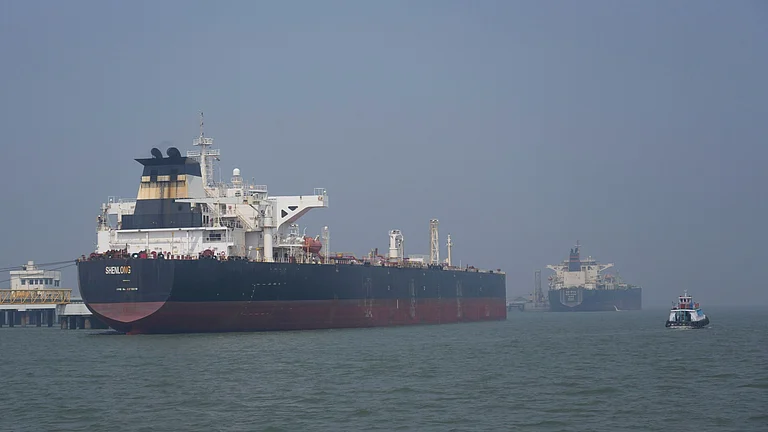

Diplomatic signals have reinforced the trajectory. National Security Adviser Ajit Doval visited Abu Dhabi recently for talks with senior UAE leadership, and earlier this year, UAE Minister of Industry and Advanced Technology Sultan Ahmed Al Jaber led a high-level delegation to Delhi. Al Jaber described India as a "decisive driver" of global energy demand — a framing that carries commercial intent as much as diplomatic courtesy.
Sourav Mitra, Partner, Oil and Gas at Grant Thornton Bharat, echoes the optimism but urges caution on timing. The UAE's exit could, over the medium term, make global oil supply more responsive and exert downward pressure on crude prices — offering India relief through a lower import bill and easing inflationary pressures. In the near term, however, such moves tend to unsettle markets and heighten geopolitical uncertainty, underscoring the importance of India continuing to diversify its supply sources and deepening bilateral energy partnerships to manage potential disruptions.