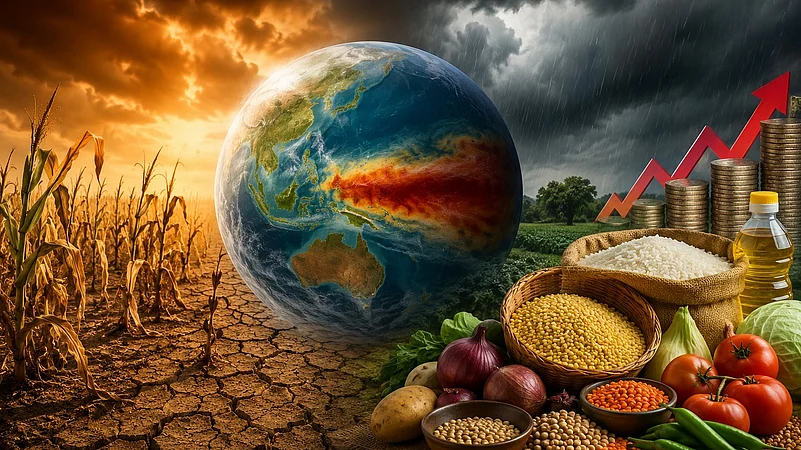

A strong El Niño is typically associated with below-normal rainfall and higher temperatures, raising concerns about agricultural production in India.
Pulses, vegetables, oilseeds and coarse cereals are among the crops most vulnerable to weak monsoon conditions, potentially leading to higher retail prices.
Lower crop output could add to food inflation pressures at a time when policymakers are also grappling with geopolitical uncertainties and elevated commodity prices.
India could be heading into another year of weather-driven inflation risks as forecasters warn of a strong El Niño event. While rising geopolitical tensions and volatile crude oil prices are already keeping policymakers on edge, an El Niño-induced disruption to agricultural output could add fresh pressure on food prices in 2027.
The concern stems from El Niño's influence on rainfall patterns. India receives nearly 70% of its annual rainfall during the southwest monsoon, making the agricultural sector highly sensitive to any disruption in monsoon activity.

1 September 2026
Get the latest issue of Outlook Business

With nearly half of the country's agricultural land still dependent on rainfall rather than irrigation, a weak or erratic monsoon can quickly translate into lower crop output and higher food prices.


What Is El Niño?
El Niño is a climate phenomenon that occurs when sea surface temperatures in the central and eastern Pacific Ocean become unusually warm. This warming alters global weather patterns and can weaken India's southwest monsoon.
Advertisement
Historically, strong El Niño years have been associated with below-normal rainfall, prolonged dry spells and higher temperatures across large parts of India.
The World Meteorological Organization (WMO) has warned that a strong El Niño could emerge, raising concerns about its impact on agriculture and inflation.
Why Does El Niño Matter for Food Prices?
A weaker monsoon can affect crop sowing, reduce yields and disrupt overall agricultural production.
Farmers may delay planting, switch to less water-intensive crops or rely more heavily on irrigation if rainfall remains deficient. Higher temperatures can further stress crops during critical growth stages.
The result is often lower supplies of key food items, which can push up prices for consumers.
Advertisement
According to Reuters, global food security depends heavily on a concentrated supply chain dominated by staples such as wheat, rice, maize and soybeans. Weather disruptions in major producing regions can therefore have ripple effects across global and domestic food markets.
Which Crops Are Most Vulnerable?
Historical data analysed by The Economic Times suggests that some crops are significantly more vulnerable to weak monsoons than others.
Among major crops, bajra, maize, tur and groundnut are considered particularly vulnerable to deficient rainfall.
Rice is relatively better protected because around 70% of the crop area is irrigated. India also maintains substantial rice and wheat stocks, which can help cushion supply shocks.
One of the biggest inflation risks comes from pulses, especially tur dal, a staple in Indian households.
Tur is also distributed under the government's food welfare programmes, making it an important commodity from both a nutritional and policy perspective.
India's annual demand for tur is estimated at around 4.5-4.6 million tonnes, significantly higher than domestic production. To bridge the gap, the country regularly imports large quantities.
In 2024-25 alone, India imported around 1.2 million tonnes of tur to meet domestic demand.
Production remains vulnerable to weather shocks because tur is primarily grown during the kharif season, which depends heavily on monsoon rainfall.
Recognising the risk, government officials have reportedly been holding regular reviews of the monsoon outlook and its likely impact on crop production.
What Happened During the Last Strong El Niño?
The last major El Niño episode in 2015 offers a glimpse into what could happen if monsoon conditions deteriorate.
That year, India's monsoon rainfall was around 14% below normal. Production of pulses, oilseeds and rice declined significantly compared with years that experienced above-normal rainfall.
Lower output contributed to tighter supplies and higher prices for several agricultural commodities.
While weather patterns never repeat exactly, the historical relationship between strong El Niño events and weaker crop production remains a key concern for policymakers.
Will Vegetable Prices Also Rise?
Vegetables are often among the first food categories to experience price volatility when weather conditions turn adverse.
Erratic rainfall, heatwaves and prolonged dry spells can reduce yields of perishable vegetables such as tomatoes, onions and leafy greens. Supply disruptions can quickly translate into price spikes because vegetables have shorter production cycles and limited storage life.
However, the extent of any increase will depend on regional weather conditions, irrigation availability and government intervention measures.
What Could Be the Impact on Inflation?
If production of pulses, oilseeds, coarse cereals and vegetables declines, retail prices could rise, adding pressure to household budgets. Higher food prices can also complicate efforts by the Reserve Bank of India (RBI) to keep inflation within its target range.
The government may respond through measures such as releasing buffer stocks, increasing imports, restricting exports or taking market intervention steps to stabilise prices.
A strong El Niño does not automatically guarantee a surge in food prices, but it significantly increases the risk.
Pulses, oilseeds, coarse cereals and certain vegetables are likely to be the most vulnerable if monsoon rainfall falls below normal. While India's irrigation network, grain reserves and policy tools provide some protection, a weak monsoon could still lead to higher food inflation in 2027, particularly for staples that are already facing supply-demand imbalances.
For consumers, the biggest indicators to watch in the coming months will be monsoon performance, sowing progress and the production outlook for pulses and vegetables.