The American White-Collar Worker Jobs Act was introduced by Republican Congressman Chip Roy on June 4, 2026.
The bill would require H-1B applicants to maintain a residence abroad and show no intent to abandon it.
It would also end the current lottery system in favour of higher-earning applicants.
For thousands of Indian tech professionals and students building careers in the United States, the path to a green card just got significantly narrower. A new bill introduced in the US House of Representatives proposes to strip the H-1B visa of its most valued feature and its ability to serve as a stepping stone to permanent residency.
Republican Congressman Chip Roy introduced the American White-Collar Worker Jobs Act on June 4, 2026 proposing to scrap the Optional practical training (OPT) programme, a post study work authorisation for international students in the US.
"For its nearly forty-year history, the H-1B visa has been abused, allowing employers to routinely sideline American STEM workers in favour of cheap foreign labour, while masking layoffs and wage suppression as 'shortages.' It's time to end this lottery-based pipeline and replace it with a system that prioritises merit, enforces real wage standards, and puts American white-collar workers first," said Roy, who represents the 21st district of Texas in Congress.

1 September 2026
Get the latest issue of Outlook Business

Advertisement
The Immigration Accountability Project, the Federation for American Immigration Reform, and US Tech Workers back the proposed legislation.
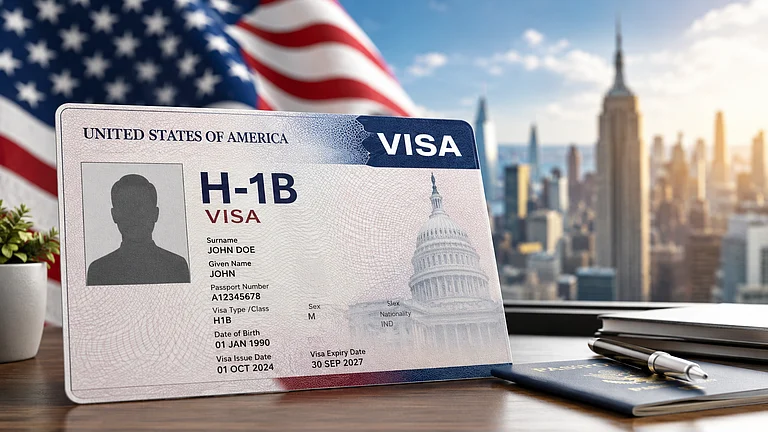

The bill aligns with the Trump administration's crackdown on legal immigration schemes, which includes tightening regulations, giving H-1B applicants priority for higher wages, and enforcing a $1,000,000 fee on new petitions.
Apart from sabotaging the way to permanent residency, the bill imposes sweeping changes to the standard operations of H-1B visa programme.
The new legislation demands applicants of H-1B visa to exhibit that they maintain a residence abroad and have no intention to abandon it, setting aside the old policy of “dual” intent, a policy allowing visa holders to work temporarily and apply for permanent residency simultaneously
Advertisement
It would also change the existing rules of the H-1B visa that let holders extend their visa status while they wait for their green card application to be processed.
The bill would reduce the maximum length of an H-1B visa from six years to two years, giving preference to applications that offer higher earnings instead of using the current lottery system to distribute visas.
"The bill will effectively address many of the egregious aspects of the H-1B visa programme that have not merely encouraged but enabled corporations, universities, and NGOs to displace our most productive workers with cheaper and more quiescent foreigners," Kevin Lynn, President, US Tech Workers, said in a statement.
Arizona Republican Congressman Eli Crane, a co-sponsor of the bill, said in a statement that it "delivers significant reforms that protect future generations instead of padding bottom lines at their expense."
"Congress should be doing everything in our power to prioritise our own citizens rather than facilitating their displacement," Crane said.
Roy is stepping down from his position in Congress and had been running for the attorney general position in Texas. However, he did not win the primary elections for that role and lost to another Republican candidate named Mayes Middleton.