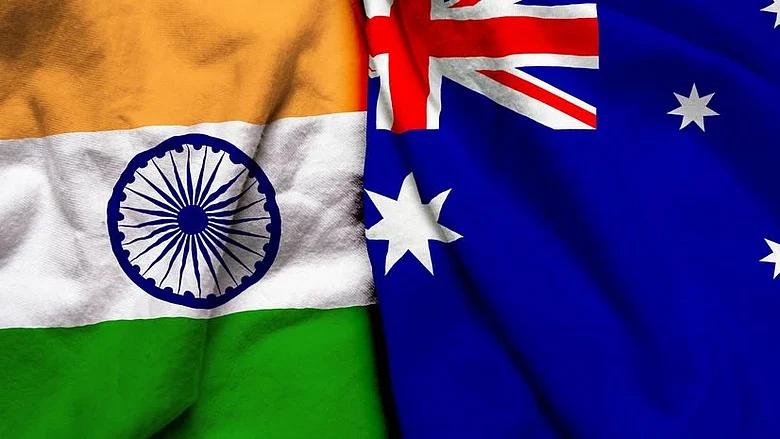

India's trade deficit with Australia narrowed to $6.5 billion in FY2026, while bilateral goods trade reached $21.1 billion, supported by zero-duty access for Indian exports under the ECTA.
The two countries are expanding cooperation in critical minerals, defence, technology, clean energy and maritime security, reinforcing supply chain resilience and Indo-Pacific collaboration.
Australia continues to attract strong foreign investment and is prioritising energy security, hydrogen, infrastructure and defence modernisation, with its partnership with India entering a more strategic phase.
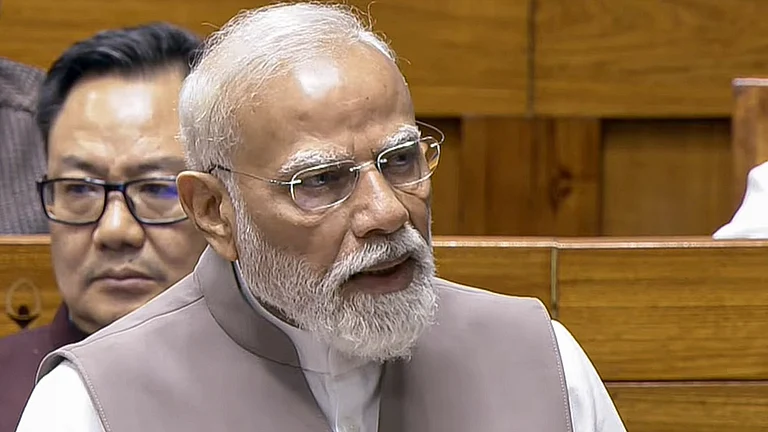
Prime Minister Narendra Modi is visiting Australia to meet with Prime Minister Anthony Albanese with discussions likely focusing on trade, defence cooperation, critical minerals, technology, counter-terrorism, and the Indian community.
"This is the third time Prime Minister Narendra Modiji has visited Australia as prime minister, and he is taking time for a substantial visit to Melbourne," Australian High Commissioner Philip Green told NDTV. "The relationship between our two leaders has always been strong, but it has really been galvanised. Prime Minister Albanese is enormously looking forward to meeting his friend, Narendra Modiji."

1 October 2026
Get the latest issue of Outlook Business

The bilateral partnership is entering a more consequential phase. A new report by Rubix Data Sciences highlights accelerating cooperation across multiple strategic sectors.
Trade Deficit Halves
India's trade deficit with Australia more than halved to $6.5bn in FY2026. A sharp decline in imports from Australia drove this contraction, the Rubix report stated.
Advertisement
Total bilateral goods trade stood at $21.1bn in FY2026. Since January 1, 2026, all Indian exports became eligible for zero-duty market access into Australia. This tariff elimination under the India-Australia Economic Cooperation and Trade Agreement boosted the domestic textiles, pharmaceuticals, chemicals and agriculture sectors.
Minerals and Defence
Australia possesses 21 of the 49 critical minerals identified by India as essential for clean energy and advanced manufacturing.
Rubix Data Sciences President Tushar Bhaskar said the long-term bilateral narrative extends beyond trade balances, with "...Australia's vast reserves of critical minerals playing a pivotal role in supporting India's clean energy transition, semiconductor ambitions and supply chain resilience."
Advertisement
Defence cooperation has intensified alongside economic integration. The two nations expanded their security framework through the Australia-India Defence Ministers' Dialogue, the Mutual Submarine Rescue Arrangement and Quad maritime collaboration.
Broader Economic Landscape
Australia attracted AUD 5.1trillion in foreign investment by the end of 2025. Mining and quarrying led these inflows, followed by financial services, real estate and manufacturing.
The Australian government is presently focusing on energy security, critical minerals, hydrogen production, infrastructure spending and defence modernisation. Canberra is also maintaining a cautious approach to artificial intelligence regulation.
Australia's broader economic growth is projected to remain moderate over the near term. However, the Rubix report stated that its strategic partnership with India is accelerating rapidly.