




Trump defended the 32-day Iran war by comparing it to America's longest conflicts, claiming Iran is "essentially no longer a threat."
He threatened more strikes within weeks, dismissed rising gas prices as "short-term," and told oil-dependent nations to protect the Starit of Hormuz themselves.
His remarks rattled markets as Brent crude spiked 5% to $105 and FPIs offloaded ₹8,331 crore worth of Indian stocks.
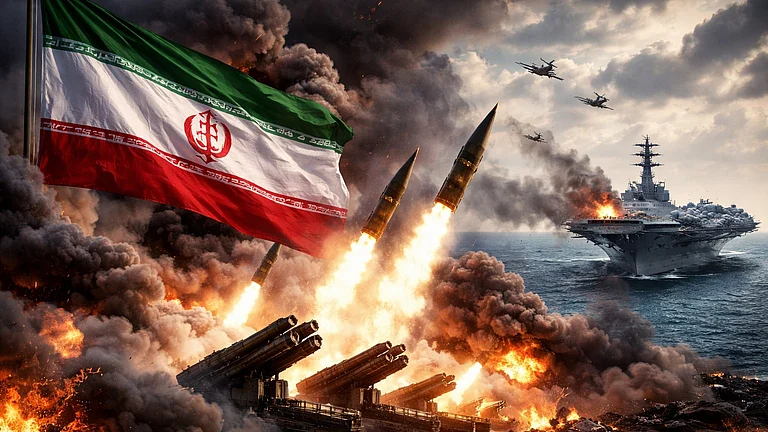
US President Donald Trump defended the United States' ongoing military operation in Iran, comparing its 32-day duration to some of America's longest wars and insisting the campaign was moving quickly and decisively.
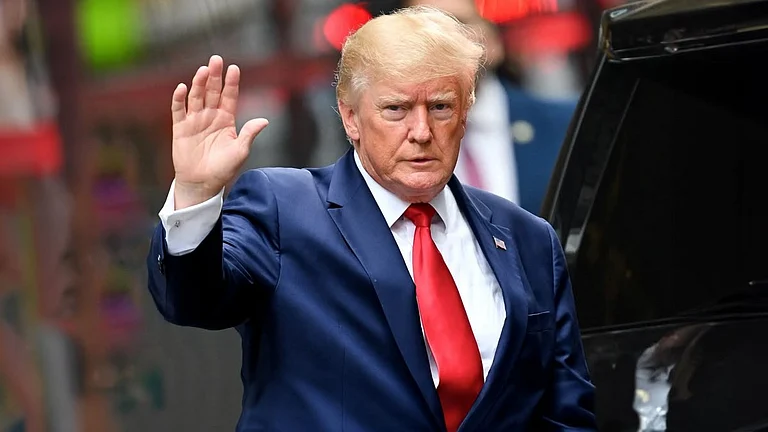
In a speech delivered on April 2 (IST), Trump pushed back against criticism of the conflict, also known as "Operation Epic Fury" by putting the conflict in historical context. He pointed out that American involvement in World War I lasted far longer than the current 32-day campaign, highlighting what he called rapid progress on the ground.

1 October 2026
Get the latest issue of Outlook Business

"It's very important that we keep this conflict in perspective. American involvement in World War I lasted one year, seven months and five days," Trump said.

He also referenced the timelines World War II, Vietnam and the Korean and Iraq wars and contrasted it witrh the ongoing conflict.
"World War II lasted for three years, eight months and 25 days. The Korean War lasted for three years, one month and two days. The Vietnam War lasted for 19 years, five months and 29 days. Iraq went on for eight years, eight months, and 28 days. We are in this military operation, so powerful, so brilliant against one of the most powerful countries for 32 days," Trump said in his 19-minute address.
Advertisement
The US President claimed that Iran had been "eviscerated" and was "essentially no longer a threat." He said the military's core objectives were close to being met and promised to "finish the job" soon. However, much like his earlier statements where he said the war would end "shortly," he gave no specific timeline. He also confirmed that more strikes on Iran were coming, warning that in the next two to three weeks, the US would "bring them back to the Stone Ages."
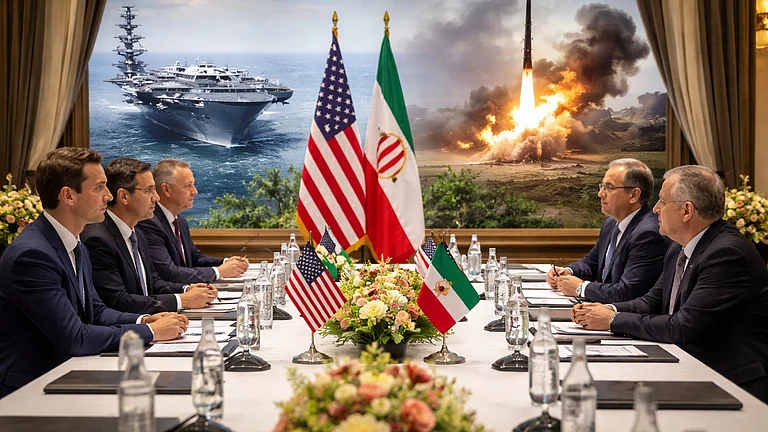
In the same speech, Trump said the US was in talks with a new group of "more reasonable" Iranian leaders. Iranian officials, however, denied that any serious negotiations were taking place. Trump also threatened to strike Iranian energy and civilian infrastructure, remarks that experts said had once again pushed market sentiment into negative territory.
Advertisement
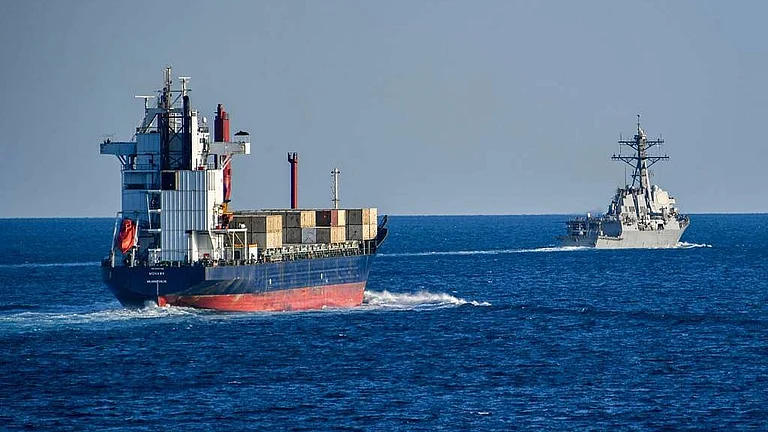
Trump also addressed the rising gas prices caused by Iran's shutdown of the Strait of Hormuz, a key route for global oil trade. He told Americans this was a "short-term" problem and that once the war ends, the strait would open up "naturally" and gas prices would "rapidly come back down." The claim was met with scepticism as oil prices continued to rise.
He urged countries that depend on the strait for oil to step up and protect it themselves.
"There's no country like us anywhere in the world, and we're in great shape for the future. The United States imports almost no oil through the Hormuz Strait, and won't be taking any in the future. We don't need it. We haven't needed it, and we don't need it. And the countries of the world that do receive oil through the Hormuz Strait must take care of that passage. They must cherish it. They must grab it and cherish it," Trump said.

His remarks sent shockwaves through global markets. Dr. V.K. Vijayakumar, Chief Investment Strategist at Geojit Investments, said Trump's declaration that the US would "hit Iran extremely hard in the next two to three weeks" had soured market mood again.
Brent crude jumped around 5% to $105, while the US 10-year bond yield rose to 4.36%, putting pressure on gold and silver prices. "FPIs continued selling heavily (in Indian markets) with a sell figure of ₹8,331 crore on April 1st. The high crude price, the widening trade deficit, the fear of declining remittances and sustained FPI selling are acting cumulatively to put high pressure on the rupee which continues to decline despite RBI's restrictions on dollar futures deals," he said.
Vijayakumar also warned against reading too much into Trump's stated timelines. "President Trump's statement that 'we will finish the job in two to three weeks' cannot be taken at face value since the president has been notoriously inconsistent in all his views. He can change his position anytime," he added.
Earlier, Trump had reportedly considered pulling the United States out of NATO after alliance members refused to join the Iran campaign. He made no mention of this in his speech.









