Uber committed over $10 billion to acquire autonomous vehicles and developer equity
The investment includes $7.5 billion for robotaxi fleets and $2.5 billion in tech stakes
Lucid Motors will supply 35,000 EVs after Uber increased its stake to $500 million
Uber plans to launch robotaxi services in 28 cities by 2028 via Nvidia partnerships
Ride-hailing platform Uber is set to invest more than $10 billion in acquiring thousands of autonomous vehicles and taking stakes in their developers, according to the Financial Times. The move comes as the company seeks to shift away from its asset-light “gig economy” model to avoid potential disruption from robotaxis.
Uber has reportedly increased its dealmaking over the past year, announcing partnerships with more than a dozen providers, including China’s Baidu and US-based Rivian. It also plans to launch robotaxi services in at least 15 cities by 2026.
1 September 2026
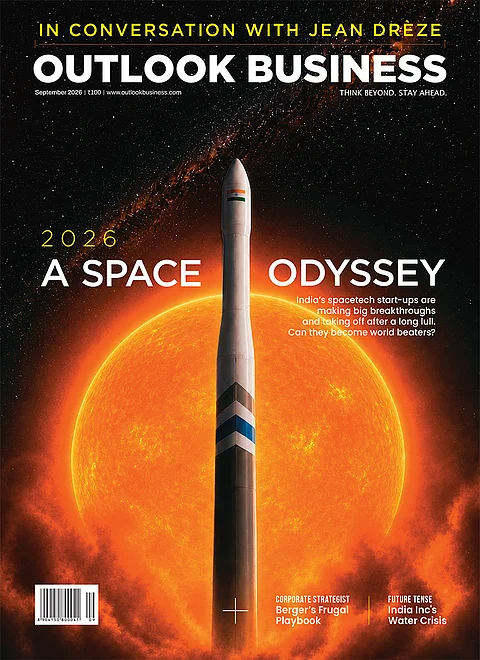
Get the latest issue of Outlook Business

A Reuters report stated that Uber’s total investment could include more than $7.5 billion for robotaxi fleets and about $2.5 billion in equity investments, with deals linked to deployment milestones.
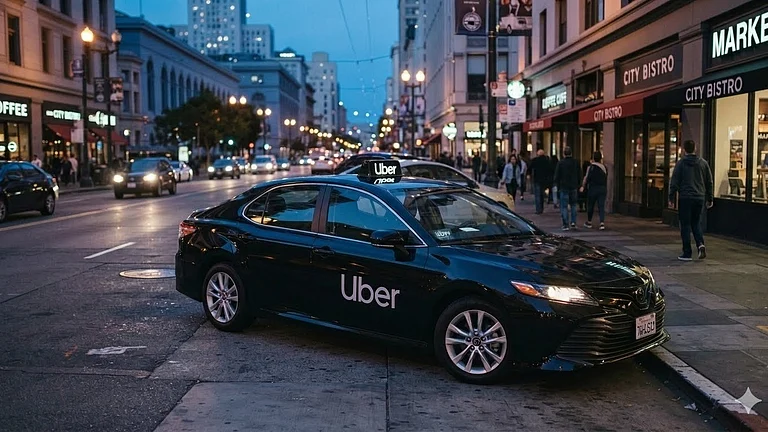


Uber’s Autonomous Vision
Uber is reportedly positioning itself as a marketplace and distribution layer for multiple autonomous-vehicle makers, rather than operating solely as a ride-hailing app.
Advertisement
The company has accelerated partnerships globally, working with several autonomous vehicle providers, including Baidu, Rivian, Lucid Motors and others. In July 2025, Uber agreed to invest $300 million in Lucid and purchase more than 20,000 Gravity SUVs for a robotaxi programme with Nuro. A subsequent expansion increased Uber’s total investment in Lucid to $500 million and its vehicle order to at least 35,000 units.
The broader strategy is to deploy robotaxi services across multiple cities and build sufficient fleet capacity to remain central as the market becomes increasingly automated.
Advertisement
Auto Rivals Push Uber
Uber’s push also reflects rising competitive pressure from companies such as Alphabet’s Waymo, Tesla and Amazon’s Zoox, all of which are working to control more of the autonomous mobility stack.
Uber had sold its own self-driving unit in 2020, but CEO Dara Khosrowshahi has since said the company is willing to deploy capital to secure supply and capture a share of what it views as a trillion-dollar opportunity.
The company also sees potential upside in monetising autonomous vehicle data, insurance services and other financial products linked to fleet operations. However, investors remain divided on whether Uber can successfully transition to a more capital-intensive model without undermining the profitability it has only recently achieved.