
Centre has reportedly opposed Adani's court challenge against a finding that nicotine pouch sales at Mumbai airport are illegal.
The government said the airport is on Indian soil and the sales violate drug laws and pose health risks.
Adani has argued the products are not drugs and fall outside Indian jurisdiction as they are sold to departing passengers.
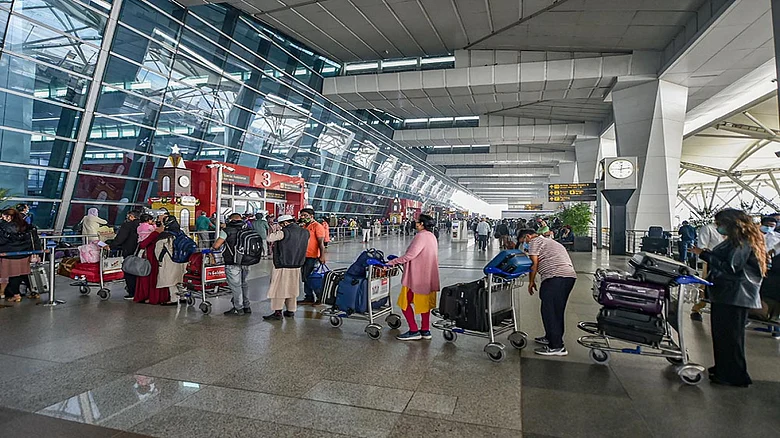
The Centre has reportedly opposed the Adani Group's legal effort to overturn a finding that the sale of nicotine pouches at Mumbai's Chhatrapati Shivaji Maharaj International Airport (CSMIA) is illegal. In recent court filings, reviewd by news agency Reuters, authorities said the sale amounts to a "substantive violation" of drug laws and poses a "serious public health risk". The Mumbai High Court is due to hear the case on Tuesday.
As per the news agency's report, lawyers say the legal dispute could set a precedent on how India regulates the sale of nicotine pouches, one of the world's fastest growing nicotine products, at duty-free international airports.

1 October 2026
Get the latest issue of Outlook Business

Background Of The Case
The case relates to an inspection by the country's drugs department in March, which found that duty-free shops at Adani's Mumbai airport were illegally stocking and selling nicotine pouches without the necessary approvals. Nicotine pouches are classified as a drug in India. The finding prompted a court challenge from the company.



Adani's unit, Mumbai Travel Retail, has argued that Indian law does not apply to nicotine pouches that are imported and stored in customs warehouses and sold only to departing international passengers. In a statement to Reuters last week, Adani said the characterisation of "the matter as a 'breach of law' is premature and legally unsustainable," adding that the unit had "challenged the regulatory interpretation through judicial review."
Advertisement
Government Says Airport Is On Indian Soil
In a filing dated July 7 and reviewed by Reuters, the government said the airport, one of the country's busiest, is located on Indian soil, rejecting Adani's argument that the products fall outside Indian jurisdiction. "The products enter Indian airspace and Indian territory at the moment of arrival at CSMIA. The fact that they are stored in a customs-bonded warehouse does not mean they are not physically present in India," the government said as quoted by the report.
India's Central Drugs Standard Control Organisation said in its filing that the sale of nicotine pouches at the airport was "not merely a procedural non-compliance but a substantive violation" of various provisions of Indian drug laws.
Advertisement
The government's submission described nicotine as "a psychoactive and addictive chemical." It said selling nicotine pouches without approval was "exposing persons who purchase such products, international passengers, many of them Indian citizens, to products of unverified quality, unestablished safety."
A government study in June had described nicotine pouches as "a new and largely unregulated public health concern," noting widespread illegal sales and consumption among people aged 18 to 40.
The government reportedly also cited a 2019 Indian law banning e-cigarettes and vapes, saying the law recognised the health risks of unregulated nicotine delivery products. It said permitting the airport to sell nicotine pouches would amount to "judicial circumvention of this legislative policy."
Adani has argued that the pouches are "not a drug" and represent a "recent innovation," a position the government has rejected. According to Reuters, Adani has imported more than $29,000 worth of Philip Morris' Zyn pouches and $7,700 worth of the White Fox brand from Swedish Smokeless Solutions since August.
India has approved certain nicotine replacement products, including patches and chewing gums, through a registration process. Products such as nicotine pouches, which users insert under the lip to get a nicotine effect, remain unapproved and illegal in the country.
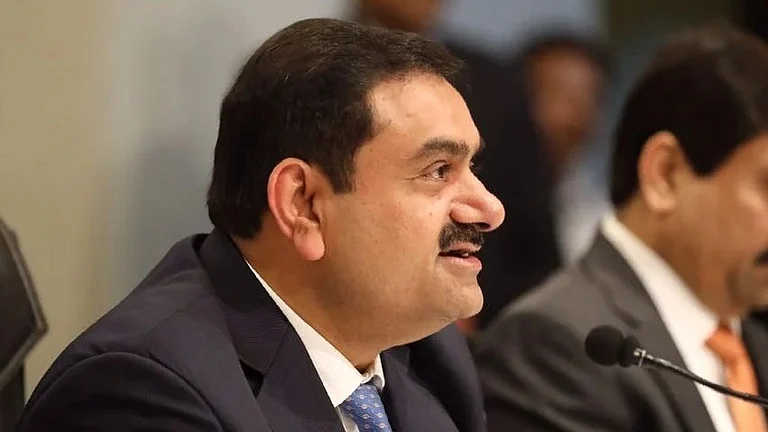
Gautam Adani's group manages eight airports across India and has an $11 billion expansion plan, which includes duty-free shops, to meet growing demand for air travel.