FMCG majors want the government to continue measures to boost private consumption.
This comes after steps such as GST rationalisation and the ₹12 lakh income tax rebate in Budget 2025.
The industry is expecting similar announcements in Finance Minister Nirmala Sitharaman’s Budget speech on February 1.
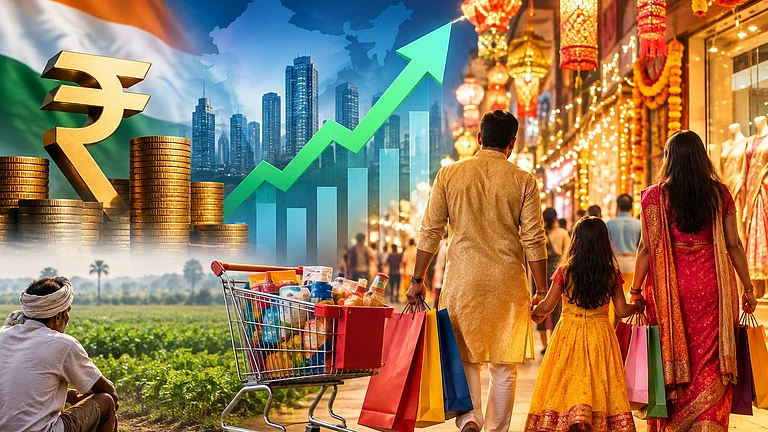
Fast Moving Consumer Goods (FMCG) majors expect the government to continue with its measures to boost private consumption even after the government tried to stimulate demand with moves like GST rationalisation in September last year and a personal income tax rebate extended to ₹12 lakh in Union Budget 2025.
The industry expects similar announcements in the upcoming Budget speech by Finance Minister Nirmala Sitharaman on February 1. However, the key question is whether the government has more room to provide tax cuts or put more money in the hands of consumers via populist direct payment schemes. Economists and analysts think it’s unlikely.

1 September 2026
Get the latest issue of Outlook Business



What FMCG Companies Want?
“Our main expectation from the Budget is efficient measures to boost consumption, particularly through further rationalisation of GST,” said Sudhir Sitapati, Managing Director and Chief Executive Officer, Godrej Consumer Products Ltd.
His expectations are echoing across the industry as it is still trying to grow out of a demand slump triggered by post-Covid pandemic high inflation and low wage growth among the salaried class. It has since eased substantially, with December’s headline CPI prints coming in at 1.33% year on year (yoy).
Advertisement
According to GCPL CEO Sitapati, there are a few large, mass-consumption FMCG categories, especially in home care, that continue to be taxed at 18% and could logically move to a lower slab such as 5% to support demand.
“The sector (FMCG) enters the year with positive momentum with early signs of consumption recovery, driven by easing inflation, improved affordability through tax reforms, and steady demand growth across both rural and urban markets. As consumer preferences evolve and premiumisation gains traction, supportive policies will be key to accelerating demand,” said Sunil Agarwal, Co-founder and Chairman of Kolkata-based RSH Global, which makes products under brands like Joy, Karis and Orimii.
Advertisement
He also noted that a more balanced and consistent GST structure for personal care products will play an important role in improving profitability while allowing companies to continue offering high-quality products at affordable prices.

Recovering Household Consumption
Private Consumption Expenditure (PCE), which represents the spending by Indian households, grew to 7.9% in the second quarter of the financial year 2025–26 (FY26), as per official data.
As a portion of total nominal gross domestic product (GDP), private consumption now accounts for 62.5%, up from 60.3% in the June quarter of FY26. According to official data compiled by CEIC, private consumption has been volatile over the last 12 quarters. It touched a low of 58.16% of GDP in the fourth quarter of FY24, recovered to 65% in Q3 FY25, but later declined to 58.28% in Q4 FY25.
In the past three quarters, PCE as a percentage of GDP has been growing steadily. But the contrast is seen on the ground. Analysts have been observing a lag in spending by urban households. It has continued in Q2 FY26.
According to a note by ratings agency CareEdge on November 28, 2025, while rural demand conditions remain steady, a broad-based momentum in the domestic demand scenario remains critical for domestic growth going forward. The note attributed overall improved private consumption to factors such as reductions in income tax rates, GST rate rationalisation and easing inflationary pressures.
Even for the FMCG sector, the recovery is visible. Data from Worldpanel by Numerator shows that India’s FMCG market growth improved to 4.7% in the September quarter compared to 4% growth recorded in the same quarter last year. It was also higher than the previous quarter ended June 2025, indicating a gradual recovery in demand.
“Urban is accelerating and is currently sitting at a good 5.2% growth vis-a-vis a growth of 4.2% in rural; both of them have added a one percentage point growth over the Q2 ’25 growth, which is a good sign for the market. This growth is likely to continue into the final quarter of the year,” the note by the global consumer insights company said.
However, it added that annual growth is still lower than levels seen a year ago, suggesting that a full recovery will take more time.
Does Govt Have Headroom?
In the last Budget, the government offered significant income tax relief by extending the income tax exemption limit from ₹7 lakh to ₹12 lakh under the new tax regime. Analysts at the time estimated that this would lead to a revenue loss of about ₹1 lakh crore in personal income tax collections.
Later in September, the GST Council overhauled the GST rate structure from a four-tier system (5%, 12%, 18%, 28%) to just two slabs, 5% and 18%, with a nil rate for some essentials and a higher “sin” rate at 40% for items like alcohol, tobacco, etc. Some estimates (for state finances) suggest the general government revenue loss due to GST rationalisation could be over ₹1.2 trillion annually (around 0.4% of GDP), with the Centre’s share being about ₹1 trillion (around 0.1% of GDP).
This, along with 50% trade tariffs imposed by the US, analysts say there is limited scope for any large fiscal stimulus in the Budget.
“With multiple fiscal measures announced in FY26, chances of additional measures seem low in the FY27 Budget,” analysts at Kotak Institutional Equities said in a note on January 16.
It added that with committed spending already accounting for about 60% of total revenue expenditure, the government has limited space for populist measures without putting pressure on fiscal stability. It also needs to keep fiscal space ready for the implementation of the 8th Pay Commission, expected around FY28.
Against this backdrop, as per the brokerage, revenue expenditure growth is estimated at about 5%, while capital expenditure is projected to grow 9%. According to ratings agency ICRA as well, the Budget is expected to prioritise capital spending, though it expects government capex to rise 14% to about ₹13.1 trillion, or 3.3% of GDP.
It sees the gross tax revenues of the Union up 7% in FY27, led by a strong 11% rise in direct taxes, while indirect taxes may grow only around 2%, partly due to GST rate cuts introduced from September 2025. After the transfer to states, the Centre’s net tax revenue is expected to grow 5.2% to about ₹28.5 trillion in FY27, said the agency in a note.
But the government, as per the ratings agency, will keep on track with its fiscal deficit target of 4.3% of GDP in FY27, leaving little room for any relief on the tax front.
Other Key Demands
Though the companies have also asked for other budgetary demands. According to Noida-based Dharampal Satyapal Group, the focus will be on targeted manufacturing support to bolster “Make in India”.
“This can be achieved by facilitating measures such as capital subsidies and land at concessional rates to bolster rural production and consumption, alongside providing critical tax relief through input tax credits,” said Rajiv Kumar, Vice Chairman, DS Group.
He also requested the government to implement a comprehensive support framework that helps Indian companies go global to “successfully navigate the complex global environment and set up a robust presence across the globe”.
But we will have to wait and see if the government prioritises industry asks over fiscal discipline.