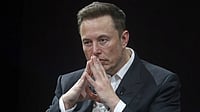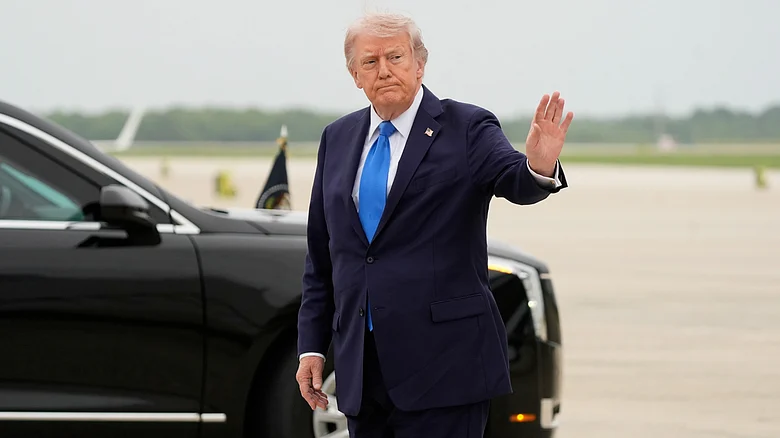

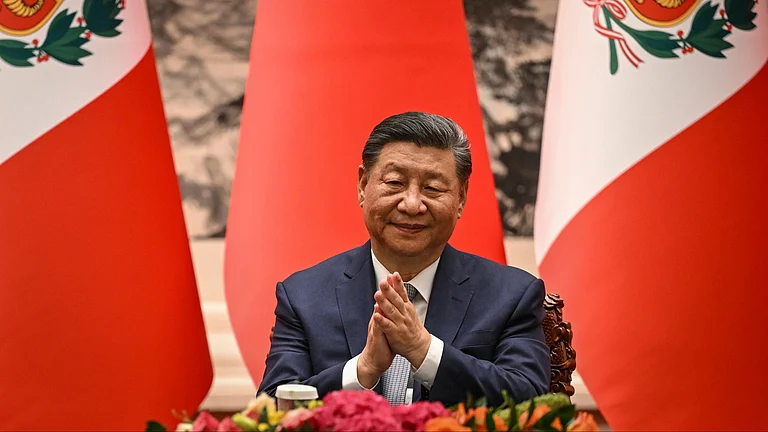
Trump agreeing with Xi Jinping’s “declining nation” remark sparked renewed debate over America’s global influence and superpower status.
The summit focused on Taiwan, trade, Iran, and strategic rivalry, with Xi warning against a “Thucydides Trap” between rising powers.
Analysts point to BRICS expansion, dollar alternatives, debt concerns, and geopolitical tensions as signs of a shifting global order.
US President Donald Trump and his Chinese counterpart Xi Jinping “successfully” concluded the much-anticipated summit held in Beijing, though no major deals were announced. Trump’s visit to China marks the first by an American President in nearly a decade and comes amid a rapidly evolving geopolitical landscape, volatile global markets, and the Iran-US war.
Following the first round of discussions, Beijing and Washington agreed on several aspects of trade and technology, though contestations remained, particularly regarding the Taiwan issue. Both Xi and Trump strongly agreed that the Strait of Hormuz must remain open and that Iran must be stopped from developing and possessing nuclear weapons.

1 October 2026
Get the latest issue of Outlook Business

As per reports, one of the striking moments from the Xi-Trump summit was when Trump publicly said Xi was “100 percent correct” in describing the US as a “declining nation.”
His agreement hints at quite a pivot from the MAGA President’s usual narrative about his homeland. It is also interesting that only a couple of months ago, he had called China and India “broken economies.”
Advertisement
However, Trump later clarified on social media platform Truth Social that what he meant through his agreement was that the “decline” referred to the socio-economic condition of America before his return to the Oval Office for a second term, blaming the Joe Biden administration for what he called “tremendous damage.”
Though Trump clarified his stance, policymakers and analysts have long debated the erosion of US “hegemony” or superpower status, as the country slowly loses influence globally amid the rise of middle powers and a multipolar world order.
One of the primary reasons was highlighted in Xi’s address itself. Xi warned about the dangers of the “Thucydides Trap,” a classical theory in global politics which states that rising competition and influence between rival powers could increase the risk of broader conflict.
Advertisement
As per reports citing Chinese officials, the US is scrambling across regions with multiple confrontations while also struggling to maintain influence everywhere.
Trump’s “Liberation Day” tariffs and the deals he struck with major economies were widely celebrated until the US Supreme Court ruled that he did not possess the authority to impose tariffs under the Emergency Economic Powers Act.
This marked a critical blow to Trump’s policies at a time when he was already losing support at home.

The capture of Venezuelan President Nicolas Maduro and the combined military attacks with Israel on Iran have sent global oil prices soaring. The uncertainty has raised concerns among economists and analysts about global growth, with fears that the world economy could slip into recession if the Iran war prolongs.
Trump’s repeated attempts to pressure the US Federal Reserve to lower interest rates, along with the probe against Fed Chair Jerome Powell, have also raised questions about the independence of the US central bank, a crucial institution responsible for balancing inflation and unemployment through monetary policy.
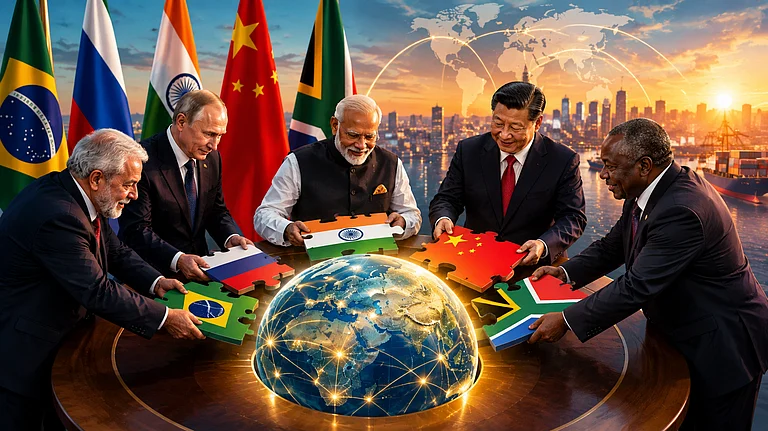
Meanwhile, countries across the Global South are increasingly shifting toward multipolar and cooperative groupings such as BRICS. This reflects how the world is no longer aligning solely with one major power or relying heavily on US-led institutions and alliances.


Trump has argued that this erosion of US influence was the result of policy failures under Biden and that his administration is rebuilding American strength through tougher trade policies, border controls, and military positioning.
Further, though the US economy remains the largest in the world, concerns around its long-term debt and fiscal stability continue to worry economists.
Federal funding requirements have ballooned, while rising deficits have pushed US government debt to record highs. Analysts are increasingly debating how sustainable the American economic model remains in the long term.
The US dollar is also losing some of its sheen as a safe-haven currency. A currency that once dominated global trade is now being challenged by governments and central banks seeking settlements in non-dollar currencies and other alternatives.
This shift is partly attributed to US economic sanctions and rising geopolitical tensions. Central banks have also increasingly moved toward investing heavily in gold as a safer haven asset than the dollar.
Despite these debates and the dollar remaining relatively weak, Trump has argued that under his second term, the stock market is performing strongly, retirement account values are rising, and large foreign investments are flowing into the US, signalling a recovery in economic growth.
Amid rising geopolitical tensions, tariff worries, and inflation concerns, Wall Street has remained remarkably resilient.
Whether the US is losing its “hegemony” does not yet have a definitive answer. The US still boasts the world’s largest economy, leading military capabilities, technological innovation, and dominance in global finance.
China, meanwhile, is grappling with its own economic slowdown and concerns over a declining population.
However, the great power struggle continues, with both the US and China asserting influence across sectors, regions, and countries in an intensifying superpower race.