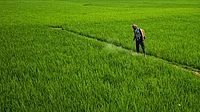
Despite policy momentum to set up 5,000 CBG plants, consistent supply of agricultural residue and biomass continues to challenge scale-up.
Companies are integrating farmers, local entrepreneurs, and women-led networks to improve reverse logistics and stabilise biomass sourcing.
AI-enabled monitoring and exploration of invasive species like lantana and water hyacinth could expand feedstock availability while improving operational efficiency.
India’s push towards circular bioenergy is gaining momentum, but scaling the sector will depend on building resilient supply chains and ensuring consistent feedstock availability. Despite policy momentum under schemes such as SATAT, which aims to establish 5,000 compressed biogas (CBG) plants, the number of operational units remains limited, highlighting structural bottlenecks in adoption and execution.
Industry stakeholders point out that setting up bioenergy infrastructure is only one part of the equation. Ensuring a stable and predictable supply of agricultural residue and biomass remains a critical challenge, particularly given fragmented landholdings and logistical constraints in rural India. Companies operating in the segment are increasingly turning to community-driven models to bridge this gap, integrating farmers directly into the circular economy value chain.

1 October 2026
Get the latest issue of Outlook Business

“The major challenge is securing consistent feedstock supply. Technology adoption must be driven at the grassroots level,” Anand Behl, Chief Business Officer, Kisani Urjaa said during a discussion on circular bioenergy transition.

Advertisement
One emerging approach involves building decentralised collection systems that aggregate both dry biomass — such as paddy straw, cotton residue, and maize waste — as well as wet biomass like napier grass, which is increasingly being explored as a high-yield energy crop. These models often integrate local entrepreneurs and farmer networks to streamline reverse logistics and reduce input variability.
Technology is also playing an enabling role in improving traceability and operational efficiency. AI-enabled monitoring systems are being deployed to optimise biomass collection, predict supply fluctuations, and improve plant productivity. However, stakeholders emphasise that digital integration must be complemented by on-ground training and capacity building to ensure sustained adoption among farmers.
Advertisement
Another emerging focus area is the integration of invasive plant species such as lantana and water hyacinth into bioenergy feedstock streams. Research collaborations with academic institutions are underway to assess the commercial viability of such biomass sources, potentially transforming ecological challenges into energy inputs.
Experts argue that balancing automation with rural livelihood generation remains crucial for long-term sustainability of the sector. While automation can reduce operational costs and improve plant efficiency, community-based participation models — including women-led aggregation networks — are being explored to ensure inclusive economic benefits.
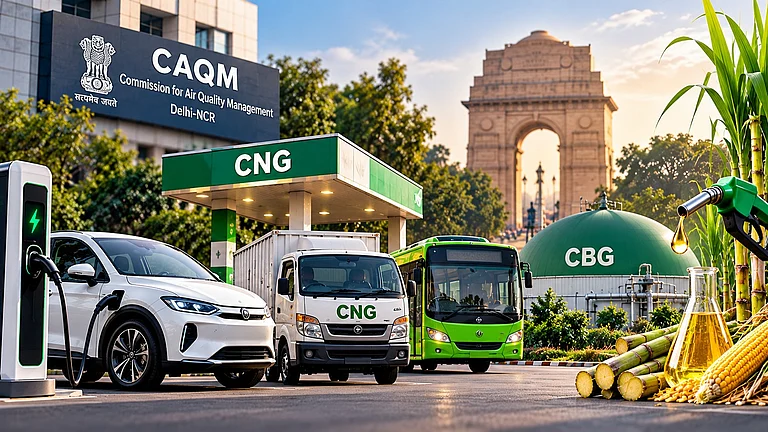


As India seeks to expand its clean energy mix, circular bioenergy presents an opportunity to simultaneously address agricultural waste management, rural income generation, and emissions reduction. The pace of scale-up, however, will likely depend on the ability to align policy support, technology adoption, and grassroots participation into a cohesive ecosystem.
"What we understand from this conversation is that there is an opportunity in this sector and that with some guidance and mentorship we can probably see more and more grown-up in our country," Rijit Sengupta, chief executive officer, Centre for Responsible Business said.
Speaking separately on energy requirements and bio gas, Devesh Garg, Chief Commercial and Sales Officer at Gruner noted that the CBG (compressed biogas) sector has immense potential and can significantly contribute to bring energy higher to 15% from the 7% target.
“Solutions include exploring from the sea for oil gas fields, or through agri residue. Creating wealth through waste is where the CBG comes into,” he added.