
Centre plans to fund seismic data acquisition in deep and ultra-deepwater blocks, led by DGH under the “Samudra Manthan” programme
Nearly 1 million sq km of previously restricted ‘no-go’ offshore areas opened to improve data availability and attract foreign investment
Move gains urgency as India’s import dependence hits 89% for crude and 51% for gas amid falling domestic output
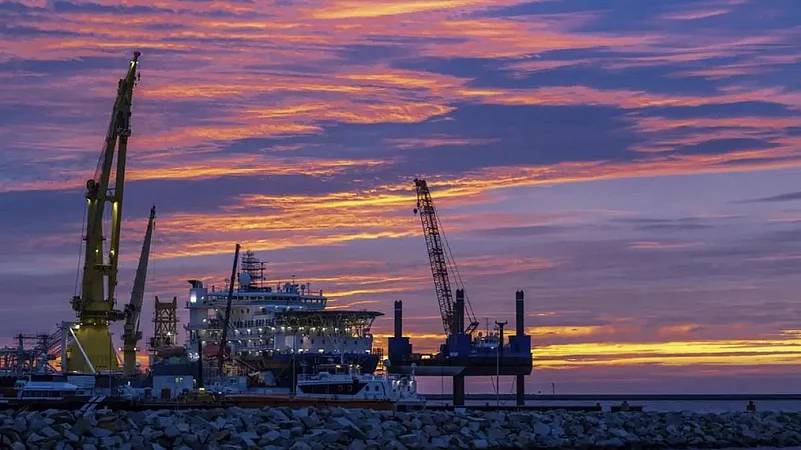
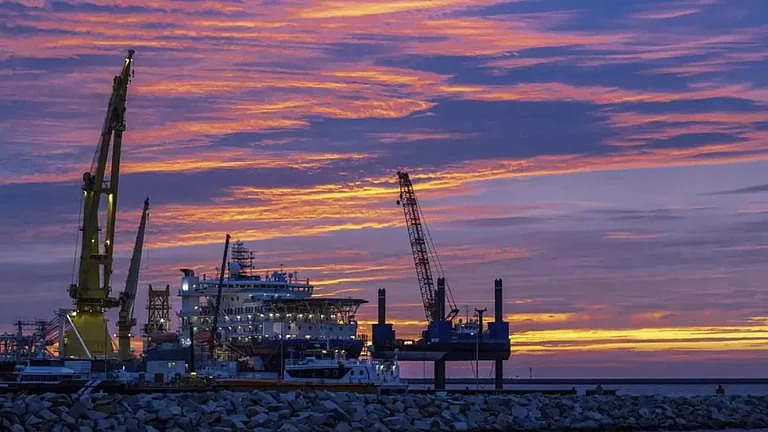
The Centre is considering fast-tracking domestic deep-sea exploration, Business Standard reported, citing sources. The government’s focus is likely to be on gathering seismic data in already explored deep-water and ultra-deepwater oil and gas blocks.
Under the proposed “Samudra Manthan” programme, the Centre plans to fund seismic data acquisition, with the Directorate General of Hydrocarbons (DGH) expected to lead the effort, according to one source who did not disclose the funding size.

1 September 2026
Get the latest issue of Outlook Business

The report added that funding from the government remain crucial as the drilling of wells for data collection is capital intensive.
The source told Business Standard that a decision is yet to be made whether the Centre would finance the project fully or partially.
The push is aimed at improving data availability in untapped offshore regions to attract foreign investment, addressing long-standing concerns from global companies over insufficient geological data in Indian blocks.
“Adequate data is the first step in oil and gas exploration. Many of these blocks were earlier classified as ‘no-go’ zones, which limited data collection. That gap is now being addressed,” the report said citing another source.
Advertisement
These “no-go” areas refer to sedimentary basins that were off-limits for decades due to concerns from defence, space, environmental, and strategic agencies.
In a significant policy shift, the government has now opened nearly 1 million square kilometres of such offshore areas for exploration.
West Asia Crisis Pushes for Energy Security
The renewed push comes amid disruptions to India’s energy supplies due to the West Asia crisis, which has highlighted the country’s heavy reliance on imports.
India imports nearly 90% of its crude requirement and over 60% of LPG needs.
Advertisement
The West Asia crisis exposed India’s vulnerabilities in depending heavily on ‘just-in-time’ supply and relying more on a single source. Amid rising uncertainty, India has boosted domestic LPG production despite a decline in demand.


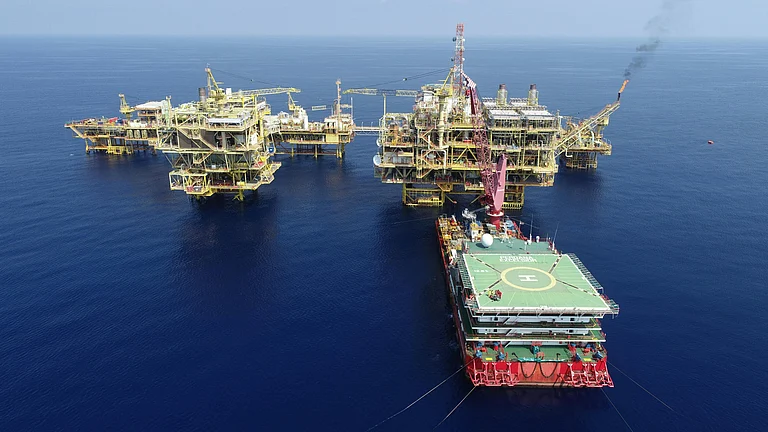
Crude oil production declined for the eleventh consecutive year in FY26, while natural gas output fell for the second straight year, largely due to ageing fields and a lack of major discoveries.
Official data shows that import dependence reached 89% for crude oil and 51% for natural gas during the year.