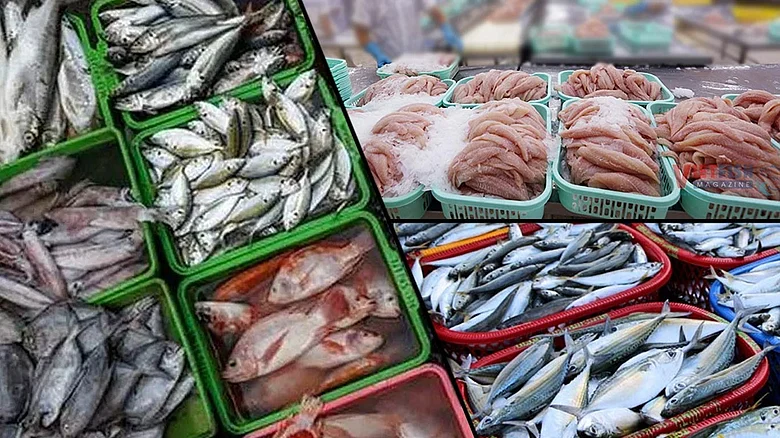
The product passport would cover quality standards, traceability and health and safety compliance.
The official cited EU and US rules on digital traceability for seafood products.
India’s seafood exports are expected to cross $10 billion in 2026-27.
India needs a robust "product passport" system for boosting seafood exports as developed nations are increasingly demanding digital traceability, sustainability credentials and quality assurance from the fishing boat or farm to the consumer, an official said.
The concept of a product passport encompasses the complete set of attributes associated with an export product, including quality standards, traceability, sustainability credentials, health and safety compliance, and documentation of the supply chain from origin to consumer.
"Traceability and sustainability are important for seafood exports now. If we want to export to the world, that commodity should have our export passport.

1 October 2026
Get the latest issue of Outlook Business

"Passport of commodity includes quality requirements, attributes like health, traceability, and sustainability. So the product passport has to be made strong. Once it is strong, we will be competitive," the official said.


Citing examples, the official said as per an European Union (EU) regulation, fish and shrimp sold in the bloc need to be digitally traceable from the boat or farm to the final consumer, demonstrating that the products were legally caught or farmed and safely processed.
Advertisement
Similarly, under a US rule, exporters are increasingly expected to provide detailed digital records covering the entire lifecycle of seafood products.
India would need to create robust digital systems to capture information such as vessel details, catch records, farm registrations, geolocations, production capacities and processing data, which would accompany export consignments.
"So, we need to set up a strong system," the official said, adding that for this, all the stakeholders of this ecosystem, including the state fishery department, the central government, Marine Products Export Development Authority (MPEDA), and the coastal aquaculture authority, have to work together as India's seafood supply chain is fragmented.
Advertisement
India has been making sustained efforts to secure market access for seafood exports. In 2026-27, the exports are expected to cross $10 billion in 2026-27 from $8.5 billion in 2025-26.