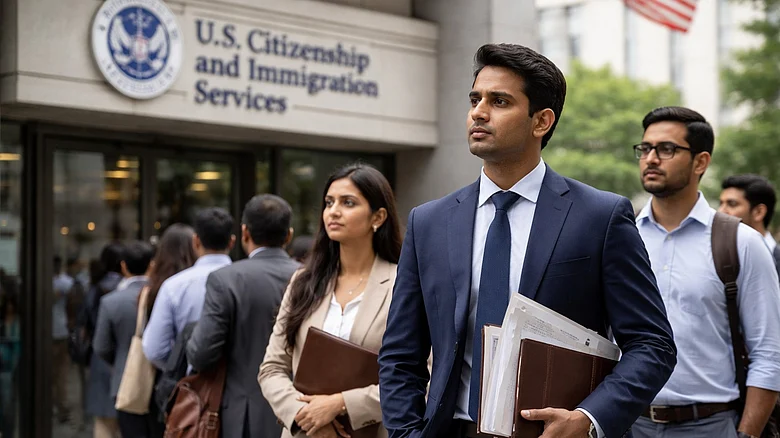

US under Donald Trump proposes H1-B changes that may raise hiring costs and tighten immigration rules
US Labor Department proposal targets wage calculations, making hiring foreign workers significantly more expensive for employers
Proposal may raise minimum pay from 21% to 33%, based on experience and role
The US government under President Donald Trump has proposed a rule targeting H1-B visas that could make hiring foreign workers more expensive and tighten immigration norms.
The US Department of Labor has introduced these changes through a formal proposal that targets wage calculations used for foreign workers. This shift could make overseas hiring significantly more expensive for employers.
Under the proposal, the minimum pay requirement which is linked to these roles may rise sharply. Estimates suggest wage levels could increase from 21% to 33%, depending on the worker’s experience and job category.

1 October 2026
Get the latest issue of Outlook Business

The government has opened the proposal for a 60-day public feedback period. Once finalised, the rule may also face legal scrutiny in courts.
Experts have questioned the framework of these changes, with some calling the approach “inappropriate” and inconsistent with earlier wage-setting practices.
How Will Wage Rules Change?
At the centre of the proposal lies a revised method to calculate ‘prevailing wage’. This term usually refers to the average salary earned by workers in a similar role within a specific location.
Advertisement
The new approach moves beyond that definition and sets wage levels higher than the current market average. This could force companies to offer better pay to foreign hires.
Officials argue that this change will bring foreign workers’ salaries closer to those earned by US employees in comparable roles and locations.
The Labour Department has also said the move aims to curb misuse of visa programmes. It believes some firms rely on lower-paid foreign workers instead of hiring local talent.
The proposal also seeks to update rules linked to Labour Condition Applications and the PERM system, which supports permanent immigration under categories like EB2 and EB3 visas.
Advertisement

Who Will Be Most Affected?
If the rule goes through, higher costs may push companies to cut back on hiring foreign workers, with entry-level roles likely to take the biggest hit. Fresh graduates may find it harder to enter the US job market as firms could favour experienced candidates who meet higher salary requirements.
With Indians forming a large share of H1B and EB2 and EB3 applicants, they may see the strongest impact. The proposal also adds a one-time $100,000 fee for new H1B entrants, increasing costs for employers.
The government has tried a similar move before. In October 2020, US courts blocked a wage rule citing weak justification. This time, the proposal’s future will depend on feedback, legal hurdles and implementation.