The US has reached the FY2027 H-1B visa cap, with USCIS confirming it has received enough petitions to fill all 85,000 available visa slots.
FY2027 introduced a new wage-based selection system, replacing the traditional random lottery by giving higher-paying job offers a greater chance of selection.
The H-1B programme allows US employers to hire highly skilled foreign professionals in specialised occupations, with an annual cap of 65,000 regular visas and 20,000 additional visas for applicants holding US master's degrees or higher.
The United States has officially exhausted the annual H-1B visa quota for Fiscal Year (FY) 2027, with the US Citizenship and Immigration Services (USCIS) confirming that it has received enough petitions to fill all 85,000 available visa slots.
As a result, there will be no second H-1B lottery for this fiscal year.
1 September 2026
Get the latest issue of Outlook Business

Employers whose registrations were selected during the initial lottery had until June 30, 2026, to submit complete H-1B petitions.
Successful applicants approved under the FY2027 cap will be eligible to begin working in the United States from October 1, 2026, the start of the new fiscal year.
H-1B Registrations Decline Sharply
The FY2027 cap season witnessed a significant drop in demand compared with the previous year.
According to USCIS data released in May, 211,600 valid H-1B registrations were submitted for FY2027, a decline of 38.5% from the 343,981 registrations received for FY2026.
Advertisement
While USCIS has confirmed that the annual cap has been reached, it has not yet published the final selection rate or detailed cap statistics.
The agency said additional information is expected to be released in the coming weeks.
New Wage-Based Selection System Introduced
FY2027 also marked a major change in the H-1B selection process. Instead of relying solely on a random lottery, USCIS introduced a weighted selection system that gives higher priority to employers offering better salaries.
The system uses the Department of Labor's Occupational Employment and Wage Statistics (OEWS) wage levels, with higher-paying positions receiving a greater chance of selection.
Advertisement
The change has already influenced the profile of selected applicants.
USCIS data shows that 71.5% of selected beneficiaries held a US advanced degree, up from 57% in FY2026.
Meanwhile, only 17.7% of selected registrations came from the lowest wage category (OEWS Level 1), indicating a shift toward higher-paying skilled positions.
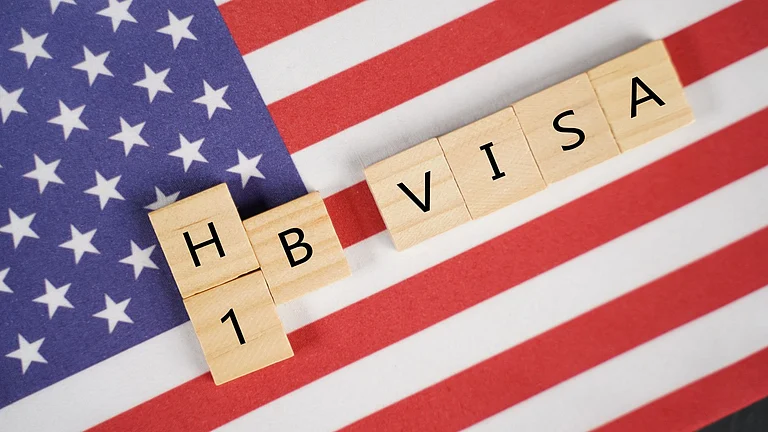
What Is the H-1B Visa?
The H-1B visa, introduced under the Immigration Act of 1990, allows US employers to hire foreign professionals in specialised occupations requiring at least a bachelor's degree or equivalent expertise.
The visa is generally issued for three years and can be extended for another three years.
It is intended as a temporary work visa, although many holders later transition to permanent residency through other immigration pathways.


Technology companies remain the largest users of the programme, with the Pew Research Center estimating that at least 60% of H-1B approvals since 2012 have been for computer-related occupations.
However, hospitals, banks, universities and other employers also rely on the visa to recruit skilled foreign talent.
The annual H-1B cap includes 65,000 regular visas and an additional 20,000 visas reserved for applicants holding US master's degrees or higher.
Certain employers, including universities and nonprofit research institutions, are exempt from these annual limits.