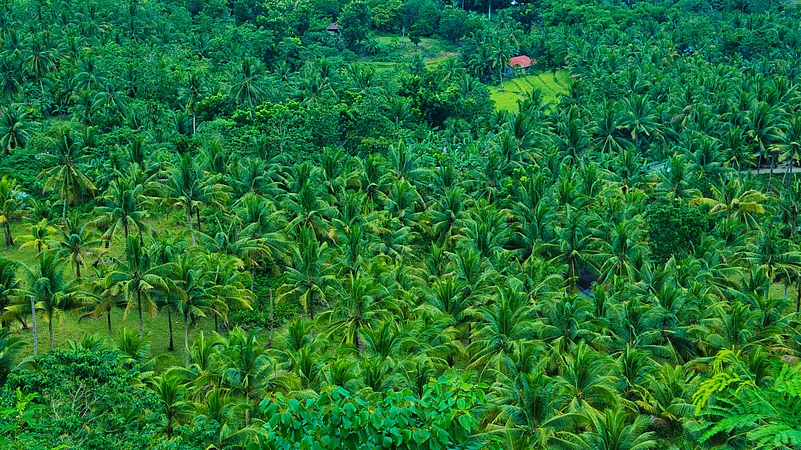

Global forest loss drops 36% in 2025 due to policy interventions.
Agriculture remains the biggest driver of deforestation across tropical regions globally.
India shows marginal forest gains but natural ecosystems remain under pressure.
Destruction of the world’s tropical forests eased in 2025 from a record high, a report showed on Wednesday, underscoring how decisive policy can keep trees standing despite pressures from a warmer climate and expanding agricultural frontiers.
The world lost 4.3mn hectares (10.6 mn acres) of pristine tropical forest last year, a 36% drop compared to 2024, due largely to Brazil’s efforts to curb deforestation as pledged by President Luiz Inacio Lula da Silva when he took office in 2023.

1 September 2026
Get the latest issue of Outlook Business

“It’s encouraging, when the problem feels massive, (that) there are real interventions that work out there and we can see it in the data,” Elizabeth Goldman, a co-director of Global Forest Watch, which releases an annual report prepared by the World Resources Institute and the University of Maryland told Reuters.
Goldman further said that countries are deforestation 70% more than they should be to meet the global commitment signed by almost all countries in 2023 to halt and reverse forest loss by 2030.
“Achieving this goal in the coming years will not be easy,” she said.
Advertisement
Agricultural expansion continued to be the biggest driver of forest loss around the world, driven by farm commodities in nation such as Brazil, Bolivia and Indonesia and subsistence farming in places such as the Democratic Republic of Congo.
Long-running policy continued to limit the loss of primary forests in Malaysia and Indonesia, where palm oil plantations have historically pressured biomes.
But President Prabowo Subianto’s push to expand a food estate programme, which aims to make the country self-sufficient in food production, contributed to an increase in deforestation in Indonesia last year.
Environmental groups have warned that the end of any industry-wide agreement to bar the purchase of soybeans from recently deforested farms in the Amazon rainforest this year will have a similar impact in Brazil in coming years.
Advertisement

Forest Cover Balance in India
In India, forest cover has shown marginal gains, reaching 715,343 sq km (21.76% of geographical area) in 2023, according to the India State of Forest Report (ISFR) 2023 released by the Forest Survey of India.This happened largely due to afforestation and conservation efforts.
However, experts note that these gains are uneven, with natural forests continuing to face pressure from infrastructure projects, mining and land-use change, raising concerns about long-term ecological quality despite reported increases in overall green cover.