Direct seeded rice shows encouraging results and may cover 60% of India’s rice area.
Experts say DSR reduces water use, labour demand and greenhouse emissions significantly.
Officials urge faster adoption amid groundwater depletion and rising agricultural sustainability concerns nationwide.
Direct Seeded Rice (DSR) technology is showing "encouraging results" across several states and could potentially cover up to 60% of India's rice cultivation area, senior government officials and agricultural scientists told while addressing the Federation of Seed Industry of India (FSII) conference in New Delhi on March 10. The officials called for urgent adoption of water-efficient farming systems amid deepening groundwater crisis.
Speaking at the FSII conference on DSR, Agriculture Commissioner P K Singh said that new seed technologies and crop protection innovations would be critical to transforming Indian agriculture.

1 September 2026
Get the latest issue of Outlook Business

"We are actively looking at new biologicals, improved crop protection chemistry and next-generation seed technologies, including hybrid and gene-edited varieties. These technologies, when combined with improved agronomic practices, can become real game changers for Indian agriculture and help us move toward more sustainable farming systems," PTI quoted Singh as saying.
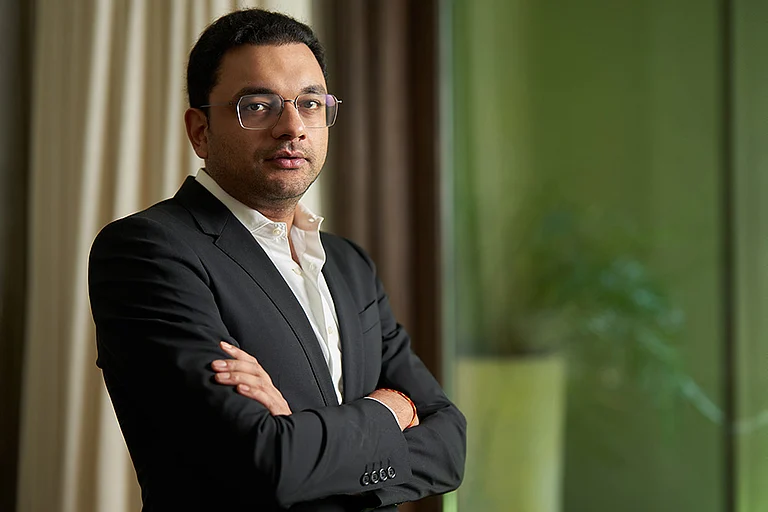
Trilochan Mohapatra, Chairperson, PPVFRA (Protection of Plant Varieties and Farmers' Rights Authority) told PTI that DSR has the potential to significantly improve efficiency in rice cultivation while reducing input costs.
He claimed that even a partial implementation of DSR could result in "massive savings" in groundwater, irrigation energy, and greenhouse gas emissions because rice is grown on almost 44 million hectares (mha) in India.
Advertisement
According to him, depending on agro-ecological conditions, 20–60% of India's rice area may eventually switch to DSR.
Mohapatra, however, cautioned that adoption of new agricultural technologies had "often been slow and challenging," and stressed that collaboration between public and private sectors would be essential.
The urgency of the transition was underscored by alarming groundwater data.
Ajai Rana, Chairman, Federation of Seed Industry of India (FSII) and CEO & MD, Savannah Seeds, told PTI that groundwater extraction in Punjab had reached nearly 156% of annual recharge, while Haryana stood at around 137%.
Advertisement
What Is Direct Seeded Rice?
According to the International Rice Research Institute (IRRI), direct seeded rice (DSR) is a crop establishment system wherein rice seeds are sown directly into the field, as opposed to the traditional method of growing seedlings in nurseries and then transplanting into flooded fields.
In contrast to traditional puddled transplanting, DSR does not require fields to be continuously flooded.
IRRI noted that direct seeded rice is viewed as one of the most efficient, sustainable and economically-viable rice production systems used today. When compared to the conventional puddled transplanted rice (PTR) method prevalent in Asia, DSR delivers faster planting and maturing, conserves scarce resources like water and labour, is more conducive to mechanisation and reduces emissions of greenhouse gases that contribute to climate change. Mechanised DSR also creates avenues for employment through new service provisions and is less labour intensive and free from drudgery, making it more attractive to youth and women farmers.
How DSR Helps in Sustainable Farming
Producing one kilogram of rice consumes nearly 3,000–5,000 litres of water, stated the IRRI report, adding that agriculture accounts for nearly 80% of India's freshwater withdrawals.
A K Singh, Former Director, Indian Agricultural Research Institute, said rice would remain central to India's food security, but that production systems must evolve.
"Direct Seeded Rice offers an important pathway for sustainable intensification of rice systems, supported by strong research, improved seed varieties and effective extension services," he said.
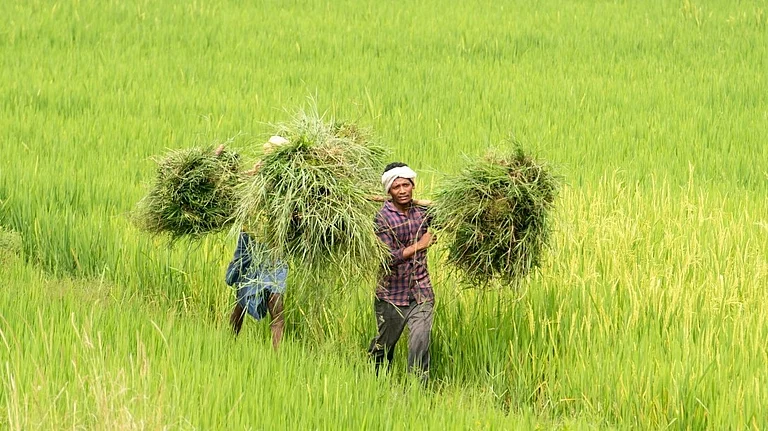
On the ground, the benefits are already visible. Mehat Lal Bisen, a progressive farmer from Madhya Pradesh, shared that adopting DSR had helped him reduce labour costs and water use while improving overall efficiency.

(With inputs from PTI.)