
Apple agreed to pay $250 million to settle allegations that it falsely marketed AI-powered Siri features that were not yet available.
The lawsuit covers nearly 36 million eligible iPhones sold in the US between June 2024 and March 2025, including iPhone 16 models.
The controversy comes amid leadership changes at Apple, with Tim Cook set to step down later this year and John Ternus named as successor.
Technology giant Apple Inc on Tuesday agreed to pay $250 million to settle a class-action lawsuit alleging that it misled iPhone buyers by falsely touting artificial intelligence capabilities for its Siri voice assistant in late 2024.
Plaintiffs alleged that Apple “promoted AI capabilities that did not exist at the time, do not exist now, and will not exist for two or more years” in order to boost smartphone sales.

1 September 2026
Get the latest issue of Outlook Business

According to a report by The Guardian, Apple still has not fully released the more “personalized” version of Siri, despite announcing it two years ago.
The Better Business Bureau’s National Advertising Division, the US advertising watchdog, concluded that Apple falsely advertised the new AI-powered Siri as “available now,” the report said.
The settlement, filed on Tuesday for court approval, showed no admission of wrongdoing by Apple and covers nearly 36 million eligible devices purchased in the US between June 10, 2024, and March 29, 2025. These include the iPhone 16, as well as the iPhone 15 Pro and 15 Pro Max models.
Advertisement
“We resolved this matter to stay focused on what we do best: delivering the most innovative products and services to our users,” The Financial Times reported, quoting Apple.
Each class member could receive $25 per device, a sum that could rise to $95 depending on the number of approved claimants.
Lawyers added that Apple undertook this AI-focused campaign specifically to catch up in the Big Tech race for next-generation technology, increasingly being driven by OpenAI and Anthropic.
However, its marketing of Apple Intelligence as a feature capable of delivering iPhone users a new and improved version of Siri — transforming it from a “limited voice interface into a full-fledged personal AI assistant” — was allegedly false.
Advertisement

Leadership Transition at Apple
Tim Cook, Apple’s incumbent CEO, has long faced criticism for the company’s perceived lack of breakthrough innovation in its smartphones. In April, Cook announced that he would step down from the top role later this year and named John Ternus as his successor.
During a town hall meeting, Cook reflected on his mistakes as Apple CEO and cited several major setbacks during his tenure. He described the launch of Apple Maps on the iPhone in 2012 as his “first really big mistake,” as the app faced significant issues in several parts of the world.
Other missteps during his tenure included the failed launch of the AirPower wireless charging mat and an unsuccessful decade-long effort to develop a self-driving car.
Known for his expertise in logistics and operations management, Cook joined Apple in 1998 and went on to oversee the company’s worldwide sales and operations.

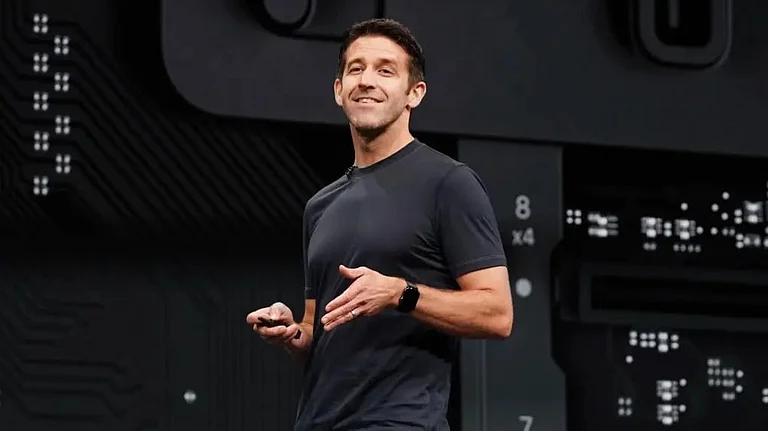


In 2009, he temporarily assumed responsibility for Apple’s day-to-day operations while co-founder Steve Jobs took medical leave due to complications arising from pancreatic cancer. In 2011, just months before Jobs’s death, Cook officially succeeded him as Apple CEO.