Jio IPO may raise ₹37,700 crore through a fresh issue.
Most IPO proceeds will fund debt repayment and balance-sheet strengthening.
Jio serves 524 million subscribers with expanding AI and digital businesses.
Reliance Jio Platforms has formally kicked off its public listing journey, filing its Draft Red Herring Prospectus (DRHP) on Friday with the Securities and Exchange Board of India (SEBI) for what is expected to be one of the largest IPOs in Indian market history.
The proposed offering consists of a fresh issue of up to 27 crore equity shares, with no offer-for-sale (OFS) component. Based on market estimates, the IPO could be valued at around $4 billion (nearly ₹37,700 crore) at current market valuations, making it India's largest-ever public offering. If those estimates hold, Jio's share sale would surpass both the proposed National Stock Exchange (NSE) IPO, expected to be around ₹30,000 crore, and Hyundai Motor India's ₹27,870 crore offering in 2024.

1 September 2026
Get the latest issue of Outlook Business

The filing marks a significant milestone for Reliance Industries, which has spent the last decade transforming Jio from a telecom operator into a broader digital platform spanning connectivity, broadband, enterprise technology, cloud services and emerging artificial intelligence initiatives.


However, beyond the size of the offering, the structure of the issue and the proposed use of proceeds offer important clues about what Reliance hopes to achieve through the listing.
Why Jio's IPO Is Different
Unlike several recent large IPOs that have primarily provided exit opportunities to existing investors, Jio's public issue is entirely a fresh issue of shares. No existing shareholder will sell stock through the offering.
Advertisement
This means Reliance Industries, which owns 66.43% of Jio Platforms, along with investors such as Meta, Google, KKR, Mubadala, Vista Equity Partners and the Saudi Public Investment Fund, will continue to hold their stakes after the IPO, subject to dilution arising from the creation of new shares.
The company has proposed reserving up to 50% of the issue for Qualified Institutional Buyers (QIBs), while at least 35% will be allocated to retail investors. The allocation for Reliance Industries shareholders and employees is yet to be disclosed.
The structure is noteworthy because all proceeds raised from investors will flow directly to Jio Platforms rather than existing shareholders. In a fresh issue, new shares are created and the company's share capital expands, whereas an OFS merely transfers ownership from existing investors to new ones without bringing fresh funds into the business.
Advertisement
Where Will The IPO Money Go?
The DRHP shows that the overwhelming majority of the proceeds will be used to strengthen Jio's balance sheet.
The company has earmarked approximately ₹27,500 crore for repayment or prepayment of existing borrowings, either fully or partially. Any residual amount will be used for general corporate purposes.
According to the filing, the final deployment of funds may vary depending on market conditions, financing arrangements, interest rates, exchange rate movements and business requirements. Nevertheless, debt reduction remains the primary objective of the issue.
The decision is significant because it distinguishes Jio's IPO from growth-capital raises. Rather than using the funds for acquisitions or aggressive expansion, the company is prioritising balance-sheet optimisation. Lower debt levels could reduce interest costs and improve financial flexibility as Jio continues investing in newer areas such as cloud infrastructure, artificial intelligence and satellite communications.
Why Reliance Wants Jio Listed
The listing also serves a broader strategic purpose for Reliance Industries. For years, investors seeking exposure to Jio have had to buy Reliance Industries shares, where telecom and digital businesses sit alongside oil-to-chemicals, retail, new energy and other businesses. A separate listing would allow investors to assign an independent valuation to Jio Platforms.
The move could help establish a clearer market value for one of Reliance's fastest-growing businesses and provide greater transparency around its financial performance and growth trajectory.
Reliance Industries currently owns 66.43% of Jio Platforms. Other major shareholders include Meta, which owns nearly 10% through Jaadhu Holdings, and Google International LLC, which holds around 8%.
Global investors such as Saudi Arabia's Public Investment Fund, KKR, Vista Equity Partners, Mubadala and General Atlantic also own stakes in the company.
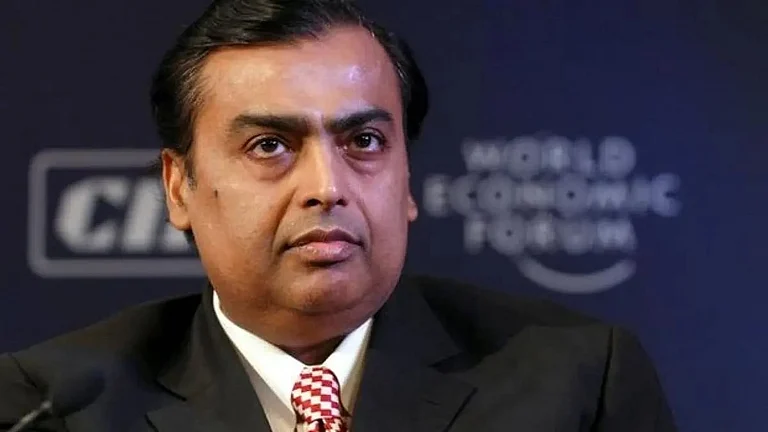
Mukesh Ambani described the proposed listing as an emotional milestone for the Reliance Group.
"This is a deeply emotional moment for me, for the entire Reliance Family, and millions of its shareholders," Ambani said during Reliance Industries' annual general meeting.
"The proposed listing of Jio will demonstrate to the world that India can build technology companies of global scale, global capability, and global value."

Market experts believe the listing could emerge as one of the biggest value-unlocking events within the Reliance ecosystem. Santosh Meena, Head of Research at Swastika Investmart, said the proposed IPO is significant not only because of its scale but also because it gives investors direct exposure to one of India's largest digital platforms.
He noted that the fresh issue structure suggests the capital raised is intended to support the company's long-term growth plans rather than facilitate exits for existing shareholders, while also increasing the representation of technology-led businesses in India's public markets.
Riyank Arora, Associate Vice President - HNI & Derivatives at Hedged.in, said the filing represents an important step in Jio's evolution.
"The filing of the DRHP is a clear indication that the company is entering its next phase of growth and value creation," he said.
Arora added that the listing could act as a value-unlocking event for Reliance Industries by enabling investors to independently assess Jio's telecom and digital businesses.

More Than A Telecom Company
Although Jio's identity remains closely linked to its telecom operations, the business has expanded considerably since its launch in 2016.
Its consumer platform includes mobile services, JioFiber broadband, JioAirFiber fixed wireless access and internet-enabled devices such as JioBharat. As of FY26, the company served more than 524 million subscribers, including 268.5 million 5G users.
Beyond consumer connectivity, Jio has built an enterprise-focused business spanning cloud infrastructure, Internet of Things (IoT) solutions, digital collaboration platforms and enterprise networking services. The company has also expanded partnerships with global technology firms including Google, Meta and Nvidia.
The next phase of growth may come from newer technology initiatives. Reliance recently outlined plans to build AI infrastructure and services, while media reports suggest Jio is seeking regulatory approvals to develop a low-Earth orbit satellite constellation comprising around 1,600 satellites.
Akash Ambani, Chairman of Reliance Jio Infocomm, recently said the company aims to connect regions that remain beyond the reach of traditional networks.
"Jio connected India on the ground, now we must connect from the skies," he said.
The diversification is important because investors may increasingly evaluate Jio not only as a telecom operator but also as a broader digital infrastructure and technology platform.
What Investors Should Watch
Jio enters the public market with strong operating metrics. For the March quarter of FY26, the company reported operating revenue of ₹44,928 crore, up 13% year-on-year. Net profit rose 13% to ₹7,935 crore, while EBITDA increased 18% as margins expanded by 230 basis points.
Subscriber engagement also remained strong. Average Revenue Per User (ARPU) improved to ₹214, supported by tariff hikes and higher customer usage. Monthly data consumption reached 42.3 GB per user, while overall data traffic increased around 35% from a year earlier.
Meena said Jio's leadership position with more than 524 million subscribers, strong 5G adoption, growing digital services ecosystem and expanding AI capabilities support expectations of a premium valuation. According to him, market participants are already discussing valuation estimates in the ₹10-12 lakh crore range, reflecting investor expectations around Jio's future growth potential beyond traditional telecom services.
The Reliance AGM also reinforced management's view that consumer-facing digital businesses are among the group's core growth engines. As a result, investors are likely to evaluate Jio not only on subscriber growth and telecom metrics, but also on its ability to scale newer businesses across cloud infrastructure, artificial intelligence, enterprise solutions and digital platforms.
According to Arora, Jio's market leadership and scale could make the IPO one of the most closely watched offerings in recent years. "Given Jio's strong market leadership, extensive subscriber base, and expanding digital footprint, the issue is likely to attract significant investor interest across both institutional and retail segments," he said.
However, investors will also need to assess valuation, competitive dynamics in the telecom sector, execution of newer technology businesses and the company's ability to monetise opportunities beyond connectivity.
While the IPO gives public investors direct access to India's largest telecom operator, the longer-term investment case may depend on whether Jio can successfully evolve into a broader digital and technology platform while maintaining growth and profitability.