
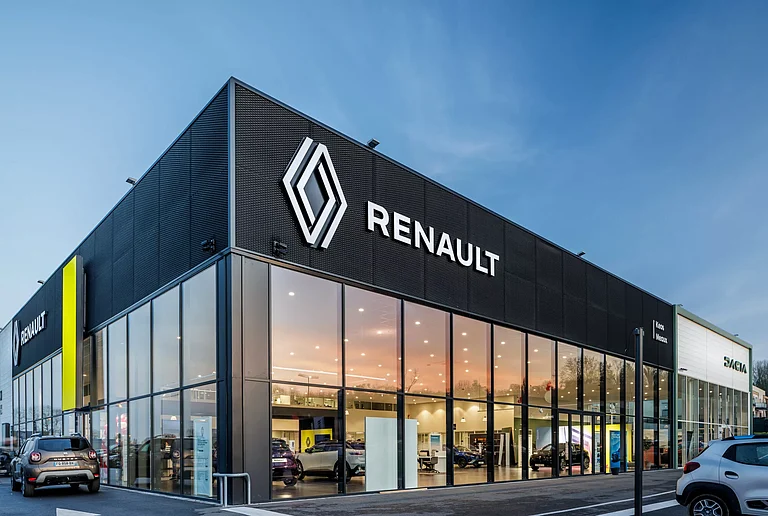
Renault sees India as a core global hub and is betting on new launches like the Duster, hybrids and CSUVs.
The carmaker is doubling down on SUVs and hybrids as near-term growth engines, while keeping small cars like the Kwid alive and preparing for a gradual shift to EVs.
Renault expects India’s manufacturing base, Chennai plant consolidation and a potential India–EU FTA to strengthen governance, boost exports and make India a key pillar of its international strategy.
Renault has brought back the Duster after four years to revive its position in India, now the world’s fastest-growing car market. The earlier Duster helped start the SUV wave in 2012, but was discontinued in 2022. The new model comes with a hybrid option, a new turbo engine and a highly localised platform at a time when SUVs dominate more than half of India’s passenger vehicle sales.
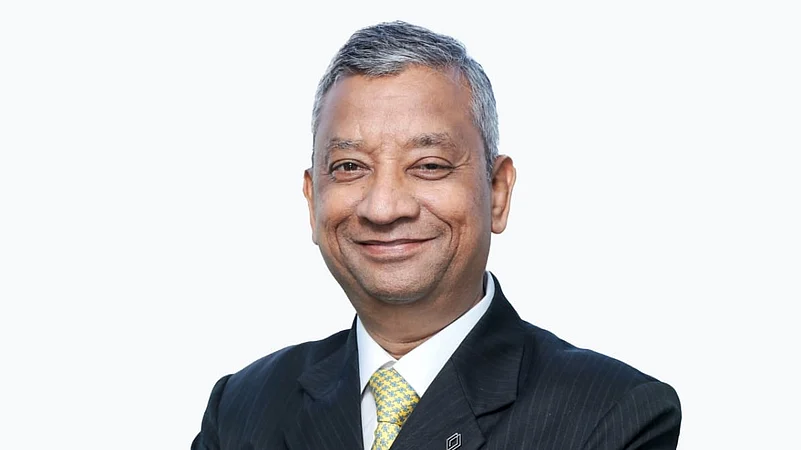
In a conversation with Outlook Business, Renault India MD Venkatram Mamillapalle said India is now central to Renault’s global plan. With higher localisation, a fully controlled Chennai plant and new powertrain options, Renault aims to regain scale, strengthen exports and prepare for a shift towards hybrids, CNG, ethanol and eventually EVs. He also expects the EU-India FTA to boost component exports and support future European-linked products.

1 September 2026
Get the latest issue of Outlook Business

Edited Excerpts:
What is Renault’s marketing strategy now, and why relaunch Duster at this time?
We are coming now because we are ready. There is no auspicious timing for launch. We analysed customer needs and completed engineering and production. We chose Republic Day to showcase the car. Our play in the market expands from A and A+ segments to B+ and C segments, so our reach will widen. We currently operate in dense competition, both in sub-4m and above-4m segments. We will also enter the CSUV segment next year. During Diwali, we will launch a hybrid, where there are very few players. Our E-tech hybrid technology is far superior to what exists.
Advertisement
Why is there no Renault logo on the front side of the Duster? Do you think Duster emotion will play a bigger role?
There is a Renault logo on the side and back, but we want to bring Duster emotion to the forefront. Duster carries its own pride, so we are defining it not just as a brand, but as an emotion. In future, others may copy this.
Tata Motors and Mahindra now dominate SUVs. How do you plan to compete?
Advertisement
Competition exists in every segment. The product is the hero. Customers buy based on need and affordability. In India, buying a car is a family decision. Duster was a strong brand earlier, and it built its own following. There is nostalgia among buyers who saw it while growing up.
We kept the same DNA—body style, masculinity, ride and handling, safety and comfort. It is also feature-rich with Google Automotive, so even if you forget your mobile, everything is inside the car. It has 212 mm ground clearance, best-in-class boot space, panoramic sunroof, ventilated seats, dual displays (10-inch and 12.3-inch), cockpit-style driver setup, pedal shifters, e-shifters, DCT transmission and a 160 PS engine. The hybrid (1.8L) can run 80% on battery in city traffic. It will be priced in line with the market.

You previously said Renault aims for 5% market share. When will that happen?
Only Duster will not give 5%. We are expanding from A to C segments. After launches, we should reach 3% plus and migrate to 5% over time. It won’t happen overnight. India’s TIV is 4.8 million today and may reach 5.5 million by 2030. Around 60–70% will be ICE and 30–40% hybrids and EVs. We play in both. European FTA will also benefit Renault in India.
Expectations from the EU–India FTA?
Balanced trade, especially in automotive. Benefits will come year over year. High-end cars may benefit more initially, but we can export more components and our supplier base gains. Let us wait for the final details.
What are your export goals? Which countries are in focus?
We already export to South Africa. The FTA should boost exports further. We will make left-hand drive for Europe as well. Right-hand drives we are already doing. Currently South Africa is the main market, with a few other countries included.
How do you see the SUV market evolving? And do small cars still have a future?
Kwid continues as long as regulations permit. Only two players remain in the small car segment—us and Maruti—so we will not exit. This segment may take a U-turn when earning power and traffic conditions change. Europe moved from big cars to small cars due to congestion and parking. Metro India may follow.
SUVs are currently a trend. Sedan went away and SUVs came in. This will continue until India reaches around 6 million TIV (by 2032). SUVs also help hybridisation and electrification because there is space to load batteries and two powertrains. So SUVs will continue for a while.
What is Renault’s decarbonisation plan?
First step is hybridisation. CNG and ethanol will help. E20 is already in the market and we are there. If it moves to E45, E65, and E85, we are ready because of Brazil experience. EV tech is available with us. We are waiting for ecosystem maturity. Chennai tech centre has already done an EV for Europe.
Today hybrid is right. For tomorrow, EV. Timeline depends on industry. CNG is already present, and we will adapt it more, although it gives fewer carbon credits.
Your view on Chinese EVs and supply chains?
China has technology. We either have it or learn from them. Starting from zero will take 10 years. We should allow Chinese investment in a restricted manner through joint ventures and technology adaptation. Commerce ministry must define how.

When will India become self-dependent in technology?
India must invest more in R&D and innovation, and convert R&D into production. Government support has to increase. Currently it is not enough.
How does the Chennai plant acquisition help Renault?
Earlier there were too many entities. Now there is one kitchen and one chef. This improves governance. With better governance, you get the right products at the right time and cost.
How important is India for Renault in the global context?
India is a main pillar in our international game plan. Earlier, we focused on Korea and Brazil; now it is India’s time. Our products are already around 90% local, and the Duster is about 85–88% local. We plan to increase localisation further and also export components from India to Europe.