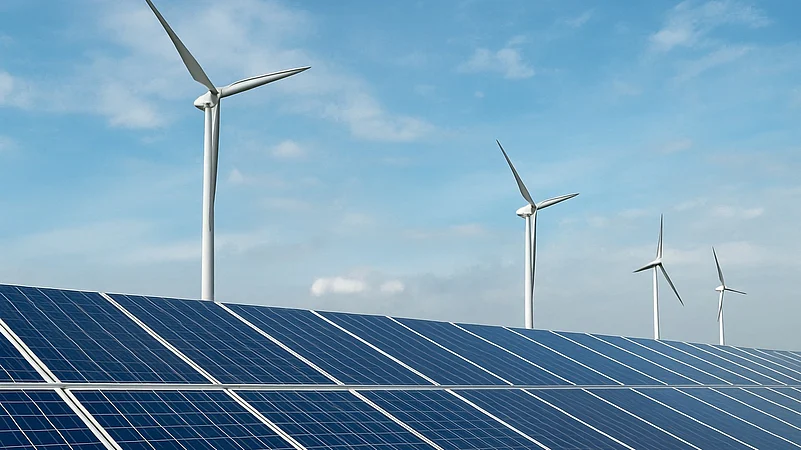

Transmission infrastructure is struggling to keep pace with renewable energy expansion, leading to growing curtailment and evacuation challenges.
Coal plant inflexibility and solar's midday generation surplus are limiting the grid's ability to absorb renewable power.
India's energy transition now depends as much on transmission, storage and grid flexibility as on adding new renewable capacity.
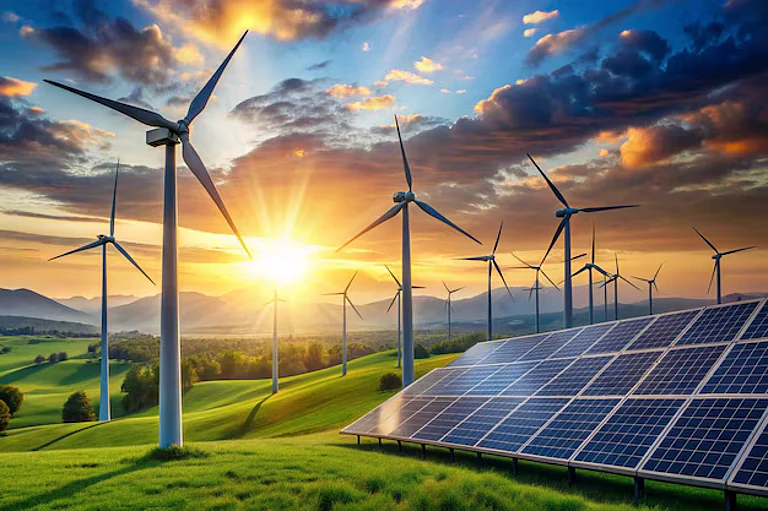
In the deserts of Rajasthan and Gujarat, some of India's newest solar parks are already generating electricity. Projects developed by Adani, ReNew, Serentica, Juniper, Zelestra, ACME and Amp Energy are feeding power into the grid through temporary arrangements because the transmission lines meant to carry their electricity are still under construction.
In all, 26 solar projects are operating under the temporary General Network Access (T-GNA) framework — a temporary regulatory provision that underscores a growing mismatch in India's energy transition. The country is adding renewable capacity at record speed, but the infrastructure needed to evacuate that power is struggling to keep up.
The consequences are becoming increasingly visible. In the first quarter of 2026, transmission constraints accounted for nearly two-thirds of all renewable energy curtailment, resulting in about 300 GWh being curtailed.

1 September 2026
Get the latest issue of Outlook Business

"Transmission constraints have emerged as a key challenge for large renewable energy projects, with generation capacity expanding faster than the transmission network," said Duttatreya Das, Energy Analyst at Ember Energy. "Several projects that are completed or near completion are unable to fully evacuate power because the required transmission infrastructure is still being built."
Advertisement
The figures point to a challenge that could define the next phase of India's energy transition: generating renewable power is no longer enough. Ensuring that every unit reaches consumers is becoming just as critical.
Coal's Inflexibility
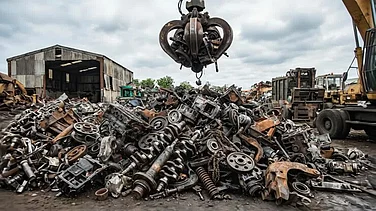
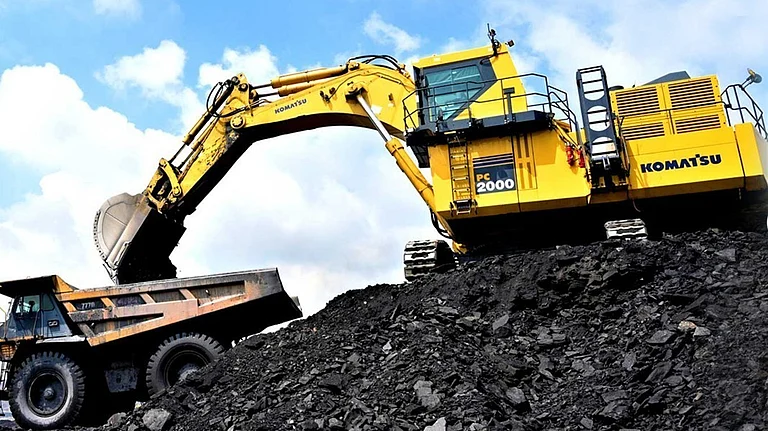
One of the leading causes of renewable energy curtailment in India is the inflexibility of coal-fired power plants. Unlike solar and wind farms, coal plants cannot simply be switched off when renewable generation surges and restarted when demand rises later in the day.
A coal plant's boilers, turbines and ancillary equipment operate at very high temperatures and pressures. Shutting a plant down completely and restarting it can take several hours and consume additional fuel. Frequent start-ups and shutdowns also increase wear and tear, maintenance costs and operational risks.
Advertisement
For this reason, coal plants are required to maintain a minimum technical load — the lowest level at which they can operate safely and efficiently. "Most coal plants in India can only reduce output to around 50-55% of their installed capacity while remaining online," says Das.
A 1 GW coal-fired power plant, for instance, may only be able to lower generation to about 500-550 MW. Shutting it down completely could make it difficult to respond quickly when solar generation drops at sunset or when wind output fluctuates.
This creates a hard constraint during periods of high solar generation. If demand stands at 100 GW, at least 50 GW must come from coal operating at minimum load, leaving only the remaining 50 GW to be met by solar and wind. Any renewable generation beyond that level may have to be curtailed.
More flexible thermal plants can help address this. In Germany, coal units can operate at much lower minimum levels — sometimes as low as 20-25% of their capacity. A 100 MW plant, for instance, may be able to remain stable at just 25 MW.
The lower a coal plant can reduce its output while staying operational, the more renewable energy the grid can accommodate. Improving coal flexibility is therefore a key lever for reducing curtailment and integrating larger shares of solar and wind into the system.
Solar's Midday Surge
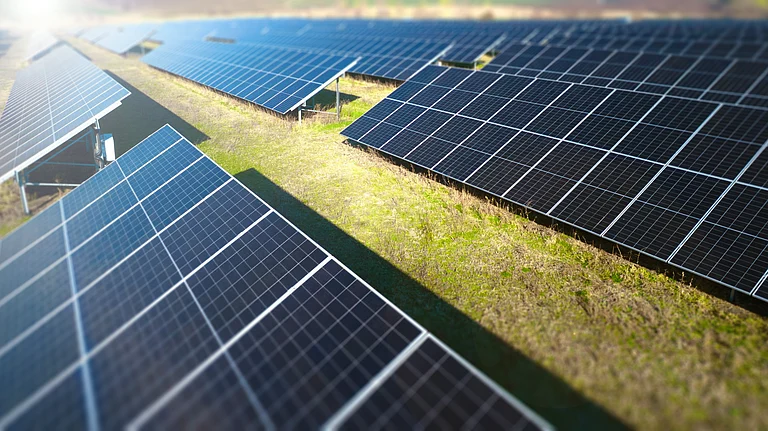
A related challenge in power systems with high solar penetration is the midday surge. Solar generation typically peaks between late morning and early afternoon, when sunlight is strongest. During these hours, large volumes of electricity enter the grid simultaneously from utility-scale solar parks and rooftop installations.
Electricity demand, however, does not peak at the same time. In much of India, demand is relatively moderate during the afternoon and rises sharply only in the evening, when households switch on lights, fans, air conditioners and appliances. This creates a mismatch between when solar power is generated and when it is most needed.
"Grid operators cannot rely solely on renewables, whose output varies with weather conditions. A certain amount of conventional generation — primarily coal — must therefore remain online to ensure reliability and provide balancing services," said Das.
For example, if solar plants generate 40 GW at noon while demand is only 100 GW, the grid must accommodate that power alongside coal, hydro and other sources that need to remain online. If demand is insufficient, transmission lines are congested, or coal plants cannot reduce output further, grid operators may have to curtail some solar generation.
This pattern — a steep midday surplus in renewable generation followed by a sharp evening ramp-up in demand — is known as the duck curve. Managing this rapid swing requires flexible generation, storage systems and robust transmission infrastructure.
As India adds more solar capacity, midday surpluses are becoming increasingly common in states such as Rajasthan and Gujarat. Without adequate storage, demand-side flexibility or transmission capacity, a growing share of this low-cost renewable electricity risks being curtailed rather than consumed.
Transmission Gaps
India's transmission network currently extends over approximately 503,661 circuit kilometres (ckm) and consists of two main components: the Inter-State Transmission System (ISTS), which forms the national grid, and the Intra-State Transmission System (InSTS), which delivers electricity within states and connects to local distribution networks.
To support the country's clean-energy ambitions, the National Transmission Plan 2022 envisages expanding the network to about 648,190 ckm by FY32, requiring annual additions of nearly 24,000 ckm. Achieving this will be essential for integrating India's target of 500 GW of non-fossil fuel-based capacity by 2030.
However, grid expansion targets have consistently outpaced actual build rates. Transmission planning has traditionally been aligned with thermal power projects, which typically take three to five years to develop — a timeline that sits poorly with the pace of renewable energy deployment.
According to a recent Ember report, from FY2021-22 to FY2025-26, India achieved only about 80% of its planned transmission network expansion targets. On average, around 13,000 ckm of transmission lines were added annually, against a planned target of approximately 16,230 ckm across both the inter-state and intra-state systems.
This recurring shortfall has left a growing pipeline of delayed and unfinished transmission projects. Meanwhile, rapid growth in renewable capacity and rising electricity demand have pushed planned targets sharply upward. For FY2026-27, the planned addition for the ISTS alone has climbed to about 25,146 ckm.
Compounding the planning gap is a supply chain crunch. "The shortage of critical transmission and substation equipment is emerging as a major bottleneck, with procurement lead times stretching from just two to three months a few years ago to as long as nine months or even a year today," said Simarpreet Singh, Executive Director and CEO of Hartek Power, a Chandigarh-based transmission equipment manufacturer.
"Manufacturers of transformers, circuit breakers, CTs, PTs and other critical grid components must rapidly scale up production capacity to keep pace with India's accelerating expansion of power generation, renewable energy and transmission infrastructure," he added.
Making Every Unit Count
India's renewable energy challenge is no longer confined to adding generation capacity. The focus must now shift to ensuring that clean electricity can be transmitted, stored and consumed efficiently — a task that will require coordinated action across transmission planning, grid operations, storage deployment and market design.
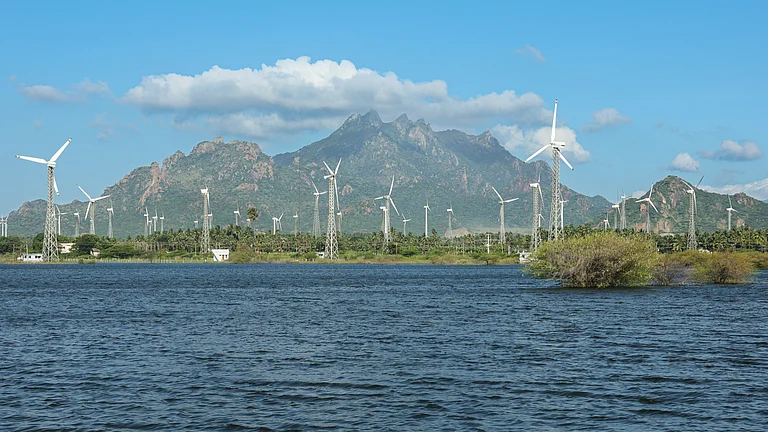
Equally important is reducing the excessive concentration of renewable energy development in a handful of states. India's renewable energy story was once spread across several states, but it is today increasingly concentrated in Rajasthan and Gujarat, with some contribution from Karnataka.


While these states offer excellent conditions for large-scale projects, such concentration inevitably strains transmission infrastructure. "When tens of gigawatts of new capacity are added in the same region, transmission networks are forced into a constant cycle of catch-up," said Das. "New lines are built, more capacity is added, congestion reappears, and the process repeats. At the same time, transmission expansion faces challenges such as land acquisition, right-of-way issues and environmental clearances."
A more balanced strategy would encourage renewable energy deployment closer to demand centres — in states such as Madhya Pradesh, Telangana, Odisha and Uttar Pradesh. Locating generation nearer to consumers would reduce the need for massive transmission upgrades and lower the risk of congestion.
Historically, developers have prioritised sites with the least land-acquisition friction. Going forward, transmission availability must become an equally important factor in project planning. In many cases, developers may need to choose locations where land acquisition is somewhat more complex but where grid connectivity already exists or can be provided more readily. The goal should be to weigh transmission access alongside land availability — not treat the latter as the sole criterion.