




The US is countering China's 80% control of the Democratic Republic of the Congo's critical mineral extraction
Washington is heavily backing the 1,300-kilometre Lobito Corridor rail project with over $4 billion to bypass Chinese-dominated transport routes
Private American firms, including the Jeff Bezos and Bill Gates-backed KoBold Metals, are securing major lithium and copper assets in the region
The United States is aggressively expanding its investments, diplomatic ties and security alliances in the Democratic Republic of the Congo to break China's grip on critical mineral supply chains.
The DRC stands as a central geopolitical battlefield for resources vital to future technologies. The central African nation ranks as the top global producer of cobalt and the second-largest source of copper.

1 September 2026
Get the latest issue of Outlook Business

The country also holds massive reserves of lithium, coltan, manganese, tantalum, tungsten, gold, tin and diamonds. Despite vast mineral wealth, severe infrastructure shortages and prolonged armed conflict make foreign investment essential.


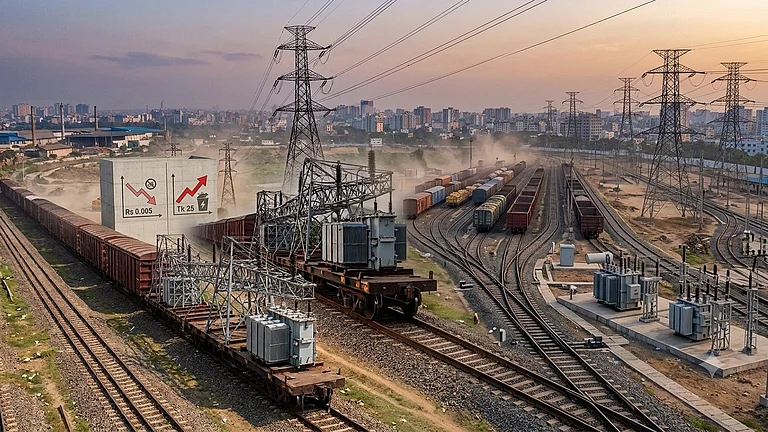

At present, Chinese-based entities are estimated to manage or own nearly 80% of the critical mineral extraction within the DRC. Washington now aims to secure its own access to these essential materials and challenge Beijing's overwhelming market dominance.
China's Deep-Rooted Dominance
China established its foothold early as Chinese firms entered the DRC well before Western investors were willing to risk capital in the politically unstable region.
They funded vital roads, railways and mining infrastructure in exchange for long-term agreements on mineral access.
Advertisement

Most extracted material is shipped directly to China for processing. Currently, Beijing commands over 90% of the global supply of refined commercial-grade cobalt chemicals, battery-grade tricobalt tetroxide and nickel-cobalt-manganese cathode precursor materials.
It also dominates upwards of 80% of the manufacturing of battery-grade cobalt sulphate, while representing over 50% of global finished copper production. This extensive reach allows China to dominate the entire supply chain, from raw extraction to final battery manufacturing.
The Lobito Corridor
Infrastructure forms the counter-strategy as Washington heavily backs the Lobito Corridor to bypass Chinese-controlled transport routes.
Advertisement
The initiative spans 1,300 kilometres of rail lines that connect the Atlantic shores of Angola to the resource-heavy territories of Zambia and the DRC.
The project has secured over $6 billion in financial commitments. This includes more than $4 billion from the US government. The US International Development Finance Corporation also pledged as much as $553 million in lending to upgrade the area's rail systems.
The new route aims to slash transport times and reduce shipping costs. It will establish an independent export channel that completely avoids supply chains dominated by China.

Diplomacy and Security
Peace efforts support strategic goals as the DRC and Rwanda signed a US-mediated peace agreement in June 2025. This was followed by the late 2025 Washington Accords for Peace and Prosperity, hosted by Donald Trump to strengthen regional stability.
Both nations subsequently signed the Regional Economic Integration Framework. This agreement is designed to facilitate robust investment opportunities for American companies.
To deepen involvement, the United States and the DRC established a Strategic Partnership Agreement alongside an expanded security partnership memorandum.
Eastern DRC has suffered decades of armed conflict. The M23 rebel group continues to control strategically important mining areas. To stabilise the region, the US Treasury imposed sanctions on the Rwanda Defence Force and four senior military officers over allegations of supporting M23.
Deals and Alliances
Private investments are surging rapidly as American companies have heavily increased their regional footprint. In 2025, KoBold Metals, backed by Jeff Bezos and Bill Gates, acquired the disputed Manono lithium deposit. Virtus Minerals also signed copper and cobalt agreements.
The US and the DRC held their first Joint Steering Committee meeting earlier this year. Following these talks, Kinshasa designated Strategic Asset Reserves to grant preferential access to US firms.

A landmark $9 billion agreement involves mining giant Glencore and Orion CMC, a consortium partnered with the US government. The deal grants Orion a 40% stake in Mutanda Mining and Kamoto Copper Company.
While Glencore retains operational control, Orion gains the right to actively redirect mineral sales away from Chinese supply chains. This shift is notable because the Mutanda facility has traditionally provided substantial quantities of cobalt to Chinese networks.









