

Experts urge for floor pricing and market stability as India operationalizes its carbon market
Hero Future Energies notes carbon prices plummeted from $5 to $0.5 in recent years
Blended finance models are essential to mitigate risks for SME project developers
As India prepares to operationalise its carbon market in the coming months, experts have flagged the need for price stability, floor pricing, and stronger institutional mechanisms to ensure the system benefits actual project developers.
Vijay Anand, Head HSE and Sustainability at Hero Future Energies, highlighted the importance of price parity and market stability, drawing from two decades of experience in the sector.

1 September 2026
Get the latest issue of Outlook Business

“I am working on this carbon market since 2003. I have seen the rise and fall and then the push again of this space. There are many learnings across this journey about how the benefit will reach the actual doer. There should be a parity of prices. A couple of years ago it was trading at $5 dollar, today it's trading at $0.5 dollar. In Indian carbon market, availability of the market, parity of prices and floor price is something that becomes important. We hope that these challenges are taken care during this new transition,” he said.


Advertisement
Anand also pointed to gaps in earlier global mechanisms, particularly around technology transfer.
“The very beginning of this carbon clean development mechanism was technology transfer. But that tech transfer never actually happened. And that's why, today we are facing the issue that renewable energy credits are not much. So, if some credits are not given to SMEs, then it will be a problem,” he added.
Neelam Pandita, VP, ESG and Investor Relations at BlackSoil Capital, highlighted the role of blended finance in addressing risks and enabling broader participation.
“I feel that blended finance can play an important role cause we all want the same things right as stakeholders or the ecosystem. If multiple organisations, like local orgs, government bodies work together, we can create an ecosystem where they can work together and mitigate the risks and it can be an outcome based model and it can really help them. All the impact metric, will help,” she said.
Advertisement
The discussion was moderated by Leena Nandan, who has previously worked on environmental policy at the national level.
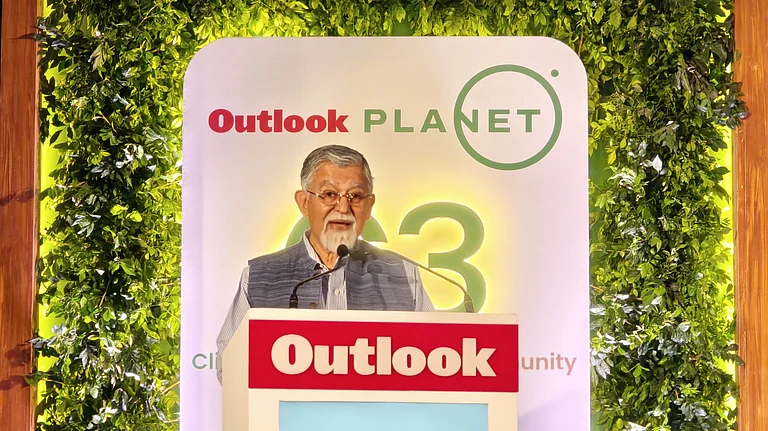
Experts broadly agreed that while the upcoming carbon market marks a significant step in India’s climate policy framework, its success will depend on robust pricing mechanisms, institutional coordination, and ensuring equitable access for smaller enterprises.
The discussion was part of the C3 — Climate + Circularity + Pact Summit and Awards platform focused on accelerating India’s green economy.