India’s climate finance taxonomy serves as a vital tool for sustainable investment labelling
Experts at Outlook Planet C3 warn that taxonomy alone cannot ensure project bankability
Bridging the financing gap requires innovative blended finance and structured capital sequencing
India’s climate finance taxonomy is a necessary first step but insufficient to address deeper structural challenges such as project bankability, experts said at an industry discussion in the capital. Climate taxonomy, in essence, is a system that classifies which parts of the economy can be labelled and marketed as sustainable investments, helping bring clarity for investors and policymakers.
“Taxonomy is a first step. It'll only help on labelling and assigning, it probably won't address the issue of bankability. Those are issues that mere taxonomy can not address,” said Manish Kumar Shrivastava, Associate Director – Climate Finance, The Energy and Resources Institute.

1 September 2026
Get the latest issue of Outlook Business

He further added that one has to think about more innovative ways of blending.



Echoing a similar view, Lavanya Jayaram, Regional Director, South Asia at AVPN, said, “I feel that taxonomy is a good starting point for sure. In terms of policy, the government has been making and expanding a lot of changes. Dialogues have accelerates, but the money needs to flow. Each one to see the role is what I would recommend.”
Elaborating on the issue of bankability, Shrivastava said it lies at the intersection of borrower expectations and lender requirements.
Advertisement
“So, the money is available, as long as certain terms are met and there is a regulatory context within which those terms are determined. The borrowers are of different scale and knowledge. So there is a hide cost involved. To bridge the gap, someone has to bring an element of certainty and patience. One is we need to look at the regulatory area. And the other kind of finance apart from the government. So those are the area where a degree of institutionality is needed,” he added.

Advertisement
Jayaram emphasised the importance of structuring capital effectively to unlock investments. “We need to think about whether, can we play a role to tap in more investment We need to sequence the capital, the right place, right time is what next becomes important to make the ecosystem right,” she said.
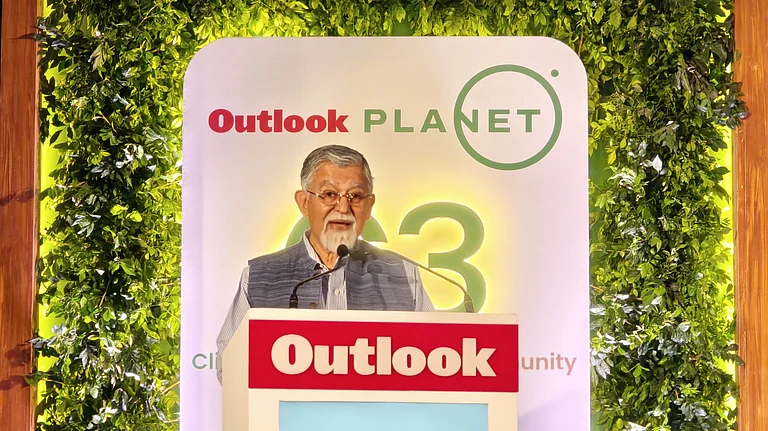
The session was hosted by R R Rashmi, Distinguished Fellow at TERI, during the second edition of Outlook Planet in New Delhi. The discussion was part of the C3 — Climate + Circularity + Pact Summit and Awards platform focused on accelerating India’s green economy.