
Combined climate pressures are weakening Amazon rainforest resilience faster than earlier scientific estimates.
Deforestation and warming together could degrade vast Amazon regions at lower temperatures.
Scientists warn Amazon may shift from carbon sink to major carbon source.
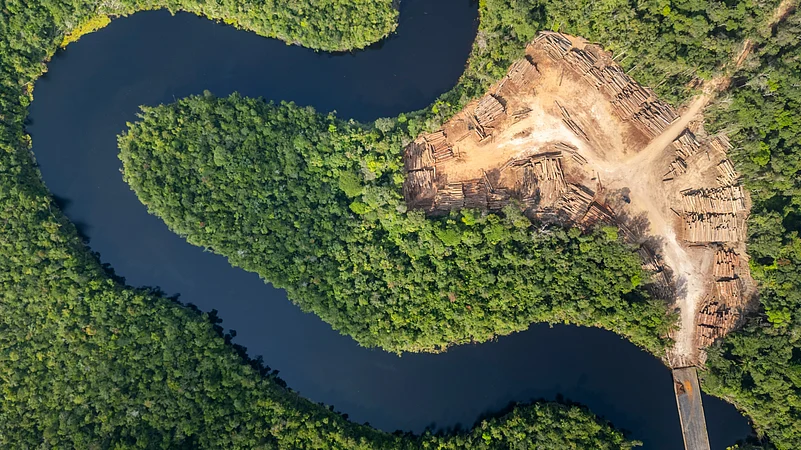
Two-thirds of the Amazon rainforest could be pushed to the brink of ecological collapse at lower levels of global warming than previously thought, a new study has found.
The research, published in the journal Nature on May 6, 2026, has warned that the Amazon could experience destabilising shifts not just from warming, but from multiple pressures occurring simultaneously – such as rising temperatures, deforestation, drought and forest degradation.

1 September 2026
Get the latest issue of Outlook Business

“These combined stresses are eroding the resilience of the rainforest and pushing it towards a tipping point where it could begin to drive its own decline,” the researchers from the Potsdam Institute for Climate Impact Research (PIK) said in their study.
The study found that with deforestation reaching between 22 and 28 percent, together with global warming of 1.5-1.9 degrees Celsius, nearly a third of the Amazon could turn into degraded forest areas. This is below earlier projections from Earth system models that have forecast thresholds from 2 to 6 degrees Celsius of warming.
The study found that Amazon forests, like other endangered biomes, are exhibiting signs of resilience decline with more droughts, biodiversity loss, degradation and deforestation. The biome is also losing its natural ability to sequester carbon and is turning into a carbon source.
Advertisement
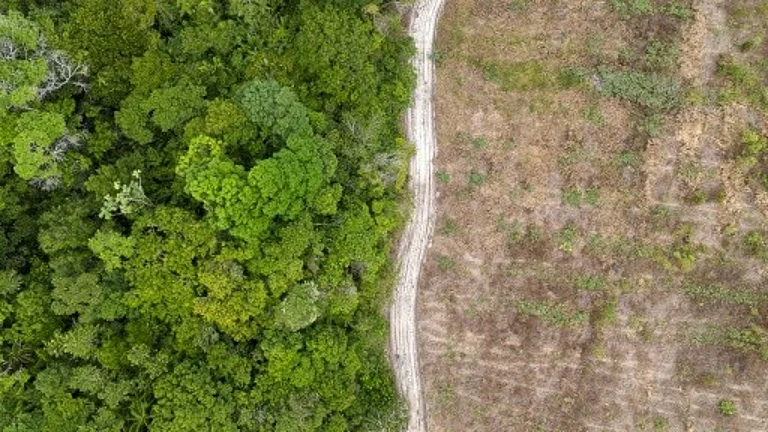
Deforestation Acts as Catalyst for Climate Stress
The study further revealed that Amazon is increasingly showing signs of ecological stress including more frequent droughts, biodiversity loss and declining recovery from extreme events.
The researchers found that damaging transitions could occur across as much as 77% of the Amazon forest even under moderate emissions pathways when deforestation is severe. An estimated 17%–18% of the Amazon has already been lost, pushing the forest closer to a danger zone identified by scientists.
The study warned that deforestation in the eastern parts of the basin could lead to “spatial knock-on effects” in which drying and forest loss in one area can trigger instability and drought in far-flung parts of the rainforest.
Advertisement
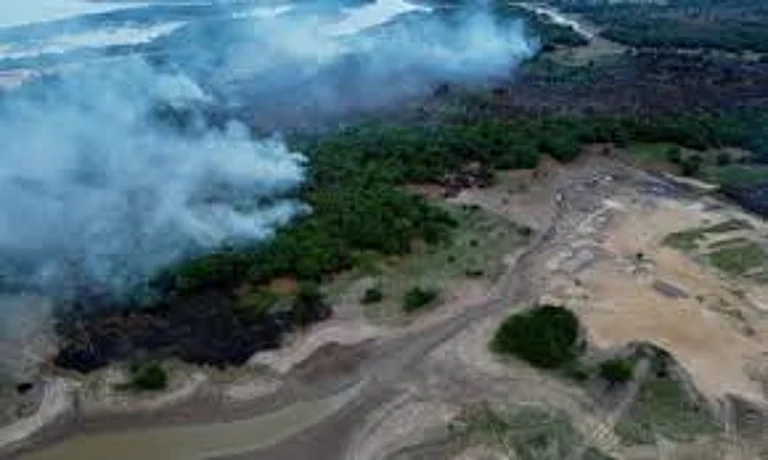
Forest Losing Climate Shield
According to a February 2024 report published in the journal Nature, the Amazon rainforest plays a crucial role in regulating global climate by absorbing vast amounts of carbon dioxide and generating rainfall across South America.
“Rising temperatures will increase thermal stress, potentially reducing forest productivity and carbon storage capacity—and causing widespread leaf damage,” stated the report.
Researchers from the Potsdam Institute for Climate Impact Research warned that continued forest loss and rising temperatures could weaken these natural systems and intensify climate instability.