
Govt considering temporary 10–15% price hike on select essential medicines to offset rising API and solvent costs amid Iran tensions
Consumers may see 3–5% increase in retail prices, roughly back to pre-GST cut levels
Raw material costs up 30–40% since March, with antibiotics like ceftriaxone and meropenem seeing sharp price spikes
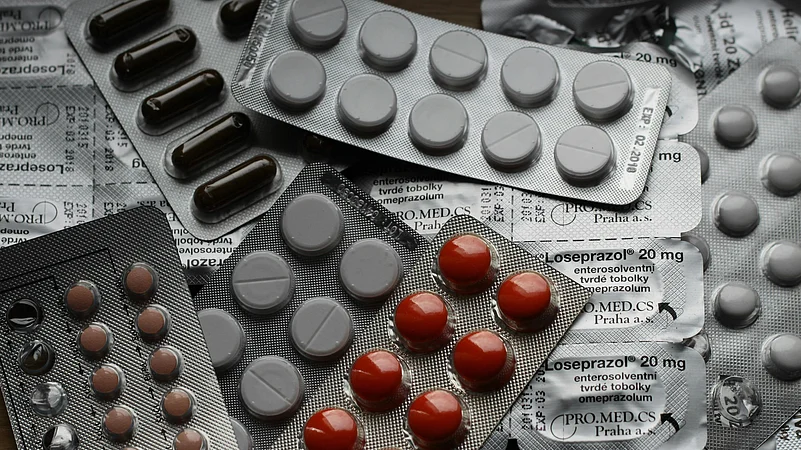
The Centre is considering a proposal to temporarily raise the prices of select essential medicines by 10–15%. The move is seen as an effort to ease cost pressures faced by drugmakers amid supply chain disruptions caused by the ongoing tensions in Iran, The Economic Times reported, citing sources.
The immediate impact on consumers could be a 3–5% increase in drug prices, roughly bringing them back to levels seen before the cuts in goods and services tax (GST) rates, the report said.

1 September 2026
Get the latest issue of Outlook Business

Senior government officials are currently analysing the merits of the proposal after several leading drugmakers flagged concerns over a sharp rise in the prices of solvents and active pharmaceutical ingredients (APIs), driven by constraints arising from global disruptions.
According to the report, the price increase is expected to be temporary, likely for 3–4 months, with the option of a rollback once input costs stabilise. Officials in the Department of Pharmaceuticals are said to be open to easing price controls temporarily to prevent disruptions in the availability of essential medicines.
“The government seems to be favourable to the industry's position given the extraordinary circumstances that may imperil supplies to Indian patients,” ET quoted a person close to the discussions as saying. “This should be seen only as an interim intervention, similar to the steps taken during the Covid outbreak.”
Advertisement
The report added that the proposed rate hike may depend on the duration of the conflict. The situation in West Asia currently shows no signs of a long-term ceasefire. However, despite the first round of negotiations failing, the US and Iran are scheduled to meet for a second round of peace talks this week before the ‘fragile’ truce expires on April 21.

How Much Have Costs Risen?
Analysts estimate that even if the Strait of Hormuz route stabilises soon, supply chain recovery could take several weeks or even months. Small and medium manufacturers — which account for nearly 60% of India’s 10,500 pharma units — are already under pressure, according to a report by The Indian Express.
Advertisement
The report noted that branded medicines have seen price increases of 15–20%, while overall costs have surged 30–40% since March.
Raw material prices have also climbed sharply. The price of the broad-spectrum antibiotic ceftriaxone has risen to ₹7,800 per kg from ₹6,000, while meropenem has surged to ₹48,000 per kg from ₹31,000.
Traders are also reportedly hoarding stocks, further tightening supply. Labour shortages — triggered by migrant workers leaving jobs amid uncertainty — are adding to the pressure on the industry.


Costs have surged across packaging inputs as well. Petroleum-based materials such as PET bottles, aluminium caps, foil, and PVC have seen steep increases of 80–100%. PVC, commonly used for blister packs due to its clarity and barrier properties, has risen from ₹130 per kg to ₹190 per kg.
Aluminium caps now cost 75 paise apiece, up from 45 paise. Aluminium foil prices have climbed from ₹400 per kg to ₹600 per kg, while premium Alu-Alu (aluminium–aluminium) packaging has increased from ₹360 per kg to ₹560 per kg.