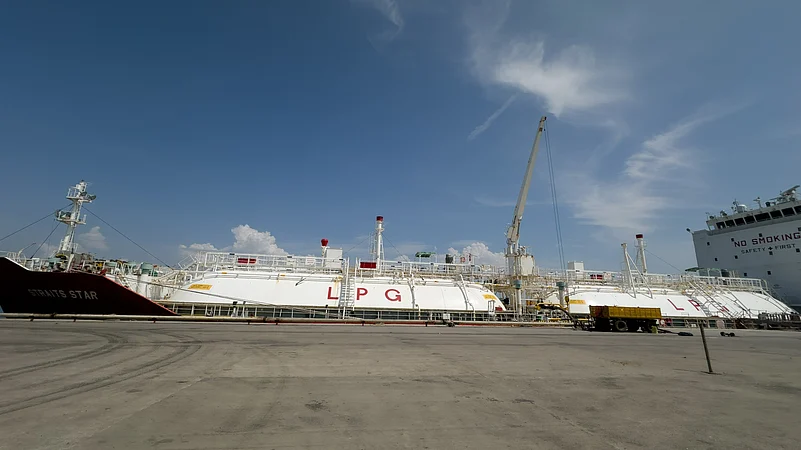

LPG supply disruption may persist for years amid Hormuz blockade uncertainties.
India’s high import dependence exposes it to supply shocks and price volatility.
Global energy trade shifts could reshape supply chains beyond immediate crisis period.
Restoration of disrupted global LPG supply chains could take three to four years because of the uncertainties surrounding its production, reported Moneycontrol.
India gets a lot of its LPG from West Asia, but the Strait of Hormuz is blocked and Iran is attacking energy infrastructure in the region in response to US-Israeli military actions. With a high import dependence of 60% India’s LPG supply remains highly vulnerable to such disruptions.

1 September 2026
Get the latest issue of Outlook Business

Before the war started, almost 90% of these supplies went through the Strait of Hormuz. As of March 24, the share of Gulf imports had dropped to 55%, showing both disruption and diversification.
Why It Takes Time
Citing an April report by Rubix Data Sciences and Vayana Trade Xchange, Moneycontrol reported that effective supply disruption could remain at 40-50% despite rerouting and alternative sourcing.
The official told Moneycontrol that the government is focusing on making sure that households always have what they need while also looking into other ways to get supplies to avoid shortages.
The report said that the change in sourcing raises short-term supply risks and exposure to price volatility because annual LPG demand is about 33 million tonnes and storage capacity only covers about 15 days of consumption as of mid-March.
Advertisement
Since the middle of March, the price of 14.2 kg LPG cylinders for home use has gone up by ₹60, and the price of commercial cylinders has gone up by ₹115.
Global Supply Realignment
According to the International Energy Agency (IEA), disruptions in key maritime chokepoints like the Strait of Hormuz often trigger long-term shifts in global energy trade flows, not just short-term supply shocks.
The IEA report further added that disruptions to Middle Eastern supplies due to attacks on the region’s oil infrastructure and the cessation of tanker traffic through the Strait of Hormuz sent Brent futures soaring, trading within a whisker of $120/bbl. Prices subsequently eased with Brent around $92/bbl at the time of writing – up $20/bbl for the month.
Advertisement
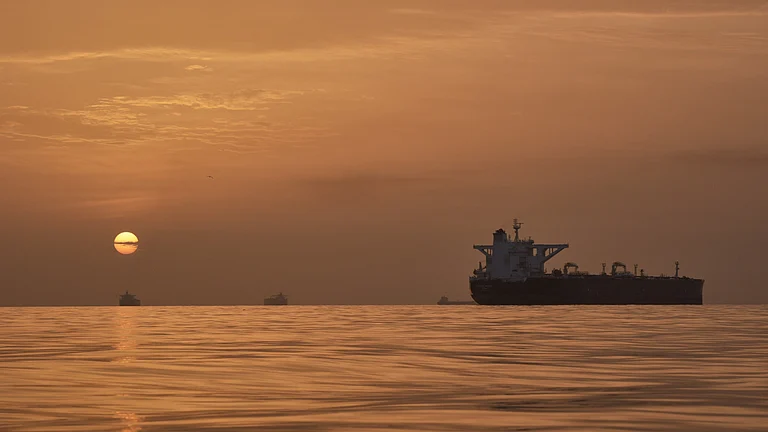
Beyond the direct damage to energy infrastructure in the region, the crisis has led to a near halt in tanker movements through the Strait of Hormuz. With nearly 20 mb/d of crude and product exports currently disrupted and limited alternative options to bypass the world’s most critical oil transit chokepoint, producers and consumers globally are feeling the strain. Benchmark crude oil prices have surged by $20/bbl to $92/bbl since the outbreak of hostilities on 28 February, with even bigger increases across product markets.
Countries typically respond by diversifying suppliers, increasing strategic storage and investing in alternative fuels.