






Extreme heat increasingly threatens livelihoods, productivity and worker incomes nationwide.
Parametric insurance offers rapid payouts triggered by predefined weather thresholds.
Awareness, affordability and trust remain barriers to wider adoption today.
A single day of extreme heat causes approximately 3,400 excess deaths nationally; a five-day heatwave causes nearly 30,000, according to a study published by India Energy and Climate Centre at the University of California Berkeley.
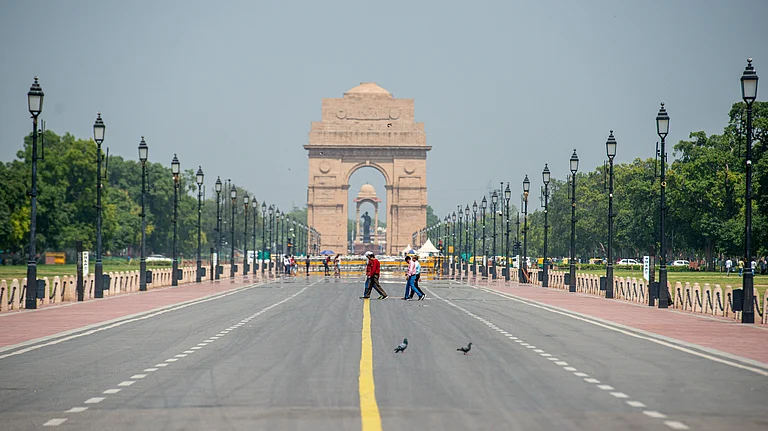
The research comes at a time when heatwave to severe heatwave conditions continue across northern, central and eastern India. Currently, the temperatures are soaring above 45 degrees Celsius in parts of Madhya Pradesh, Rajasthan, Uttar Pradesh and Haryana.

1 October 2026
Get the latest issue of Outlook Business

The researchers adapted findings from a multi-city study of heat-related deaths across 10 Indian cities and applied them to districts across the country. Excess deaths refer to the number of deaths occurring above what would normally be expected based on historical trends.
The scale and nature of the health impacts of heat depend on the timing, intensity and duration of a heat event, and the level of acclimatisation and adaptability of the local population, infrastructure and institutions to the prevailing climate.
“Extended periods of high day and nighttime temperature conditions create cumulative stress on the human body, increasing the risk of illness and death from heat exposure. Heatwaves can acutely impact large populations for short periods of time, often triggering public health emergencies and result in excess mortality and cascading socioeconomic impacts (for example, lost work capacity and labour productivity),” the World Health Organisation report stated.
Advertisement
The WHO report also stated that exposure to heat also causes loss of health service delivery capacity, when power shortages accompany heatwaves and disrupt health facilities, transport and water infrastructure.
Parametric Insurance and Its Impact
According to Swiss Re and the National Association of Insurance Commissioners (NAIC), parametric insurance is a non-traditional coverage mechanism that triggers automated payouts based on the intensity of an objective, measurable event—such as a specific earthquake magnitude or wind speed threshold—rather than assessing the actual physical damage incurred.
As heatwaves increasingly affect livelihoods and health, parametric insurance is emerging as a potential safeguard tool for outdoor workers against heat-linked income losses.
Advertisement
Though still at a nascent stage, the insurance was first rolled out in India in Nagaland, when the state was reeling under the devastating floods. Nagaland's initial parametric excess rainfall insurance pilot was launched in 2020 in collaboration with Tata AIG and reinsurer Swiss Re.
In June 2025, migrant workers in Noida reportedly received heatwave-linked payouts under plans by GoDigit and Jan Sahas. Fast forward to 2026, the parametric insurance is being offered in New Delhi by Jan Sahas in partnership with Go Digit General Insurance Limited, KM Dastur Insurance and Reinsurance Brokers and Good & Green (CSR initiative of Godrej Properties Limited).
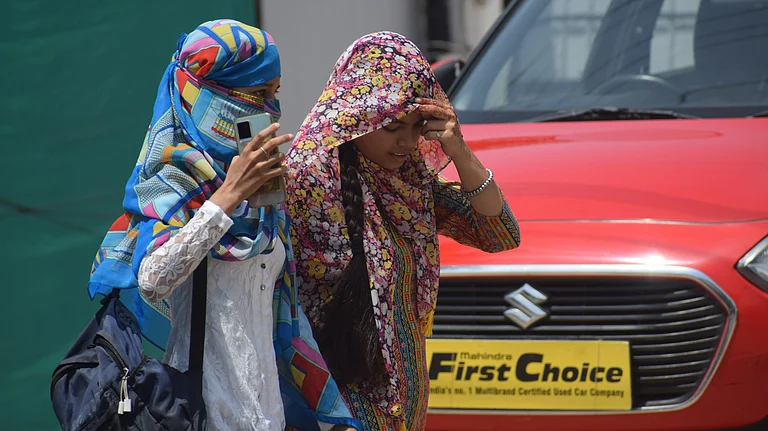
Speaking from experience, Shailesh Acharya, Director, Jan Sahas shared that extreme heat significantly reduces the earning capacity of informal workers by lowering productivity, shortening working hours and increasing heat-related illnesses. “The most vulnerable groups include construction workers, street vendors, gig workers, agricultural labourers, domestic workers, and other outdoor or manual workers who face prolonged heat exposure, limited workplace protections, and rising household expenses related to healthcare, water and cooling needs,” Acharya added.
Sudeshna Dasgupta, Head – Agriculture Business, Digit General Insurance, said that parametric insurance linked to heat and climate-related income losses is gaining traction, with more than 50,000 individuals covered across multiple states over the past year.
Dasgupta added that a high-frequency, low-payout structure helps deliver quick relief, build trust among vulnerable communities and support wider adoption while keeping premiums affordable.
Emerging Market for Protection
Commenting on the pace of adoption of parametric insurance in India, Policybazaar admitted that there is an increasing demand for parametric insurance and especially for the gig workers. “We are seeing almost every company who has a large gig workforce is exploring the benefits that can be passed on in addition to traditional insurance products,” stated Amitabh Dewan, Head of Large Risks, Policybazaar for Business.
The growing interest in heat-risk insurance comes as climate scientists warn of rising global temperatures. According to the UN’s World Meteorological Organization, at least one year between 2026 and 2030 is likely to surpass 2024 as the hottest year on record. With El Niño expected later this year, a new global temperature record could be set as early as 2027, further increasing exposure to heat-related risks.
Commenting on the viability of parametric insurance models for protecting informal workers and gig workers facing heat-related income losses, he stated that parametric programmes are viable and are among the best models available to counter climate risks. “The art is to decide the strike and exit parameters in the product, which actually make the product very easy to claim on and viable for the companies. Rather governments are also exploring to cover their state’s gig population,” he added.
He asserted that the parameters are defined well in advance and as soon as the parameter is breached, the claim is automatically triggered. “Since it’s a benefit policy, the claim process is very simple,” he elaborated.


Sharing the on-ground perspective, Sudeshna Dasgupta, Head – Agriculture Business, Digit General Insurance, agreed that designing parametric insurance is highly feasible for informal workers, underscoring that its scope is currently shaped by affordability.
“Because these policies are usually rolled out through partnerships with NGOs, cooperatives and local institutions with limited budgets, the sum insured is kept proportional to what they can afford,” Dasgupta mentioned.
He said that under this framework, payouts of ₹2,000 to ₹7,000 per individual are typically made, with premiums being determined by the group's size, the weather parameters chosen and the severity of the triggers.
Speaking about challenges currently preventing wider adoption of heat-linked insurance products in India, Dewan said, “Awareness and understanding of the product is one of the key factors for the slow uptake on this product.”
Echoing a similar sentiment, Dasgupta said that a high-frequency, low-payout model works best to build trust in a market like India where this concept is still new. She elaborated that this structure directly mirrors how climate stress is actually experienced, which is through frequent, smaller disruptions like lost workdays due to extreme heat, heavy rainfall, or poor air quality. Delivering repeatable, tangible relief through fast, high-probability payouts helps vulnerable communities quickly see the value of the policy, keeping premiums affordable while building vital confidence in the product.
Underscoring the challenges in scaling heat-linked parametric insurance, Dasgupta said that the biggest operational hurdle is mitigating basis risk—the gap between a weather trigger and the actual income loss suffered by workers—while driving adoption in a low-awareness, low-trust market. She said insurers can address this through a three-pronged strategy involving independent third-party weather data, research-backed productivity thresholds for heat-related work disruptions, and tiered payouts that rise with the duration and severity of heatwaves. According to her, overcoming these technical challenges can enable faster, automatic payouts and foster wider community adoption of such products.
Acharya said that the biggest challenges in scaling heat risk insurance are the limited availability of reliable long-term, granular weather data needed to design and price products accurately, as well as sustained worker engagement during enrollment. “Worker awareness and enrolment also require sustained engagement, but confidence in the product and data reliability remain the most critical barriers,” he added.
Dewan added that some corporates remain hesitant about such products because traditional insurance claims processes have historically been lengthy and cumbersome. “However, since this is not an indemnity related product, right guidance at the time of programme design is important,” he added.
Talking about insurers and insurtech platforms developing more climate-risk products, Dewan mentioned, “There is more than enough capacity available in the market. Over the past few years, there has been a lot of product development and many markets have tested the efficacy of these policies.”
From a market adoption perspective, Dasgupta said that demand for heat-linked parametric insurance is growing as increasingly frequent climate disruptions, particularly extreme heat, lead to immediate income losses for vulnerable workers. She added that the ability of such products to provide rapid, automated payouts based on objective weather data is driving their uptake.
Jan Sahas is currently in the third year of designing and implementing parametric insurance solutions for informal workers. “This year alone, we are facilitating four different parametric insurance products in partnership with two major insurers, one a public sector insurer and the other among the fastest growing private insurance providers in India,” stated Acharya.
This growing participation suggests increasing interest from the insurance industry in climate risk solutions for vulnerable workers. On a company level, Jan Sahas has not encountered significant policy or regulatory barriers. “As the products continue to evolve, demonstrate their value, and expand across geographies, we are optimistic that they will become increasingly viable and scalable within the broader social protection ecosystem,” Acharya mentioned.
Dewan concluded that the products are being adopted across sectors including transportation and logistics, animal breeding, shopping malls, hotels and offices, with businesses increasingly seeking coverage for non-damage business interruption losses.









