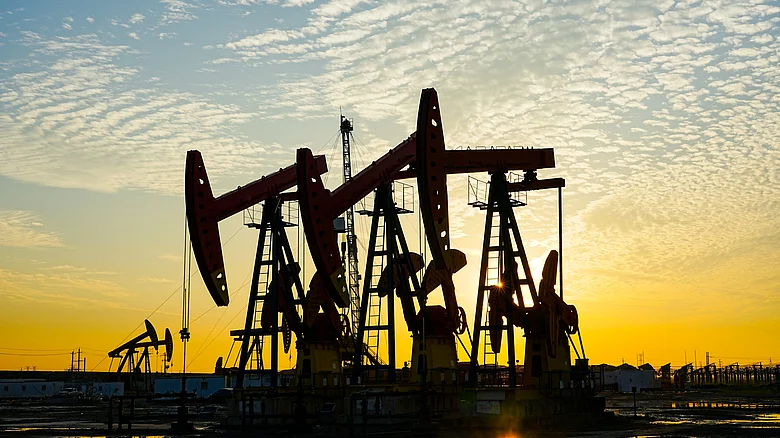

Oil prices moved higher after US President Donald Trump threatened strikes on Iranian infrastructure if Tehran fails to reopen the Strait of Hormuz.
OPEC+ announced a production increase of 206,000 barrels per day for May, capping gains despite persistent supply concerns.
Analysts warn crude could climb toward $150 per barrel if disruptions in the Strait of Hormuz continue, raising global recession risks.
Global crude prices traded higher on Monday following US President Donald Trump’s fresh threats against Iranian power and other infrastructure. On Sunday, speaking with Axios, Trump said that Washington will ‘blow up everything’ if Tehran fails to cooperate on conflict resolution and reopen the Strait of Hormuz.
Prior to the interview, Trump, in unusually harsh language, posted on his social media platform Truth Social that, “Tuesday will be Power Plant Day, and Bridge Day, all wrapped up in one, in Iran. There will be nothing like it!!! Open the F****n' Strait, you crazy bastards, or you'll be living in Hell — JUST WATCH! Praise be to Allah."

1 October 2026
Get the latest issue of Outlook Business

However, gains were capped after the Organisation of the Petroleum Exporting Countries (OPEC) and its allies decided to increase production in May. OPEC+ on Sunday decided to expand oil production quotas by 206,000 barrels per day for May. OPEC+ members met virtually on Sunday to review global market conditions and outlook.
Advertisement
"In their collective commitment to support oil market stability, the eight participating countries decided to implement a production adjustment of 206 thousand barrels per day from the 1.65 million barrels per day additional voluntary adjustments announced in April 2023,” OPEC said in a statement. “This adjustment will be implemented in May 2026. The 1.65 million barrels per day may be returned in part or in full, subject to evolving market conditions and in a gradual manner.”

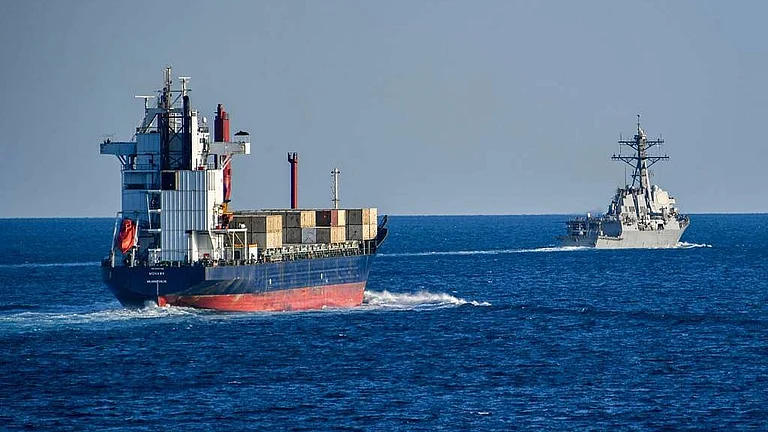
The near-complete closure of the Strait of Hormuz in response to the attack on Iran by the US and Israel has rattled global markets. Amid heightened uncertainty and escalating geopolitical tensions, benchmark crude hit as high as $119 per barrel soon after the conflict erupted nearly five weeks ago.
Advertisement
To prevent global crude prices from breaching the crucial level of $150 per barrel, the International Energy Agency (IEA) on March 11 announced the largest-ever release of oil reserves.
Even with an output hike, the increase represents less than 2% of the supply disrupted by the Hormuz closure, reports said. The Strait of Hormuz is a vital waterway that carries nearly 25% of global oil trade. Further, apart from production concerns in West Asian countries affected by the war, Russia, which is also a member of OPEC+, is unable to increase output owing to Moscow’s ongoing war and Western sanctions.
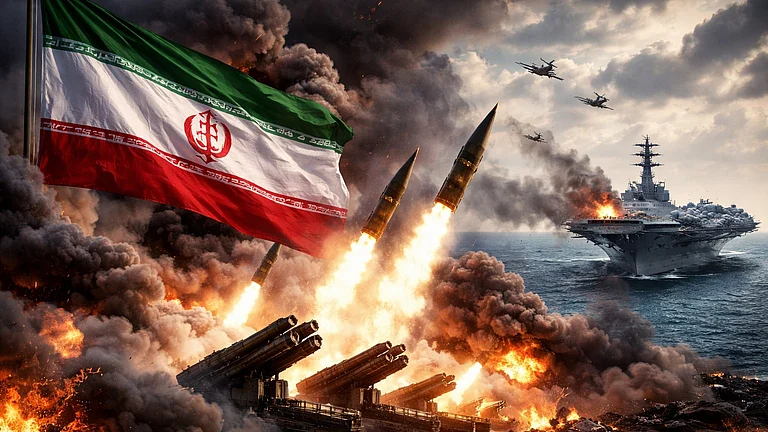

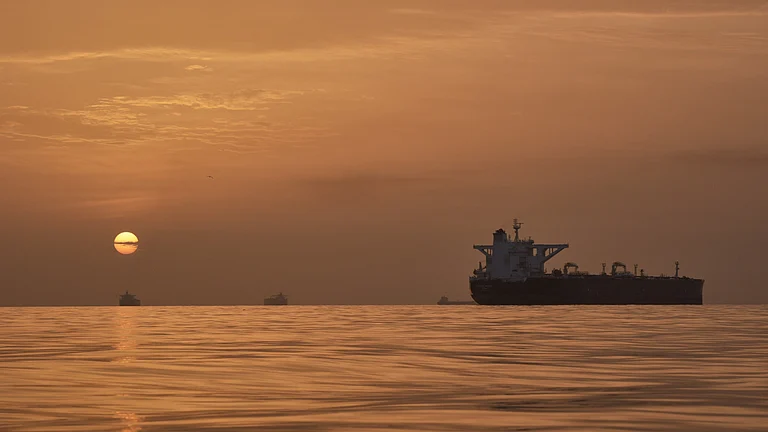
The OPEC+ Joint Ministerial Monitoring Committee, which met on Sunday, expressed concern about attacks on energy assets, citing the massive cost required to repair damaged infrastructure.
According to analysts, the likelihood of crude hitting $150 per barrel remains on the table if the war prolongs beyond April and flows via Hormuz remain disrupted into mid-May. Economists warn that crude breaching $150 per barrel risks triggering a global recession.