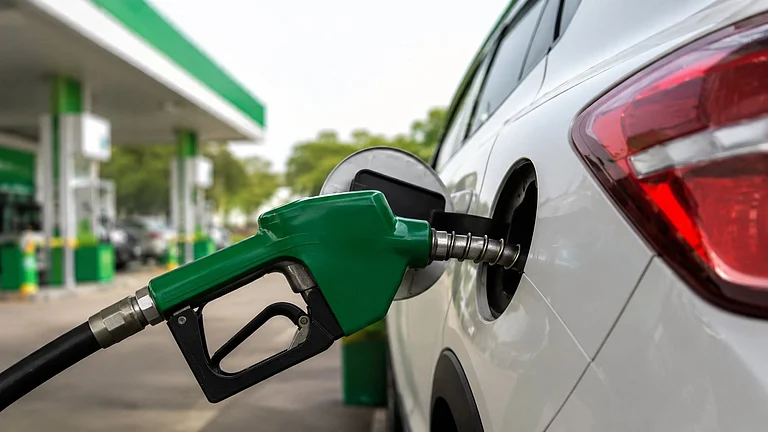
The Centre has extended excise-duty exemptions to petrol blended with 22%, 25%, 27%, and 30% ethanol to support wider adoption of biofuels.
The move follows BIS approval of fuel-quality standards for higher ethanol blends, creating a regulatory framework for future rollout.
India is accelerating its ethanol programme to reduce crude oil imports, improve energy security, and support cleaner fuel alternatives.
The Centre has reduced central excise duty on petrol blended with higher levels of ethanol, extending tax exemptions to fuels containing 22%, 25%, 27%, and 30% ethanol, according to a Reuters report.
The move is aimed at accelerating India's biofuel programme and reducing dependence on imported crude oil as the country pushes for a cleaner and more self-reliant energy mix.

1 October 2026
Get the latest issue of Outlook Business

A notification issued by the Ministry of Finance expanded the existing excise-duty benefits to higher ethanol blends, providing an additional policy boost for fuel retailers and ethanol producers.
The development follows a recent notification by the Bureau of Indian Standards (BIS), which formally introduced fuel-quality standards for E22, E25, E27, and E30 petrol blends under IS 19850:2026.
The standards, which came into effect on May 15, 2026, lay down specifications covering ethanol content, octane ratings, sulphur limits, testing procedures, and safety requirements. Together, the BIS standards and the excise-duty relief provide the technical and financial framework required for the wider adoption of higher ethanol-blended fuels.
Advertisement
India's Ethanol Push Gains Momentum
India's ethanol-blending programme has advanced significantly faster than initially envisaged.
Under the National Policy on Biofuels, first introduced in 2018 and revised in 2022, the government brought forward its target of achieving 20% ethanol blending in petrol from 2030 to Ethanol Supply Year (ESY) 2025-26.
The transition has gathered pace in recent years. Public sector oil marketing companies achieved the 10% blending milestone in June 2022 and have continued increasing the share of ethanol in transport fuels.
The latest excise-duty relief comes shortly after the launch of E85 fuel, one of the highest ethanol blends currently available in India. Introduced by Petroleum and Natural Gas Minister Hardeep Singh Puri on World Environment Day, E85 contains 85% ethanol and is designed for use in flex-fuel vehicles.
Advertisement
The rollout has begun through 48 public-sector fuel stations across the country, with the fuel being offered at a discounted price to encourage adoption.

The Push for Fuel Self-Reliance
India remains heavily dependent on imported crude oil to meet its energy requirements, making fuel imports one of the country's largest expenditure items.
The government views ethanol as a key component of its strategy to reduce import dependence, improve energy security, and lower emissions.
Higher ethanol blending can reduce the consumption of fossil fuels while creating a larger domestic market for agricultural feedstock used in ethanol production.


Union Minister Nitin Gadkari has previously argued that expanding ethanol usage could help reduce pollution, lower fuel import bills, and generate additional income opportunities for farmers, rural communities, and the broader agriculture sector.
However, challenges remain. While consumers often expect ethanol-blended fuels to be cheaper than conventional petrol, government data suggests that the average procurement cost of ethanol has, at times, exceeded the cost of refined fuel, raising questions about long-term pricing and commercial viability.