

Erratic monsoon rainfall during El Niño can reduce vegetable output, triggering sharp price spikes.
Higher food prices could add 20–25 basis points to headline CPI inflation.
Small farmers often buy essential food items, so rising prices can increase household costs despite higher crop prices.
The story of India's monsoon does not begin over Kerala's coastline. It begins nearly 10,000 kilometres away in the tropical Pacific Ocean, where a pool of unusually warm water can reshape weather patterns across India.
The connection may seem distant, but its consequences are deeply local. A paddy farmer in Punjab deciding when to transplant seedlings, a cotton grower in Maharashtra waiting for adequate soil moisture, or a pulse farmer in Karnataka weighing whether to sow at all are all, in some way, exposed to changes unfolding in the Pacific.
Those changes are already becoming visible. India's southwest monsoon, after an unusually rapid advance, has stalled, leaving large parts of the country grappling with significant rainfall deficits.

1 October 2026
Get the latest issue of Outlook Business

India recorded its fifth-driest June since 1901, with rainfall nearly 40% below the long-period average. The stalled monsoon, driven by an intensifying El Niño, has severely delayed summer crop sowing and threatens agricultural output, raising concerns over farm incomes, food inflation, and the broader rural economy.

The El Niño Threat Returns
El Niño is a climate phenomenon characterised by above-normal sea surface temperatures in the central and eastern equatorial Pacific Ocean. During strong events, temperatures in the central Pacific can rise by more than 2°C above normal.
Advertisement
Although El Niño typically peaks during the Northern Hemisphere winter, it begins developing several months earlier and begins influencing global weather patterns as it strengthens.
As the Pacific Ocean warms, cloud formation and rainfall shift eastwards from the western Pacific and Maritime Continent towards the central and eastern Pacific. This disrupts large-scale atmospheric circulation, particularly the Walker Circulation, which plays a crucial role in regulating tropical weather.
“The weakening of the Walker Circulation and the trade winds leads to anomalous sinking air and higher-than-normal atmospheric pressure over South Asia, including India. These conditions suppress cloud formation and convection, weaken the southwest monsoon circulation, and reduce rainfall,” says Krishnan Raghavan, Director, Indian Institute of Tropical Meteorology (IITM).
Advertisement
Current projections suggest that the developing 2026 El Niño could become a strong event. The 1997 "super El Niño" – widely regarded as one of the strongest on record – and the very strong 2015 event both recorded warming of this magnitude. Forecast models now indicate that the 2026 event could approach similar intensity, although it remains too early to determine whether it will ultimately qualify as a super El Niño.
However, the strength of El Niño alone does not determine India's monsoon outcome. The 1997 event offers a striking example. Despite the exceptionally strong El Niño, India received near-normal monsoon rainfall because a positive Indian Ocean Dipole (IOD) developed alongside it. The positive IOD warmed the western Indian Ocean relative to the east, strengthening moisture transport towards the Indian subcontinent and offsetting much of El Niño's suppressive effect on the monsoon.
“The Indian Ocean Dipole typically develops during August and September, and if a positive IOD forms, it could partially mitigate the impact of El Niño. At present, however, conditions do not appear particularly favourable, leaving considerable uncertainty over how the 2026 monsoon season will ultimately unfold,” says Raghavan.
How Agriculture Would Be Affected
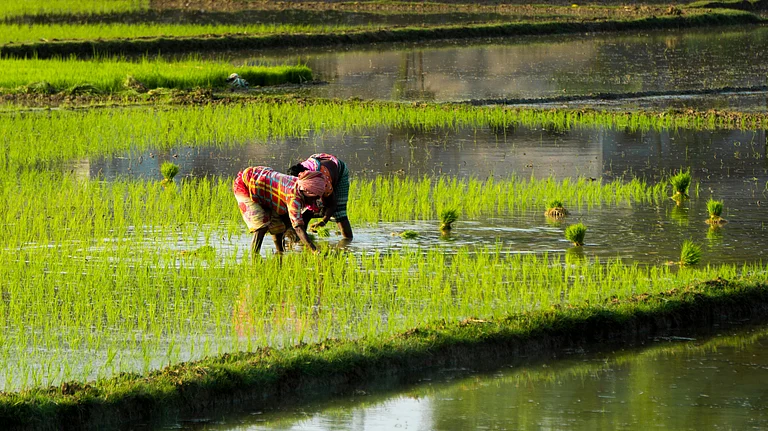
A severe monsoon deficit would affect agriculture through multiple channels, as reduced rainfall lowers soil moisture, directly constraining crop growth, particularly for kharif crops that depend heavily on monsoon precipitation.
Drier soils reduce evaporation, meaning less solar energy is used for latent heat and more is converted into sensible heat. As a result, land surface temperatures rise, exposing crops to the dual stress of moisture scarcity and heat, both of which can significantly reduce agricultural productivity.
“For cereals, the situation is relatively less worrying in the short term. Although production may decline, Food Corporation of India (FCI) stocks remain comfortable and can be released into the market,” says Indranil Pan, Chief Economist at Yes Bank.
“However, the greater concern is pulses and oilseeds, which are more vulnerable to rainfall shocks. Global edible oil supplies are already under pressure as El Niño is disrupting production in other major producing regions. Consequently, edible oil prices could witness a much sharper increase if domestic output is affected.”
One important structural improvement over the past two decades in Indian agriculture has been the expansion of irrigation. A larger share of agricultural production is now supported by irrigation rather than relying entirely on rainfall.
“However, the concern this year is that the monsoon has started with an exceptionally large rainfall deficit. Even if irrigation infrastructure exists, the critical question is whether reservoirs will have adequate water to sustain irrigation demand,” says Pan.
“If reservoirs fail to replenish adequately, the economy could face a much more serious agricultural shock.”
Furthermore, a more serious risk emerges if the rainfall deficit persists throughout the monsoon season. This would not only reduce kharif production but also affect the following rabi crop by limiting irrigation water availability. In such a scenario, the inflationary impact would be delayed rather than immediate, extending well beyond the current cropping season.

Beyond Agriculture: Economy-Wide Effects
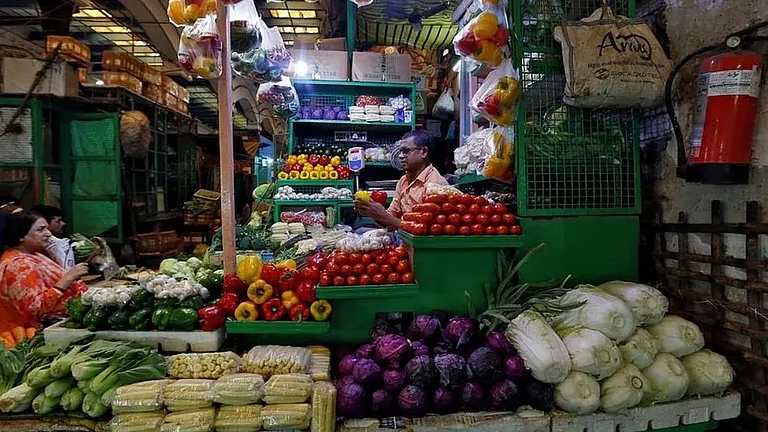
A failed monsoon is more than a weather event in India, it is an economic shock that ripples far beyond the farm. A report by Kotak Mutual Fund on the Monsoon 2026 Outlook notes that during an El Niño, below-normal and erratic monsoon rainfall can significantly reduce vegetable production, as these crops are highly sensitive to weather conditions. Since vegetables are perishable and cannot be stored for long, even modest disruptions in supply can trigger sharp spikes in prices, fuelling food inflation and placing additional pressure on household budgets.
The impact is magnified because food accounts for nearly 37% of India's Consumer Price Index (CPI). As a result, higher vegetable prices quickly feed into overall inflation. Based on past El Niño episodes, a similar pattern in 2026 could add around 20–25 basis points to headline inflation, even if prices of cereals and pulses remain relatively stable due to adequate buffer stocks and government intervention.
Higher food prices are often assumed to benefit farmers, but India's agricultural structure makes the reality more complex. Most farmers cultivate small landholdings and produce only a limited marketable surplus. At the same time, they remain consumers of food, purchasing essentials such as pulses, edible oils and vegetables from the market. Consequently, rising food prices often increase their household expenses more than they boost farm incomes.
“As food prices rise, their cost of living increases, often outweighing the benefits they receive from selling their produce,” says Pan.
The consequences extend beyond farm incomes. Higher food inflation erodes overall rural purchasing power, leaving households with less money to spend on discretionary goods and services.
The RBI's consumer confidence surveys have already shown some softening in rural sentiment, and persistently elevated food prices would likely weaken confidence further, dampening rural consumption and slowing demand across the broader economy.
The implications are particularly significant because, although agriculture now contributes a much smaller share to India's GDP than it did two decades ago, it remains the backbone of rural employment. Large sections of rural and semi-rural India still depend on farming for their livelihoods, as manufacturing has not expanded sufficiently to absorb surplus labour.
Looking ahead, the growing adoption of artificial intelligence and automation could further constrain labour-intensive job creation, making agriculture an even more critical source of employment. A severe monsoon failure, therefore, would not only disrupt crop production but also threaten rural incomes, consumption and employment, amplifying its impact across the wider economy.

The Real Test of Resilience
India enters the 2026 monsoon season far better prepared than it was during previous major El Niño events. Irrigation coverage has expanded, weather forecasting has improved, climate-resilient farming practices have gained ground and the government holds larger foodgrain buffer stocks. These measures have undoubtedly strengthened the country's ability to absorb weather shocks.
Yet a prolonged 65% rainfall deficit would test the limits of those gains. Much will depend not only on how the El Niño evolves, but also on whether reservoirs are replenished, a positive Indian Ocean Dipole develops and rainfall revives during the remaining weeks of the monsoon.



If these factors fail to materialise, the consequences could extend well beyond lower crop yields, spilling over into inflation, rural consumption, employment and overall economic growth.
The story of India's monsoon may begin thousands of kilometres away in the Pacific Ocean, but its ultimate impact is measured much closer to home, in the fields farmers cultivate, the prices households pay and the resilience of an economy that still depends, in many ways, on the rains.