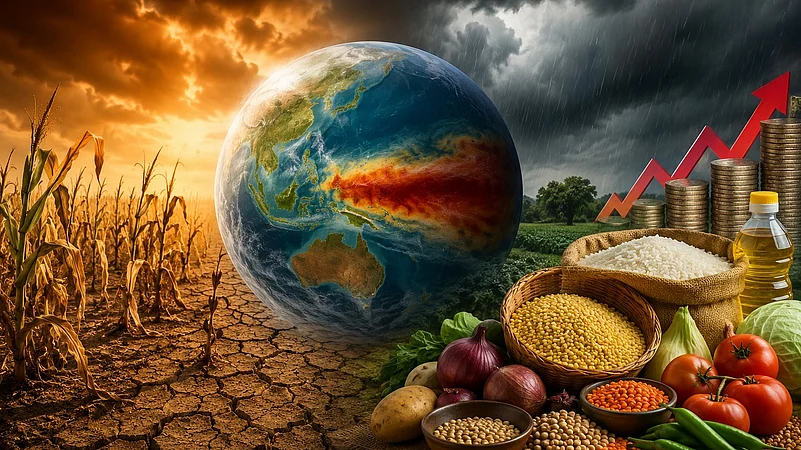

A stronger El Nino could hurt crop yields, push up grocery prices, reduce hydropower generation and increase the risk of fires and smog across Asia.
Strong foodgrain reserves, crop diversification, strategic imports and coordination with farmers could limit the immediate impact on India's economy.
The RBI has warned that erratic monsoon rainfall could weigh on agriculture and rural consumption, keeping food inflation risks on the radar.
The World Meteorological Organisation stated in July 2026 that robust El Nino patterns are forming and should grow stronger from August through October. S&P Global Ratings stated that this weather system could strain agricultural sectors and inflate grocery costs in nations heavily dependent on monsoon rains, including India, Vietnam, Indonesia and the Philippines.
The credit rating agency stated that while Asian economies face escalating climate-related vulnerabilities, substantial domestic grain reserves could mitigate the immediate economic fallout.

1 September 2026
Get the latest issue of Outlook Business

This climatic event features abnormally heated surface waters across the central and eastern regions of the tropical Pacific. It disrupts atmospheric circulation and routinely reduces rainfall across South and Southeast Asia.
Four Channels of Impact
The economic shock will spread through four primary channels. S&P Global Ratings identified lower agricultural yields, surging grocery costs, diminished hydroelectric output and landscape fires or smog as the main transmission routes.
"We expect countries with more reliance on agriculture for economic output and greater food reliance for consumers will be more exposed to the worst effects of this El Nino episode," S&P Global Ratings stated.
Advertisement
Diminished precipitation threatens immediate water availability for industries and urban centres. Depleted reservoir levels will simultaneously disrupt hydropower generation capabilities.
Buffers Shield India's Economy
Proactive measures and substantial stockpiles position India to absorb the shock.
"In India, strong food and grain buffers for affected crops as of July 2026 are key to managing food shock. In addition, authorities are enforcing district-level coordination with farmers to minimise crop losses," S&P Global Ratings stated.
The Reserve Bank of India stated in August 2026 that inadequate and erratic southwest monsoon rains could burden the farming sector and dampen rural consumption. The central bank projected retail inflation at 5 percent for FY27.
Advertisement

"Going forward, El Nino's impact on temporal and spatial rainfall distribution continues to remain a risk, although proactive supply management and adequate stocks of foodgrains could provide buffers," the central bank stated.
Authorities are mitigating risks by promoting a shift to less water-intensive crops and executing strategic import planning. Ultimately, both the RBI and S&P view the phenomenon as a manageable challenge rather than an immediate danger to India's wider macroeconomic stability.