Prime Minister Narendra Modi and Japanese PM Sanae Takaichi are expected to endorse a rupee–yen trade mechanism
It would let Japanese entities hold accounts in Indian banks and settle cross-border deals directly in local currencies
The initiative seeks to lower transaction costs, reduce dollar dependence, and support growing Japan's investment in India
India and Japan are preparing to deepen their financial partnership by exploring a local-currency settlement framework that could allow direct transactions between the Indian rupee and the Japanese yen, reducing reliance on the US dollar for bilateral trade.
The proposal is expected to feature in the joint statement following Prime Minister Narendra Modi's meeting with Japanese Prime Minister Sanae Takaichi during the 16th India-Japan Annual Summit in New Delhi from July 1-3, according to a report by Nikkei Asia.

1 September 2026
Get the latest issue of Outlook Business

If included, it would mark the first time currency cooperation has been formally incorporated into a leaders' joint declaration between the two countries.

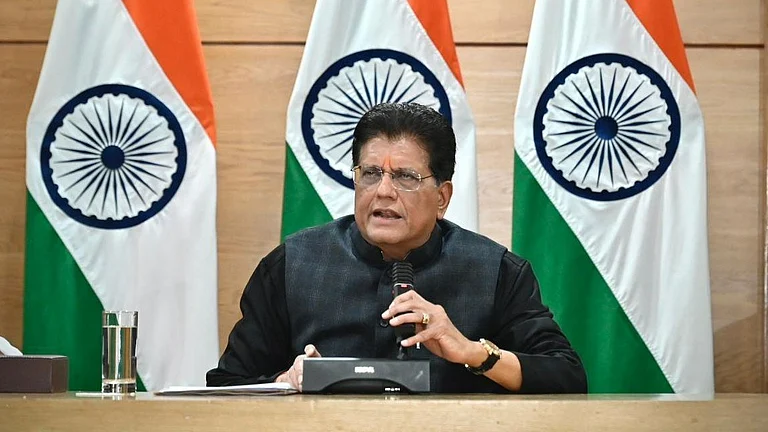


The initiative forms part of broader efforts to strengthen trade, investment and strategic cooperation between the two Asian economies.
What Is The Proposed Rupee-Yen Settlement?
Under the proposed mechanism, Japanese non-resident entities would be allowed to open accounts with Indian banks, enabling financial institutions in both countries to settle cross-border transactions directly in rupees and yen without routing payments through the US dollar, as per Nikkei.

Advertisement
The framework is expected to lower foreign exchange conversion costs, reduce remittance expenses and speed up settlement by eliminating dependence on correspondent banks in third countries.
Japan's Ministry of Finance aims to sign a memorandum of cooperation with the Reserve Bank of India (RBI) to promote greater use of local currencies in bilateral transactions, as per the report.
Why The Proposal Matters
The move reflects the growing scale of India-Japan economic ties.
Bilateral trade stood at $27.5 billion in FY26, while Japanese investment in India reached $3.2 billion between April and December 2025, as per Reuters.
Japan is India's fifth-largest source of FDI, accounting for nearly 6% of cumulative inflows, with investments of around $48 billion between January 2000 and March 2026, according to data compiled by Rubix Data Sciences.
Advertisement
About 1,434 Japanese companies are registered in India with nearly 5,200 business establishments. Almost half of the companies are in the manufacturing industry, as per Rubix.
India has remained the most preferred overseas investment destination for Japanese businesses for four consecutive years, with 61.8% of respondents in the Japan Bank for International Cooperation's (JBIC) 2025 survey identifying India as the most promising market. Separately, a JETRO survey cited by Rubix found that 81.5% of Japanese firms plan to expand their Indian operations over the next one to two years.
Reducing currency conversion costs could therefore make trade and investments more efficient, particularly for sectors such as automobiles, semiconductors, electronics, pharmaceuticals and advanced manufacturing.
Japan's Experience With Indonesia
India would not be Japan's first local-currency settlement partner. Japan introduced a similar framework with Indonesia in 2019.
Bilateral transactions under that arrangement reached the equivalent of $7.7 billion in 2025, as per Nikkei.
Tokyo is also studying a comparable mechanism with Malaysia.
The Indonesian experience is likely to serve as a reference point as India and Japan develop their own framework.

India's Push For Rupee-Based International Trade
India has steadily expanded the use of the rupee in international trade over the past few years.
The RBI introduced the Special Rupee Vostro Account (SRVA) framework in July 2022 to facilitate invoicing, payment and settlement of international trade in Indian rupees. The central bank described the arrangement as an additional mechanism aimed at reducing dependence on hard currencies while allowing exchange rates to remain market determined.
The framework gained prominence following Western sanctions on Russia, when India increasingly settled a portion of bilateral trade in rupees. While the system has helped maintain trade continuity, officials have also acknowledged challenges arising from large rupee balances accumulated by partner countries.
By August 2025, the RBI had approved 156 Special Rupee Vostro Accounts across 26 Indian banks for 123 correspondent banks from 30 countries as per Reuters. Foreign institutions maintaining these accounts were later reportedly permitted to invest surplus balances in Indian government securities.
The proposed yen-rupee mechanism would build on these broader efforts to internationalise the Indian currency.
Why The Japanese Yen Has Fallen To Historic Lows
The timing of the proposal is significant, coming as the Japanese yen continues to face sustained weakness.
The yen recently slipped into the 162-per-dollar range, its weakest level in four decades after earlier touching historic lows near 160 per dollar, despite repeated currency interventions by Japanese authorities, as per Nikkei.
Analysts attributed the decline primarily to the wide interest-rate gap between the United States and Japan. While the US policy rate remains at 3.5%-3.75%, Japan's policy rate stands at 1%, even after the Bank of Japan's (BOJ) latest rate increase. Markets remain unconvinced the BOJ will tighten monetary policy aggressively enough to narrow this gap.
Tokyo spent 11.7 trillion yen, equivalent to around $72 billion, on currency intervention between April and May, yet the yen continued to weaken, as per Nikkei.
Japan's government has maintained that economic growth remains a priority, while markets continue to debate whether the currency could weaken further if interest-rate differentials persist.

Has The Indian Rupee Seen A Similar Fall?
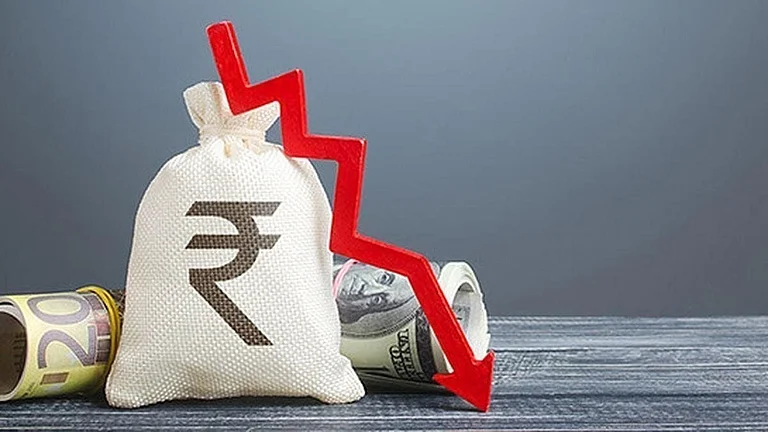
The Indian rupee has depreciated gradually against the US dollar over the years, but it has not experienced the kind of sharp, prolonged decline recently witnessed by the Japanese yen.
Unlike Japan, India follows a managed exchange-rate regime in which the RBI periodically intervenes to reduce excessive volatility rather than defend a fixed exchange rate.
Such interventions aim to maintain orderly market conditions, support financial stability and prevent sharp currency movements that could affect inflation, imports, exports and investor confidence.
India's relatively higher interest rates, stronger economic growth and active foreign exchange management have generally prevented abrupt currency swings, although global oil prices, capital flows and geopolitical developments continue to influence the rupee's movement.
How Japan's Economy Differs From India's
Although both countries are major Asian economies, their economic structures differ significantly.
Japan is a mature, export-driven economy with ageing demographics and decades of low inflation. India, by contrast, continues to record relatively faster economic growth, benefits from a younger workforce and remains driven by domestic consumption alongside expanding manufacturing.
Japanese investment in India is increasingly concentrated in sectors such as automobiles, semiconductors, clean energy, artificial intelligence (AI) and advanced manufacturing, supported by the two countries' 10-year investment roadmap announced in 2025.
Although it is unlikely to transform global trade overnight, proposed rupee-yen settlement, if implemented, could help reduce dependence on the US dollar for a portion of bilateral trade, lower transaction costs and strengthen financial cooperation between India and Japan.