Transport operators in West Bengal on Friday said the fuel price hike would increase the overall freight cost by around 3 per cent, and urged the government to ensure that traders cannot increase product prices disproportionately.
Kolkata witnessed the steepest fuel price hike among the four metros, with petrol price rising by Rs 3.29 to Rs 108.74 per litre and diesel going up by Rs 3.11 to Rs 95.13 per litre.
In Delhi, petrol prices increased by Rs 3 to Rs 97.77 per litre and diesel to Rs 90.67.

1 September 2026
Get the latest issue of Outlook Business

Petrol in Mumbai now costs Rs 106.68 a litre and diesel comes for Rs 93.14 per litre, while in Chennai, prices increased to Rs 103.67 for petrol and Rs 95.25 for diesel.
Rates vary across states due to differences in value-added tax.
All India Transporters' Welfare Association joint secretary Sunil Agarwal told PTI that the hike was “quite expected” in view of the prevailing geopolitical situation, and estimated, "The rise will have around 3 per cent impact on freight costs".
"In the overall transport cost, the impact will be fractional. However, the government should ensure that traders do not increase prices of products disproportionately in view of the fuel price hike,” he said.
Agarwal, however, said the state governments could reduce local levies to cushion the impact as the truckers were already under stress.
Advertisement
West Bengal Online App Cab Guild general secretary Indranil Banerjee said the overall additional cost burden on operators would be around Rs 50-60 per day.

He urged the government to explore the possibility of reducing state levies to neutralise the impact of the fuel price hike.
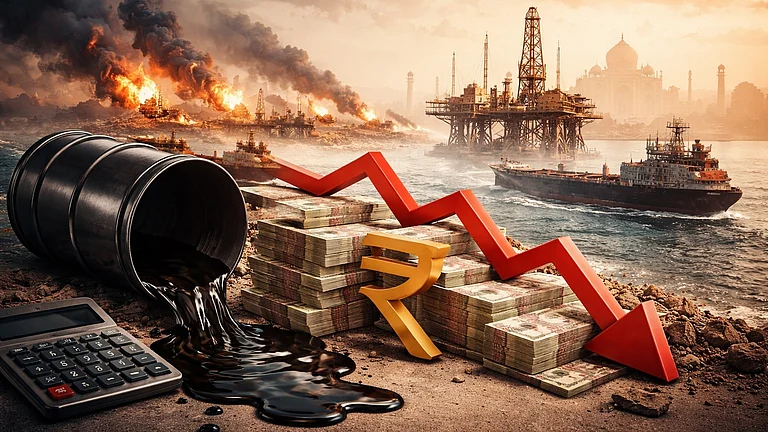
The increase is a 10th of the desired hike needed to account for the surge in global energy rates since the start of the West Asia conflict.
State-owned oil firms had kept fuel price unchanged for 11 weeks despite a surge in input cost, but passed on part of the increase once operations became financially unsustainable, the sources said.