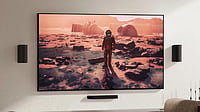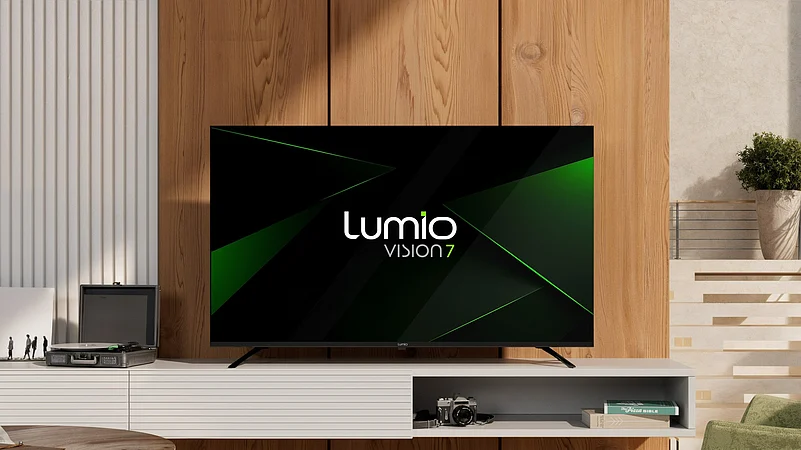

Lumio Vision 9 offers strong QD Mini LED picture quality and smooth 144Hz gaming performance.
Fast hardware delivers a responsive, lag-free Google TV experience.
Audio quality and HDR tuning need some improvement.
It’s hard to get excited about a brand-new television. They seldom change their form factor, and for the average consumer, the quality is as good as the eye can perceive. Yes, videos at different video quality can be instantly distinguished, but if two TVs are playing the same video, it’s hard for the average consumer to tell one from the other. That’s where Lumio, a brand run by those passionate about improving the home entertainment experience, comes in.
It’s just the second year of the company bringing TVs to consumers, and they’ve come out swinging. In 2026, the company launched the Lumio Vision 7 and Lumio Vision 9 TVs. They are affordable TVs, away from the glitz and glam of the flagships (read: LG, Sony (who have sadly sold their TV business to TCL), & Samsung).
1 September 2026
Get the latest issue of Outlook Business

Lumio positioned itself as the true “flagship killer”, just like OnePlus in the smartphone space. Last year, I reviewed the Lumio 7, but this year I got the Lumio 9 55-inch TV for review, and I was impressed from the get-go.



The Lumio 9 for 2026 comes in two sizes, 55-inch and 65-inch, and is a visually immersive experience with sharp and detailed 4K visuals.
Advertisement
The Miniature Remote
I know I’m starting by talking about the remote, but it's quite simply love at first sight. Lumio hasn’t changed the design from last year, and that’s the best thing about it. It’s the “Minion 2” remote, as the company calls it, and it fits perfectly in one's hand. It's ergonomically great, and includes a TLDR’ button at the bottom. Some buttons, including the ‘source’ button, have been relocated, but it only takes a day to get used to it. The only thing missing is the JioHotstar button, but that’s alright. It comes in a single grey button.
Advertisement
Design: Simplistic
Last year, people complained that there wasn't a larger screen size available. So, this year, the 65-inch variant was introduced. Two metal feet come in the box and are easily attachable. Alternatively, you can wall-mount the TV. All the ports that you’d need to use are located on the left side, while the power port is on the right side. It’s neat and clean. The build is very similar to last year, and honestly, it looks a lot like other TVs in the market. There’s very little to complain about.

Picture quality: Visually fantastic with a caveat
For 2026, Lumio has upped its display to make all types of consumers happy. Gamers now get a 4K display at 144Hz. The TV can even support a whopping 1080p at 240Hz. It is backed by
Variable Refresh Rate (VRR) and Auto Low Latency Mode (ALLM). For everyone else, the Vision 9 is now an EVA (Enhanced Vertical Alignment) panel. For binge-watchers, the 65-inch size is now available. It’s got QD Mini LED backlighting and a native contrast of 7000:1. There’s more controlled local dimming and a wider colour gamut vis-à-vis last year’s IPS screen.
The panel gets decently bright and retains quite a bit of detail, even in some incredibly complex scenes from recent movies. The Vision 9, for me, produced a better SDR image than an HDR image out of the box. Yes, calibration is one thing needed. Tweak the settings, and you’ll get much more out of this TV. In fact, switch to the ‘Movie’ preset while binge-watching, and you’ll get a more colour-accurate experience. From Mission: Impossible – The Final Reckoning to Get Out, the TV produced punchy colours and accurate skin tones, offering a more cinematic experience in SDR. Sometimes, the skin tones can be a little brighter and pink, but that’s acceptable at this price point.
While Lumio has packed a lot of technology into the panel, and it should be one of the best out there, it suffers from poor viewing angles. If you’re organising a movie night and gather a fair number of people, those sitting on the edges will definitely not have the same experience as those watching from the centre.
One last tip: Don’t set the brightness above 70 per cent. Anything above that and the blacks won’t be looking like blacks anymore.
The Sound is Loud
The Vision 9 features 50W of sound output, 2 full-range drivers, 2 subwoofers, and 2 tweeters, with a new Hexa Driver DGS 2.2 setup. The TV supports Dolby Atmos. Bass is delivered down to 38Hz, which represents a 2x improvement over the previous generation.
Dialogues are very clear, and the sound can get very loud without much distortion. Just put on Oppenheimer, and get to the ‘bomb drop’ and you’ll get a decent amount of thump.
The sound output, of course, won’t replace a dedicated soundbar, but at this price, it definitely doesn’t sound like other budget TVs.
The Need For Speed
Lumio claims it is the fastest TV on the market for its UI. The Vision 9 runs on Google TV (based on Android 14) and has the MediaTek Pentonic 700 chipset under the hood. It is paired with 3GB of RAM and 64GB of flash storage.
In day-to-day usage, the UI was snappy, apps opened in a breeze, and the TV never froze. The TV booted up from cold in just under half a minute. Quite impressive. It’s a clean Google TV interface with zero bloatware and no app launcher.
What was most remarkable, though, was the updated TLDR app. It has tabs for Movies, Shows, Sports, and Music, and one for search and settings. The TLDR app is basically the company’s in-house content discovery app. It can also display live scores for ongoing sports events and matches. There’s also the yet-to-be-launched, clearly experimental feature called Project Neo, which I saw in a demo a month or two ago.
Project Neo leverages messaging apps such as WhatsApp or Telegram to be the interface between the phone and the TV. Basically, there is a TLDR bot on these messaging apps, and you can send a link, a reel, or a text as vague as “movies where the main action hero dies”, and it’ll pull up a bunch of related content and tell you, on the TV, where you can watch it. I didn’t get to test it out fully, so I’ll have to reserve my judgment for later.
Verdict: Best budget TV out there?
At Rs 54,999 (55-inch) and Rs 72,999 (65-inch), the Lumio Vision 9 is more expensive than TVs from its direct rivals (read: Xiaomi). With better performance, loud, audible sound, a speedy interface, and regular software updates, the Vision 9 has a lot going for it.
It’s got a sturdy build (with a metal stand), a fantastic panel (upgraded from last year), and excels in SDR performance, along with the TLDR app. The Vision 9 needs to be at the top of everyone’s shopping list.
It’s very easy to recommend the Vision 9 TV to my peers. This TV gets two thumbs-up from me. Invest in the Need For Speed and don’t look back.