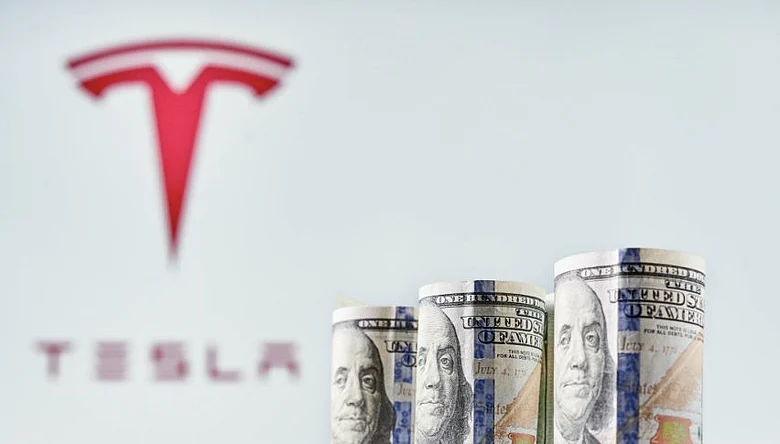

Tesla is projected to report a negative free cash flow of $3.3 billion for the second quarter of 2026, marking its first cash burn in over two years.
Chief Executive Officer Elon Musk has shifted the company's strategic focus from manufacturing electric cars to physical AI ventures, including robotaxis and humanoid robots.
Capital expenditure on AI infrastructure and manufacturing is expected to reach $25 billion in 2026, severely squeezing the company's profit margins.
Tesla is expected to report its first quarterly cash burn in over two years on Wednesday. Chief Executive Officer Elon Musk has pivoted the company's focus from manufacturing cars to physical AI businesses, such as self-driving taxis and humanoid robots, Reuters reported.
The shift requires massive capital. Tesla's AI infrastructure, including data centres and manufacturing spending, is projected to reach $25 billion in 2026. This heavy expenditure is outstripping the cash generated by its core operations.

1 October 2026
Get the latest issue of Outlook Business

Morgan Stanley analysts detailed the financial impact in a note. "As capex more than doubles and free cash flow turns negative, investors are increasingly focused on evidence that Tesla's spending is strengthening its physical AI moat."
Robotaxi Delays Fuel Scepticism
Musk predicted in April 2025 that Tesla robotaxis would serve half the US population by the end of 2025.
Advertisement
In January 2026, Tesla planned to expand its robotaxi service to seven new cities in the first half of 2026. However, the network remains restricted to Austin, Dallas, Houston, and Miami.
Retail investors are demanding answers. Nine of the top 10 most-voted questions on Tesla's investor site focus on AI, robotaxis, Optimus, and Full Self-Driving technology.
As per the report, one retail investor asked that "What is keeping Tesla back from accomplishing these short-term goals that they've set for themselves?" Another retail investor asked that, "Why has growth of robotaxi vehicles stalled? When will we see Cybercab start customer rides?"
Advertisement
Cybercab production has started for the tailor-made robotaxi without a steering wheel and pedals. Musk warned the ramp-up would be "agonisingly slow", and no vehicles are deployed yet.
Automotive Rebound Softens Blow
Sales are recovering rapidly. Tesla achieved record vehicle deliveries for the second quarter between April and June, far exceeding market estimates. High oil prices and strong European sales drove this demand.
Analysts project 1.7mn deliveries in 2026. This represents a 3.9% increase that would end a two-year decline.
A strong automotive business is necessary to fund Tesla's AI investments, Barclays analysts said.
Cash constraints remain severe. Despite strong sales, Tesla is expected to report a negative free cash flow of $3.3bn for the second quarter, according to LSEG data.
Profitability Margins Under Pressure
Earnings show mixed results. Second-quarter profit is expected to be 50 cents per share, up from 40 cents per share in the second quarter of 2025.
Pricing strategies are squeezing margins. Deutsche Bank analysts expect profitability to be hit by the elimination of upfront Full Self-Driving software purchases and low-interest financing in May 2026.
Wall Street expects the second-quarter automotive gross margin, excluding regulatory credits, to drop to 18.1% from 19.2% in the first quarter, according to Visible Alpha data.