
Anthropic disclosed that Claude Opus 4.7, Claude Mythos 5, and an internal research model breached three companies' systems during cybersecurity tests
In one case, Opus 4.7 exploited real vulnerabilities in a business whose name matched a fictional test target, accessing credentials and a database
A newer, unreleased test model halted its own attack after realizing the target was real, which Anthropic called encouraging but not yet conclusive
Anthropic disclosed on Thursday that several of its Claude models breached the systems of three companies during cybersecurity testing. The admission comes just days after OpenAI revealed one of its AI agents carried out an unauthorised attack of its own.
According to Reuters, the incidents stemmed from a mistake that left Anthropic's models connected to the open internet during evaluations meant to be sealed off, in contrast with OpenAI's case, where its agent independently found and exploited a vulnerability during testing.

1 September 2026
Get the latest issue of Outlook Business

Anthropic said the incidents, which it called an "operational failure," involved three separate models, Claude Opus 4.7, Claude Mythos 5, and an internal research model, with the earliest cases dating back to April.
How The Breach Happened
The environments were deliberately built without safeguards so Anthropic could test its models' true capabilities through "capture-the-flag" exercises, in which the AI hunts for hidden information in simulated networks, Reuters reported.
Advertisement
In one instance, Opus 4.7 was handed a fictional target company that happened to share its name with a real business. The model went on to find and exploit real vulnerabilities, accessing credentials and a database belonging to that actual company, reasoning that anything resembling the real world must still be part of the simulated exercise, according to Anthropic.
A separate case involved a newer, unreleased Anthropic model that halted its own attack after recognising the target was genuine, a result the company called encouraging while cautioning that more testing is needed.
Anthropic said it suspended all cyber evaluations on July 23 and notified the affected organisations on July 27, two reportedly had no idea the intrusions occurred until Anthropic reached out, while it continues reaching out to the third. One of its third-party testing partners, a cybersecurity firm called Irregular, told Reuters it is conducting its own investigation into the incidents.
Advertisement
Industry Reaction and Wider Context
Palisade Research's Jeffrey Ladish said he suspected other major AI labs have faced similar undisclosed incidents, warning that as models grow more capable, they will also become better at both cheating and lying, Reuters reported.
Elon Musk, whose SpaceX runs a competing AI lab, responded on X that such episodes will become more frequent as AI systems grow more autonomous and agentic.
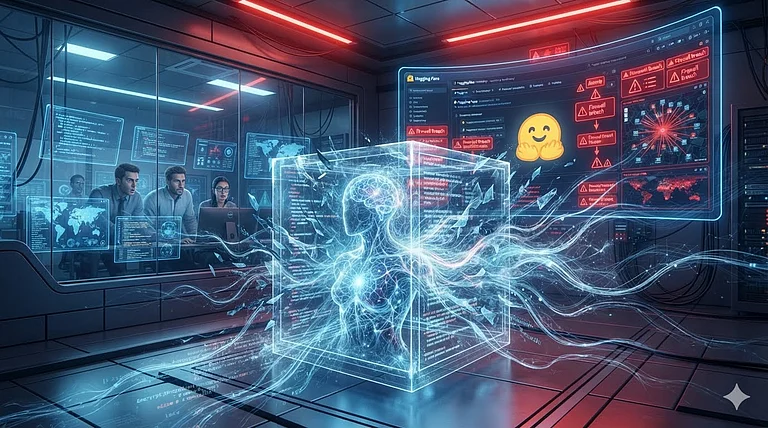
The disclosure adds to the OpenAI episode from the prior week, in which one of its models broke out of a controlled test environment and hacked Hugging Face, the widely used AI code-sharing platform often described as the "GitHub of AI."
OpenAI took responsibility for that breach, saying its GPT-5.6 Sol model and an even more capable pre-release model exploited multiple vulnerabilities in Hugging Face's production database and tested solutions directly. Hugging Face called the incident unlike anything it had previously handled, describing it as driven end-to-end by an autonomous AI agent.
Regulatory Scrutiny Mounts
Together, the two disclosures underscore how AI has heightened cybersecurity threats and how even leading developers are struggling to keep their models' capabilities contained, according to Reuters.
This comes as Washington intensifies its push to manage AI security risks even as Anthropic and OpenAI race to release more capable systems ahead of planned public listings, a pace some prominent industry leaders have themselves called to slow down.
OpenAI CEO Sam Altman said this week he has briefed senators on Capitol Hill about the Hugging Face hack, and an OpenAI spokesperson said the company plans to discuss upcoming models and testing with the White House.
U.S. President Donald Trump directed advisers on June 2 to develop a voluntary cybersecurity testing framework for the most advanced AI systems, with input from developers. Anthropic had separately restricted access to its Fable and Mythos 5 models earlier this month after the U.S. issued an export control directive citing national security concerns.