OpenAI will offer free access to ChatGPT and other AI tools to 100,000 researchers by 2027.
The initiative is part of the company's broader $250 million commitment to scientific research.
Beyond supporting researchers, the move also strengthens OpenAI's long-term AI ecosystem.
OpenAI is extending free access to its most advanced artificial intelligence (AI) models to researchers, marking one of its biggest efforts yet to integrate AI into academic research. Through its new ChatGPT for Academic Researchers programme, the company plans to provide 100,000 scientists, engineers and mathematicians with access to its frontier AI models by 2027.
The initiative goes beyond making AI tools available at no cost. It reflects OpenAI's broader strategy of embedding its technology into scientific research while allowing experts to apply AI to problems in their own fields. According to the company's blog, the programme is designed to help researchers tackle complex scientific challenges, improve productivity and accelerate discoveries across disciplines.

1 September 2026
Get the latest issue of Outlook Business

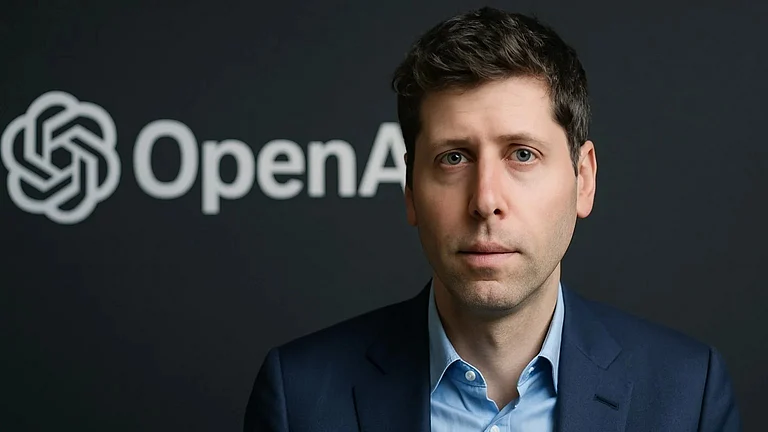
OpenAI Chief Executive Officer (CEO) Sam Altman also highlighted the thinking behind the move in a post on X, saying the company is "very close to models that will significantly accelerate scientific discovery" and that the best approach is to "empower scientists, not to try to figure out everything ourselves."
Why OpenAI Is Backing Academic Research
Unlike traditional software designed for a specific purpose, generative AI models are increasingly being used across different stages of research—from reviewing scientific literature and analysing data to generating hypotheses and writing code. OpenAI believes researchers are best placed to decide how these tools can be applied to their work rather than having the company determine which scientific questions deserve attention.
Advertisement
The programme will initially begin with 10,000 researchers this year before expanding to 100,000 participants through 2027. Eligible researchers at selected academic institutions will receive access to OpenAI's frontier models, including the GPT-5.6 family at launch, and will be able to invite up to four collaborators from the same institution.
According to OpenAI, participants will also receive business-grade privacy protections, with research data not being used to train the company's models by default. The programme will additionally include training sessions, hands-on support and opportunities for researchers to share feedback on how the models perform in real-world scientific work.
Advertisement
What Researchers Will Be Able to Do
The initiative is aimed at supporting research across multiple disciplines rather than serving as a simple chatbot subscription. Researchers will have access to ChatGPT, ChatGPT Work and Codex, OpenAI's coding tool, alongside higher usage limits and larger context windows designed for longer and more complex research tasks.
The company said researchers will be able to use more than 75 specialised life sciences capabilities covering areas such as genetics, genomics, protein modelling and drug discovery. The platform will also connect with scientific literature, genomic and clinical databases, satellite imagery, computational notebooks and other research resources.
Beyond scientific analysis, the tools are expected to assist with practical aspects of academic work, including reviewing literature, preparing grant applications, analysing datasets, drafting manuscripts and communicating research findings.

Why the Move Matters Beyond Free Access
While the announcement focuses on supporting researchers, it also forms part of OpenAI's wider effort to expand the reach of its AI ecosystem. The company has committed more than $250 million through 2027 to external scientific research, including initiatives such as NextGenAI and collaborations with the US Department of Energy's Genesis Mission.
By making its most advanced AI models available to academic institutions, OpenAI could encourage wider adoption of its technology within universities and research organisations. Researchers using these tools in everyday scientific work can also provide valuable feedback on where the models perform well and where they need improvement, helping the company refine future versions.
The initiative also reflects how AI is increasingly moving beyond consumer applications into specialised fields such as scientific research. Rather than positioning AI as a replacement for researchers, OpenAI says its goal is to provide capable tools that allow scientists to pursue their own ideas while remaining in control of the research process. As AI models continue to improve, programmes like this could shape not only how research is conducted but also how AI companies build long-term relationships with the scientific community.