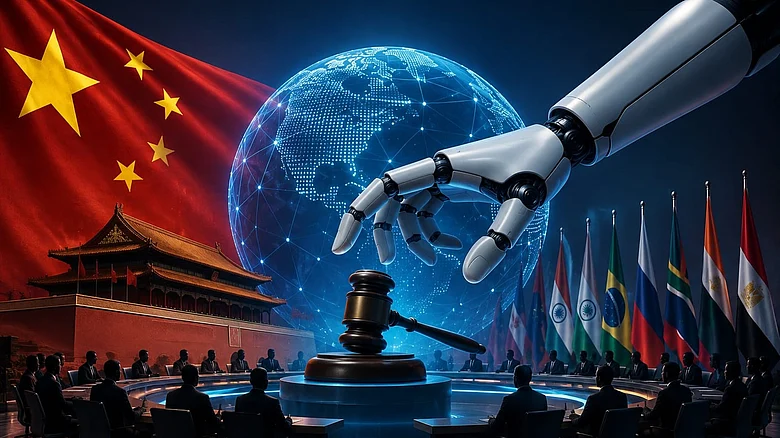

China has launched the World Artificial Intelligence Cooperation Organisation (WAICO) with 29 countries to promote global AI cooperation and governance.
The move comes amid an intensifying US-China competition over AI technology, chips and global standards.
India’s decision to stay out of the China-led initiative highlights the strategic choices countries face in the emerging AI order.
Artificial intelligence (AI) is becoming more than a race to build the most advanced models. It is now a competition over who gets to define the rules, standards and frameworks that will govern the technology.
China has taken a major step in that direction with the launch of the World Artificial Intelligence Cooperation Organisation (WAICO), an intergovernmental platform aimed at promoting international cooperation on AI development and governance.

1 October 2026
Get the latest issue of Outlook Business

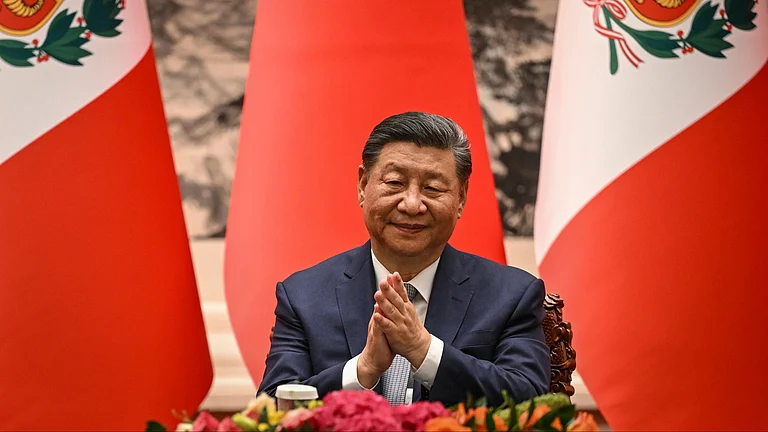
The organisation was formally established in Shanghai on July 16, with 29 countries signing its founding agreement. The launch took place during the World Artificial Intelligence Conference, where Chinese President Xi Jinping presented AI as a technology that should be developed through global cooperation.
“AI development should not be a solo performance by a single country, but a symphony of international cooperation,” Xi said at the conference.
The initiative comes at a time when the US and China are competing not only for AI leadership but also for influence over the systems that will determine how the technology is developed and used globally.
Advertisement
What Is China’s New AI Governance Body?
The World Artificial Intelligence Cooperation Organisation (WAICO) is a China-led international body focused on cooperation, governance and capacity building in AI.
The organisation aims to encourage countries to work together on AI standards, safety frameworks, technology sharing and responsible development. Beijing has positioned WAICO as an inclusive platform where developing countries can participate in discussions around the future of AI.
The founding members include countries such as Russia, Pakistan, Brazil, South Africa, Indonesia, Malaysia and several other nations from Asia, Africa and Latin America. According to reports, 29 countries signed the agreement, while India did not join the initiative.
Advertisement
China has argued that AI governance should not be shaped only by a few advanced economies. Instead, it has called for greater participation from developing countries that want access to AI technology but may lack the infrastructure and resources to build their own systems.
The creation of WAICO marks a shift in China’s approach. Beijing is not only seeking to compete in AI development but also trying to influence the global conversation around how the technology should be regulated and distributed.
Why Is Beijing Launching It Now?
The timing of WAICO is closely linked to the growing rivalry between China and the US over AI.
AI development depends on access to several critical resources, including advanced semiconductors, computing power, data and research capabilities. The US has introduced export restrictions on advanced chips and semiconductor manufacturing equipment used in AI development, citing national security concerns.
China has criticised these restrictions, arguing that technology access should not be controlled by a small group of countries.
By launching WAICO, Beijing is attempting to build influence at a time when the global AI ecosystem is still taking shape. While the US currently leads in advanced AI models and semiconductor technology, China is strengthening its position through domestic innovation, open-source models and international partnerships.
Raman Aggarwal, Founder & CEO of Jupitice Justice Technologies, said China is also trying to reduce its dependence on US technology. "China has learned its lesson from GPU and other trade restrictions and is now actively trying to hedge against future US policies by investing in its own AI infrastructure and competing frontier-level models," he said.
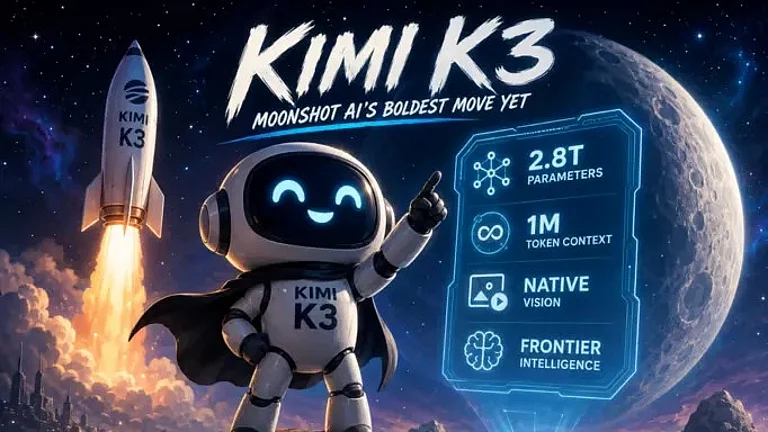
At the same World Artificial Intelligence Conference, Chinese startup Moonshot AI unveiled its Kimi K3 model, highlighting Beijing’s push to compete with leading Western AI systems.
Analysts quoted by Reuters have pointed out that global AI power depends not only on building models but also on controlling access to chips, computing infrastructure and standards. China’s latest move indicates that it wants a role in shaping all these layers.
How Does It Differ From Western AI Initiatives?
The global debate around AI governance has developed along different lines in China, the US and Europe.
The US approach has largely focused on maintaining technological leadership through private companies while introducing safeguards around AI risks. Companies such as OpenAI and Anthropic remain among the leading developers of advanced AI models.
Washington has also used export controls to restrict China's access to advanced semiconductor technology, arguing that these measures are necessary for national security.
The European Union has taken a more regulation-focused approach through its AI Act, which classifies AI systems based on risk levels and places compliance requirements on companies developing and deploying the technology.
China’s approach combines AI development with stronger state involvement. Beijing has emphasised access, cooperation and technology sharing while also calling for safeguards, monitoring systems and rules to ensure AI remains under human control.
Dr. Sorabh Bajaj, Director, Centre for Digital Learning at FLAME University, said Western initiatives such as Pax Silica and the EU AI Act focus on democratic guardrails, risk auditing and strict export controls. "WAICO differs by institutionalising China’s cyber sovereignty through a treaty-based intergovernmental platform," he said.
However, the differences go beyond regulation. The competition is also about which model of technology governance gains global acceptance — a market-driven approach led by private companies, a regulation-heavy framework, or a state-guided ecosystem.

Why Is AI Governance Becoming A Geopolitical Contest?
The race to shape AI rules is not only about technology. It is also about economic influence, national security and control over future digital infrastructure. Countries that influence AI standards could shape how companies develop systems, how data moves across borders and which technologies become globally accepted.
The situation is similar to earlier battles over internet standards, telecommunications networks and digital platforms. The countries that shaped those systems gained significant economic and strategic influence. AI adds another layer because the technology is expected to transform industries ranging from manufacturing and healthcare to defence and finance.
The US currently has an advantage through its semiconductor ecosystem, cloud infrastructure and leading AI companies. China, meanwhile, is trying to challenge that dominance by promoting open-source models and building partnerships with countries that want greater access to AI technologies.
China’s argument is that export restrictions and technology controls could widen the gap between advanced economies and developing nations. Critics, however, argue that Beijing’s model could increase state influence over technology ecosystems.
What Role Could The Global South Play?
A major part of China’s pitch for WAICO is its focus on developing countries. Many nations across Asia, Africa and Latin America want to adopt AI but face challenges such as limited computing infrastructure, shortage of skilled talent and high costs associated with developing advanced models.
China has promised AI training opportunities and cooperation centres for developing countries, presenting itself as a partner that can help bridge the technology gap.
Dr. Bajaj said WAICO could offer developing countries access to AI capabilities without some of the regulatory conditions associated with Western initiatives. However, he warned that countries need to avoid becoming overly dependent on external technology ecosystems. "For the Global South, WAICO offers immediate technical capabilities without Western regulatory demands. However, debtor nations face severe risks of algorithmic lock-in," Bajaj said, adding that member states must push for genuine technology transfers, open-weight access and sovereign data rights.
This approach could appeal to countries that have historically felt excluded from global technology decisions dominated by advanced economies.
However, Global South countries will also need to balance access to AI technology with concerns around data security, transparency and dependence on external technology providers.
The choices these countries make could influence whether AI development remains concentrated among a few technology powers or becomes more distributed globally.
What Does This Mean For India?
India’s decision to stay out of WAICO highlights the strategic challenge facing New Delhi as the global AI order takes shape.
Joining a China-led platform could have provided India with a seat at discussions around AI governance and greater engagement with developing economies. However, participation in a Beijing-led initiative also carries strategic concerns because of ongoing tensions between the two countries.
India has been focusing on building domestic AI capabilities through initiatives such as the IndiaAI Mission while also strengthening technology partnerships with countries including the US and other advanced economies.



The country has a large technology workforce, one of the world’s biggest developer communities and a growing AI startup ecosystem. However, it still lacks a frontier AI model that can compete with leading global systems.
For India, the challenge will be finding a balance between global partnerships and technological self-reliance. New Delhi will need to build domestic capabilities in areas such as computing infrastructure, AI research and advanced models while ensuring it has a voice in international discussions.
The global AI race is no longer only about who builds the most powerful technology. It is also about who writes the rules that determine how that technology is accessed, regulated and used. China’s WAICO initiative shows that the battle for AI leadership will be fought not just in laboratories and data centres, but also in diplomatic forums around the world.