India is reviewing the legal framework around safe harbour protection as it works on a proposed AI law.
The debate centres on whether AI companies should get the same immunity as traditional internet intermediaries such as social media platforms.
From deepfakes and data usage to liability for AI-generated harm, new rules could reshape how AI companies operate.
As artificial intelligence (AI) moves from generating answers to influencing decisions, India is revisiting a legal protection that played a key role in building the internet ecosystem — safe harbour.
The government is examining whether AI companies should continue to receive the same legal protections that have traditionally been available to internet intermediaries such as social media platforms. According to reports by Business Standard and The Indian Express, policymakers are reviewing gaps in existing technology laws as they work towards a proposed AI framework.

1 October 2026
Get the latest issue of Outlook Business

The discussions come at a time when generative AI tools can create text, images, videos and recommendations, raising new questions around accountability. If an AI system generates harmful, inaccurate or misleading content, the key question is: who should be responsible — the company that built the model, the organisation deploying it, or the user?
Safe harbour has helped digital platforms grow by protecting them from being held responsible for every piece of content created by users. However, AI has complicated this framework because these systems do not merely host information — they actively generate it.
What Is Safe Harbour Protection?
Safe harbour is a legal protection that shields internet intermediaries from being held responsible for content created by users on their platforms. In simple terms, it means a platform is generally not treated as the creator or publisher of every piece of content shared by its users. Without such protection, digital platforms could potentially face legal action for millions of posts, messages, images and videos uploaded every day.
Advertisement
In India, Section 79 of the Information Technology Act, 2000 provides safe harbour protection to intermediaries from liability for third-party information hosted on their platforms, provided they follow certain due diligence requirements.
The principle behind this protection was to encourage innovation and allow the internet ecosystem to grow without making platforms legally responsible for every user action.
“Safe harbor was brought about in order to protect digital platforms from liability over all the content produced by users in an effort to encourage innovation and development of the internet ecosystem,” said Manish Mohta, Founder and Managing Director, Learningspiral.ai.
However, the rise of generative AI has raised questions over whether this principle can be applied in the same way to companies developing AI models.
Advertisement
Why Were Internet Intermediaries Given Legal Immunity?
When online platforms began expanding, regulators faced a challenge: should companies be held responsible for everything users post on their platforms?
The solution was to distinguish between intermediaries and publishers. Platforms such as social media networks were viewed as facilitators that provided infrastructure for communication rather than entities directly creating the content.
Safe harbour allowed companies to operate at scale while placing certain responsibilities on them. Platforms receiving this protection are expected to follow legal requirements and remove unlawful content when notified.
“The premise is that intermediaries should be viewed as facilitators rather than being considered publishers,” Mohta said.
However, the distinction between a platform that hosts content and a system that generates content has become increasingly difficult with the expansion of AI.
Why Is AI Different from Social Media Platforms?
The biggest difference between traditional internet intermediaries and AI companies is that AI systems can actively create new information. Social media platforms generally distribute content created by users. Generative AI tools, on the other hand, process large amounts of data and generate responses based on user prompts.
These systems can write articles, create images, summarise information, generate code and provide recommendations. This has raised concerns about accountability, especially when AI tools are used in sensitive areas such as healthcare, finance, education and public services.
“AI systems are different from legacy internet intermediaries since the former also actively create information. They not only transmit, host, and post messages, but also generate new information, create recommendations, and summarise large amounts of information,” Mohta said.
The debate has become more urgent with the rise of synthetic media and deepfakes, where AI-generated content can be used to create misleading images, videos and audio.

Who Should Be Liable for AI-Generated Harm?
The question of liability is at the centre of AI regulation globally.
One view is that AI developers should be responsible because they design and train the models. Another argument is that businesses deploying AI systems should be accountable for how these tools are used in real-world situations.
Experts believe responsibility may need to be distributed across the AI ecosystem rather than placed entirely on one stakeholder.
According to Mohta, liability should be “proportionate and shared among all involved parties”. He said AI developers should create systems that are safe and transparent, while companies using AI should ensure responsible deployment.
Users also have a role in ensuring that AI tools are used appropriately, he added. A shared responsibility model could allow regulators to address risks while ensuring that innovation is not restricted.
What Is India Considering under Its Proposed AI Law?
India is exploring a broader legal framework for artificial intelligence as policymakers assess whether existing regulations are sufficient to deal with emerging risks.
According to Business Standard, the government is conducting a regulatory gap analysis of the Information Technology Act and existing AI governance guidelines to identify areas that may need to be addressed under a new AI law. The discussions reportedly include issues such as liability for companies developing advanced AI models, regulation of synthetic media, data consent and ownership of data processed by AI systems.
The Indian Express reported that the government is also examining concerns around agentic AI — systems that can independently plan tasks, use external tools and take actions with limited human supervision.
Another area under consideration is the creation of regulatory sandboxes for testing AI applications, particularly in high-impact sectors such as finance and public services. The proposed framework could also include broader AI risk guidelines, defining safeguards and responsibilities for companies developing and deploying AI-powered services.
Could New Rules Change the Business Model for AI Companies?
A stricter regulatory framework could significantly influence how AI companies develop, test and deploy their products.
Companies may need to invest more in areas such as monitoring, transparency, risk assessment and documentation. While this could increase compliance costs, experts believe stronger governance could also improve trust among businesses and users.
“Regulation is moving toward demanding auditability, traceability, and human accountability for AI-driven decisions,” said Shrish Anand Lal, Executive Director and Chief Business Officer, MiFiX.ai. He added that enterprises that treat governance as an architectural principle rather than a compliance exercise would be better prepared for the changing regulatory environment.



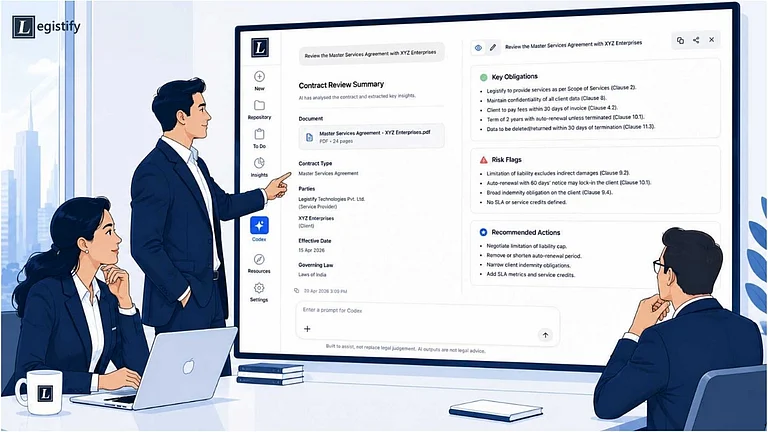
Mohta also said new rules would impact how AI companies build and implement their tools, requiring greater focus on risk management, transparency and monitoring.
For technology companies, the challenge will be finding the right balance between innovation and accountability. Strong safeguards could encourage wider adoption of AI by improving user confidence, while excessive restrictions could slow experimentation and development.
The outcome of India’s safe harbour debate could determine how AI companies balance innovation, compliance and accountability as the country builds its artificial intelligence ecosystem.