TCS Nashik is under investigation for a four-year pattern of sexual abuse and religious coercion
Seven employees, including the operations head and a POSH panel member, have been arrested
Maharashtra Police formed a 12-member SIT to probe allegations spanning 2022 to early 2026
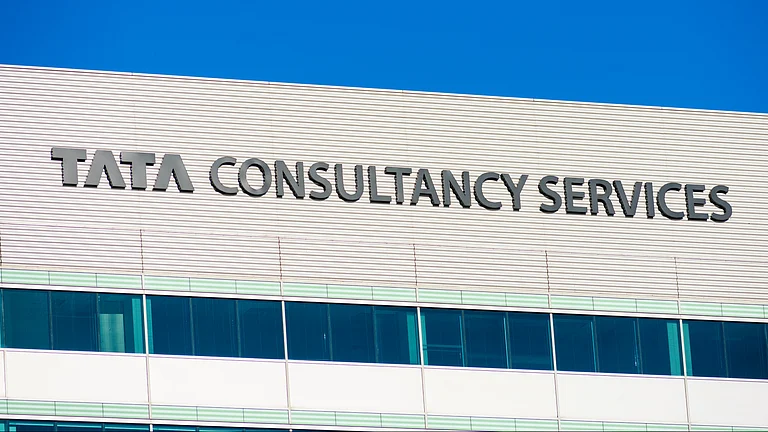
The Tata Consultancy Services (TCS) Nashik case has moved beyond being just a local complaint and has become a broader corporate governance story. What began as allegations of sexual harassment and coercion at a TCS office in Nashik has now triggered a police probe, an internal company inquiry, employee suspensions, public protests and fresh scrutiny of whether large Indian corporates are able to enforce workplace safety standards across dispersed delivery centres.
A recent Reuters report stated that TCS ordered an internal probe led by Chief Operating Officer Aarthi Subramanian, while police were investigating nine complaints and had made six arrests by April 16.

1 October 2026
Get the latest issue of Outlook Business

What the Allegations say
At the centre of the case are allegations that multiple women employees at the Nashik unit faced sexual harassment, intimidation, and coercion from senior colleagues and supervisors.




Investigators are reportedly examining complaints filed by eight women employees, along with claims that grievances were repeatedly raised but not acted upon by the HR layer.
On this, Alay Razvi, Managing Partner, Accord Juris, said, “If internal complaints were raised earlier and remained unaddressed, the company’s legal exposure grows substantially. A documented trail of repeated grievances effectively negates the argument that the employer was unaware of systemic wrongdoing, shifting the case from ‘alleged policy failure’ to institutional indifference.”
Advertisement
The accusations also include claims of pressure linked to religious conversion, which is why the matter has drawn not only workplace scrutiny but also wider political and legal attention.

Employee Safety in Corporates
The corporate concern is deeper than misconduct by a few individuals. The alleged failure here reportedly involves the organisation’s internal safety architecture, including complaint channels, escalation paths, HR oversight and the POSH mechanism.
As per reports, a senior HR official who was also part of the company’s POSH internal committee has been arrested for allegedly ignoring complaints, while investigators are reviewing emails, chats, call records, and CCTV footage to determine whether complaints were suppressed or improperly handled.
Advertisement
That makes the question less about one bad actor and more about whether the control system itself worked.
This is exactly where EIIRTrend CEO Pareekh Jain’s observation becomes relevant. As he put it, “There seems to have been a breakdown in processes,” and the episode raises the question of whether large IT service providers have become “too big scale wise and too spread out location wise to manage.”
He added, “There seems to have been a breakdown in processes given that the internal committee under POSH was not approached. So, either the employees did not have the access and awareness to do so, or they were unable to because of some reason.”
Jain highlighted that when a company grows across geographies and delivery centres, compliance systems cannot remain centralised, thinly staffed, or dependent on local discretion. In a corporate lens, the case is a warning that scale without supervision creates blind spots.
What the Law Expects from Employers
The POSH framework under Indian law, requires every workplace to constitute an Internal Complaints Committee and where offices or administrative units are located in different places, that committee must exist at all such units.
The law also requires employers to provide a safe working environment, including protection from sexual harassment, and to include the number of cases filed and disposed of in annual reporting. In other words, a written policy is not enough; the system has to be operational everywhere the company works.
Explaining it in the case's context, Anshul Verma, Partner, SKV Law Offices, said, “The reported allegations arising from the TCS Nashik office, if established, could place the employer’s duty of care under close legal scrutiny. Under Indian labour and workplace safety law, especially the POSH Act, 2013, an employer is expected to do far more than adopt a policy on paper.”
She added that the obligation is to ensure a safe workplace, maintain a functional Internal Committee, ensure timely redressal of complaints, and create an environment where employees can report misconduct without fear of retaliation. The duty of care is not just preventative, but accountability driven. If complaints were allegedly made to HR but not escalated or acted upon, that would point to a breach of statutory duty, not merely a lapse in internal process.”
Similarly, Neethi VK, Partner, QL Partners, stated that the company is more likely to face civil liability, mainly monetary fines or loss of the S&E license for any violations or non-compliances under the POSH law, for breach of the employment contract. However, “the company’s senior management is more likely to face criminal liability if they had knowledge of the alleged acts and misconduct, including any complaints raised to the HR and IC, but took no action,” she said.
Is Scale a Problem?
This case also raises a larger structural question about India’s big IT firms and their Tier-2 and Tier-3 footprints. TCS has already asked Nashik employees to work from home as a precaution while the investigation continues, showing how quickly a local compliance failure can affect operations.
In corporate terms, this is not just a reputational issue, it is a signal that governance systems may not be keeping pace with distributed manpower, local managers, and far-flung units.
When controls are stretched across a large delivery network, the weakest office becomes the company’s most visible risk.
Dr. Reema Bali, CEO, Alpha Partners believes that the employer owes utmost duty of care, both at compliance level as well as a fiduciary duty of care. She said, “The irony is that most companies see employment law as mere compliance and keep finding ways to cut corners rather than developing a culture of care. Most HR exercises are merely lip service/good to have events and are geared towards improving efficiency, sales and business objectives and not so much for employees’ mental, physical and emotional well-being or protection from illegal or harmful approaches such as in this case.”
Bigger Message for Indian Corporates
The most important takeaway is that the Nashik case may force large employers to rethink how they audit safety systems, especially for junior staff at smaller centres who may be farthest from headquarters and least likely to escalate fearlessly.
Raheel Patel, Partner, Gandhi Law Associates, argued that the employer’s duty of care here is substantive, not procedural, mere POSH compliance on paper is insufficient.
“Companies are expected to actively prevent, detect, and respond to misconduct; failure to act on warning signs can itself constitute a breach of statutory and common law obligations. Liability arises where there is negligence, suppression, or inaction despite knowledge, and can extend to senior management if awareness is established. Prior internal complaints materially worsen exposure by proving notice and wilful inaction. This case will likely harden accountability standards in the IT sector, shifting focus from policy to actual enforcement and escalation discipline,” he said.
Pareekh Jain said the case could become a turning point for how the industry handles POSH complaints, adding that “absence of evidence doesn’t mean evidence of absence.” That is the right corporate lesson here: a clean annual report or a formal policy does not prove that the workplace is safe. It only proves that the company claims to have a system. The real test is whether employees trust it, use it, and get action.
For investors, clients, and boards, the case is a reminder that workplace safety is now a governance metric, not just an HR matter. For Indian corporates, especially large IT exporters, the Nashik episode exposes the cost of weak escalation, thin oversight, and compliance that exists on paper but not in practice. If the allegations are substantiated, this will likely become one of those cases that pushes companies to harden their POSH systems, decentralise oversight, and make employee safety measurable rather than merely promised.