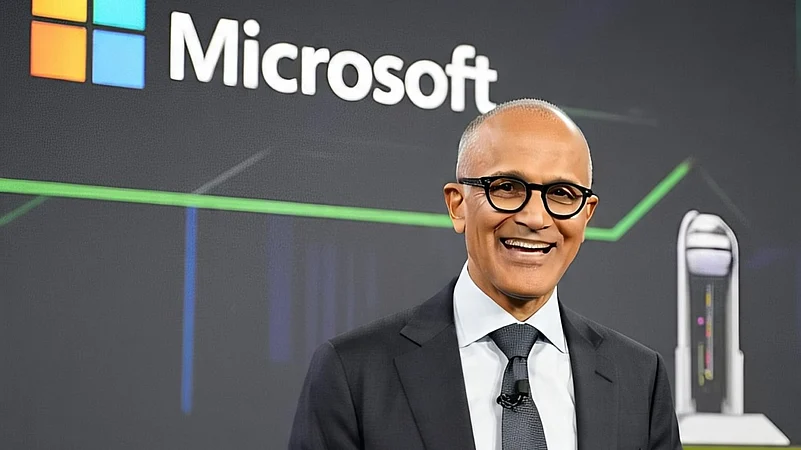

Microsoft CEO Satya Nadella criticises the concentration of AI power in a small group of companies
These companies use alarmist rhetoric about job destruction and weaponisation to defend limitless growth.
He promotes a shift toward low-cost, flexible models like Copilot Cowork, where users can choose among providers, and insists AI’s benefits must be widely shared rather than captured by a few.
Microsoft's CEO, Satya Nadella, criticised the ongoing race for artificial intelligence supremacy in an interview with the Wall Street Journal.
Nadella warned that a small group of companies is capturing the value of world-changing technology, while making dire predictions about security risks and job losses to justify limitless expansion, would not be tolerated by the public.
1 September 2026
Get the latest issue of Outlook Business

"You can't say, hey, all white-collar jobs are gone, and this could even be a weapon, and we will use all the power to build data centres," he said, while predicting that the public would not accept a handful of companies and models "doing all the learning for the world."Cheaper Models, More User Control

Cheaper Models, More User Control
Within just a few weeks, Microsoft has introduced a range of low-cost AI models aimed at reducing expenses for customers driven by high AI costs, according to WSJ. The company released Copilot Cowork, an independent AI system that lets users select from various models, including more affordable options.
Advertisement
The company is also considering whether to deploy a version of DeepSeek, a China-based, ultra-low-cost AI provider that OpenAI and Anthropic have alleged copied and compressed their leading models.
Such a move would likely benefit DeepSeek, potentially at the expense of OpenAI and Anthropic, which are already facing the likelihood of an extended price war.
The interview follows an essay Nadella published on June 14, which laid out his vision for what AI-first companies will look like in the future.
According to him, the new model for AI deployment will be more democratised, with societal benefits widely shared and companies avoiding dependency on a small group of frontier models.
Advertisement
The Bigger Ecosystem
Although Nadella did not explicitly mention OpenAI, Anthropic, or Alphabet’s Google, he made it clear that Microsoft aims to shift the direction of the AI race away from being controlled solely by frontier model developers.
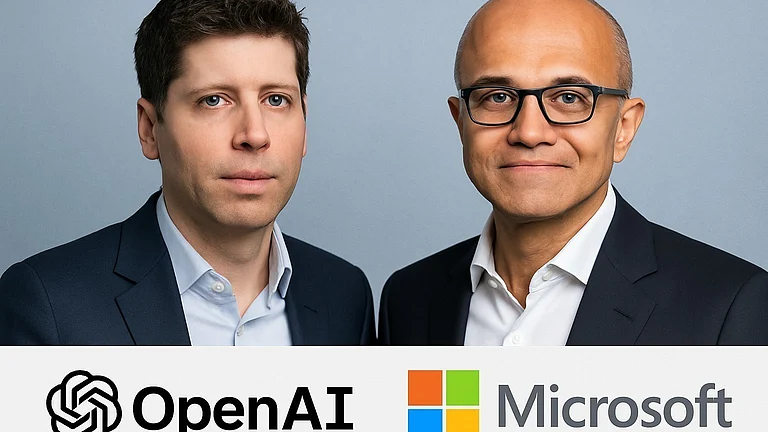
Microsoft ranks among OpenAI's earliest partners and has poured billions of dollars into helping grow the company into its current giant status.
Following years of tension, the two companies have now reached an agreement that permits OpenAI to broaden its partnerships with other major technology firms.
Nadella characterised AI as a knowledge engine that enables companies to better utilise their employees and apply their data across a range of models with different costs and capabilities.

In the future, a company’s identity will be shaped by the tacit knowledge it holds, across both humans and AI, and safeguarding intellectual property will be crucial to stop businesses from becoming commoditised.