

An estimated 60-80% of capital that would typically flow from Gulf-based NRIs into India-focused funds and alternative investments is being redirected towards FCNR(B) deposits.
Plain FCNR(B) deposits offer around 6-7%, while leveraged structures initially offered net returns of 13-14%, though rates have since eased at some banks.
Strong demand has prompted banks to reduce leverage and spreads as they approach fundraising targets, with the RBI's special FCNR(B) window scheduled to close on September 30.
Non-resident Indians (NRIs) are increasingly shifting money that would traditionally have gone into India-focused equity and alternative investment funds towards Foreign Currency Non-Resident (Bank), or FCNR(B), deposits, attracted by higher dollar returns and leverage offered under a special Reserve Bank of India (RBI) window.
The RBI's decision to absorb the hedging costs for three- to five-year FCNR(B) deposits has prompted banks to raise rates and offer additional leverage, making the deposits particularly attractive to dollar-oriented investors seeking relatively low-risk returns.

1 September 2026
Get the latest issue of Outlook Business

The surge in demand is also putting pressure on India-focused fund managers, particularly those targeting wealthy NRIs in the Gulf.


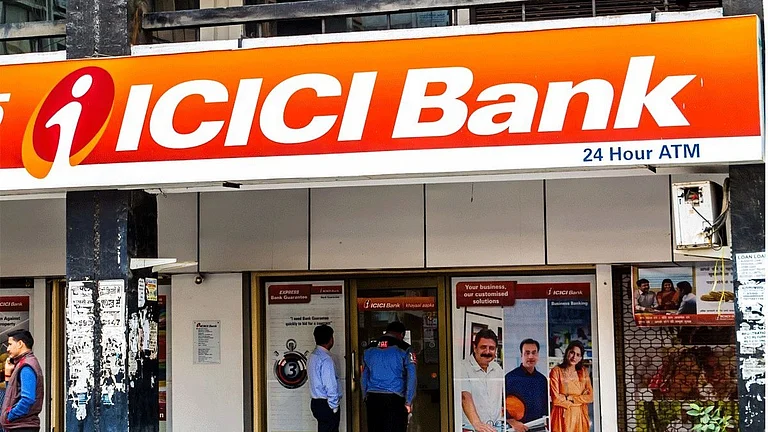

As per reports, industry executives estimate that 60-80% of the capital that would typically have flowed into India-focused funds and other alternative investment products from Gulf-based NRIs is now being directed towards FCNR(B) deposits.
Banks See Strong Demand For FCNR(B)
The intensity of investor demand is reflected in how banks are pricing the products, according to Ankur Choudhary, CEO and co-founder of Belong, a GIFT City-based retail investment platform.
Advertisement
"As the window nears to the closing, banks are finding it hard to raise enough funds to keep up with the demand for leverage, so as they try to meet their targets they are cutting the spread and the leverage on offer," Choudhary said.
He said Belong has facilitated nearly $40 million through the leveraged FCNR(B) route for its NRI customers and expects that figure to exceed $100 million before the window closes on September 30.
"When banks start taking measures like that, it tells you how much investor interest is sitting behind this," he said.
Reports suggest some banks, including HSBC Bank, have offered leverage as high as 19 times on eligible deposits, although the terms available to investors have started to change as banks approach their fundraising targets.
Advertisement
Deposits Compete With India-Focused Funds
The attractive returns have forced India-focused fund managers to reassess their offshore fundraising plans.
Fund managers seeking billions of dollars from Gulf-based NRIs are facing competition from a product that offers dollar-denominated returns without direct exposure to rupee depreciation.
Some managers have scaled back offshore fundraising targets, increased their focus on domestic investors and delayed aggressive Gulf marketing until the FCNR(B) window closes.
Vishal Goraddia, fund manager at Aikyam India Discovery Fund, Aikyam Capital Group, said investors should nevertheless view FCNR(B) deposits as a fixed-income allocation rather than a substitute for equity investments.
"FCNR(B) deposits should be viewed as part of an investor's fixed-income allocation rather than as a growth investment," Goraddia said.
He noted that the underlying deposit rate is typically around 6-7%, with additional returns in leveraged structures or from currency-related factors.
"For eligible NRIs, FCNR(B) deposits can offer competitive, tax-efficient, dollar-denominated returns while avoiding direct exposure to Indian rupee depreciation," Goraddia said.
He cautioned that shifting money away from equities could mean giving up long-term growth potential.
Plain Deposits Vs Leveraged Returns
The 6-7% rate commonly cited for FCNR(B) refers to the unleveraged deposit. Returns can be considerably higher when leverage is used.
According to Choudhary, some banks initially offered net leveraged returns of around 13-14% when the special window opened. As banks approached their fundraising targets, those returns declined to around 11-12% for fresh deposits at some institutions.
"For a Gulf NRI who wants a safe dollar return, FCNR(B) is the best of the three right now," Choudhary said, comparing the product with US Treasuries and Indian debt investments.
He noted that a five-year US Treasury yields around 4.3%, compared with the 6-7% available on an unleveraged FCNR(B) deposit.
The advantage, he said, stems partly from the RBI covering the hedging cost that would otherwise reduce the deposit rate. However, the tax treatment varies by the investor's country of residence.
Singapore NRIs Face Tax Question
For NRIs who are tax residents of Singapore, the attractiveness of the product may be affected by local tax rules.
Singapore's Inland Revenue Authority has stated that where an individual tax resident in Singapore receives interest from a bank in India, the interest can be treated as income derived from Singapore and subject to Singapore withholding tax.
This means the tax-free status generally associated with FCNR(B) interest in India does not necessarily translate into tax-free returns in the investor's country of tax residence.
Similarly, US-based NRIs may face US taxation on the interest income, making the post-tax return dependent on their individual circumstances.
Fresh Money Or Rebookings?
It remains unclear how much of the surge represents genuinely fresh foreign capital and how much reflects existing depositors rolling over or rebooking their deposits at higher rates.
The RBI has published gross FCNR(B) deposit figures through July but has not yet released the corresponding net inflow data.
"Gross tells you how much has come in. It does not tell you how much has gone out at the same time, whether that is existing depositors withdrawing to rebook at the higher rates, or maturing deposits not being renewed," Choudhary said.
"The net figure is what would let you cleanly separate genuinely fresh money from redeposits, and that is still awaited in RBI monthly bulletins," he added.
For now, he said, the available evidence suggests that demand comprises a combination of new money and existing depositors rebooking.
With the special window scheduled to close on September 30, the rush into FCNR(B) deposits could intensify further as investors and banks seek to lock in the enhanced dollar-return opportunity before the facility expires