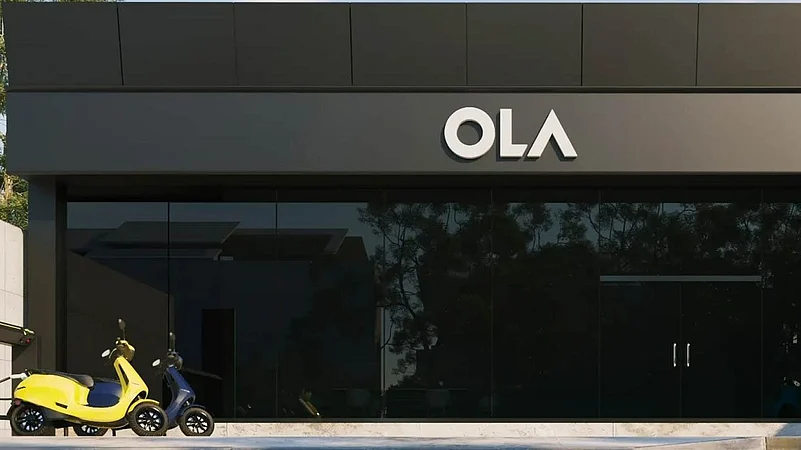

Ola Electric posted a net loss of ₹336 crore in Q1FY27, compared with ₹426 crore a year ago
The company delivered 39,192 vehicles during the quarter and said registrations rose 97% sequentially
Ola said lower operating expenses, AI-led efficiencies and deeper vertical integration supported its operational performance
Ola Electric Mobility reported a mixed financial performance for the quarter ended June 30, 2026, with revenue declining year-on-year even as losses narrowed and vehicle registrations improved sharply following operational changes introduced over the past year.
The Bengaluru-based electric two-wheeler manufacturer posted a consolidated net loss of ₹336 crore in Q1 FY27, compared with a loss of ₹426 crore in the corresponding period last year.

1 September 2026
Get the latest issue of Outlook Business

Revenue from operations declined 45% year-on-year to ₹455 crore from ₹828 crore, while EBITDA loss narrowed to ₹165 crore from ₹237 crore.



Ola Electric said it delivered 39,192 vehicles during the quarter, with consolidated gross margin remaining at an industry-leading 30.5% despite inflationary pressures.

The company said registrations increased 97% quarter-on-quarter, compared with 17% growth for the broader electric two-wheeler market, lifting its market share from 5.1% in Q4 FY26 to 8.4% in Q1 FY27.
Leaner Ops, Expansion Plans In Focus
According to the company, consolidated operating expenses declined 22% quarter-on-quarter to ₹333 crore, remaining within its guided quarterly range of ₹300–350 crore.
Advertisement
Ola said it continues to target a steady-state quarterly operating expense of around ₹300 crore, expecting the leaner cost base to strengthen operating leverage as volumes rise.
The company also said it completed a ₹780 crore Qualified Institutional Placement (QIP) during the quarter, which was 56% oversubscribed, strengthening its balance sheet and providing additional financial flexibility.
The company's sales growth was broad-based across regions, with North and East India leading sequential gains, while motorcycle deliveries under its Roadster portfolio rose 67% quarter-on-quarter.

Ola also highlighted progress in integrating its in-house battery cell technology, expanding dealer-led distribution and deploying AI across customer engagement, registrations, fulfilment, warranty processing and battery research as part of its next phase of growth.