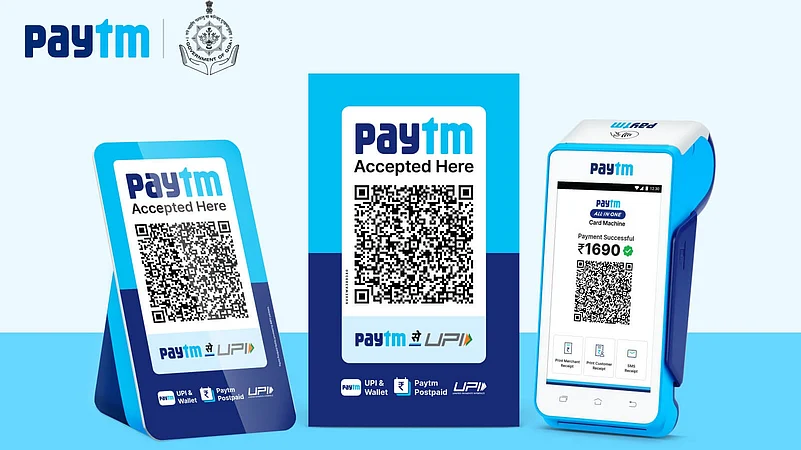
One97 Communications, the parent entity that operates brand Paytm, which reported its third profitable quarter, is showcasing strength in its business model and monetisation capability, accompanied by expanding margins and steady growth across payments and financial services.
The December quarter continued this momentum. Operating revenue grew 20% YoY to ₹2,194 crore, while profit after tax rose to ₹225 crore, despite adopting a conservative revenue recognition policy.
EBITDA stood at ₹156 crore with a margin of 7%, marking another quarter where growth and profitability moved together. This performance was supported by continued gains in market share across consumer and merchant payments, reinforcing Paytm's position at the centre of India's payments ecosystem.

1 September 2026
Get the latest issue of Outlook Business




Merchant leadership continues to anchor this progress. Paytm is deepening its presence across offline and online merchants, with a clear focus on monetisable relationships. Merchant subscriptions reached 1.44 crore, adding 27 lakh over the year, strengthening a recurring revenue base built on devices, subscriptions and commerce-led solutions.
Payments services revenue grew 21% YoY, while net payment revenue rose 25%, reflecting stronger monetisation across Paytm QR, Soundbox, card machines and Paytm UPI.
During the earnings call, the management noted that payment processing margins have now solidified above 4 basis points, supported by a shift toward higher value instruments, affordability offerings such as EMI, and the growing role of RuPay cards on Paytm UPI. This margin profile is expected to remain steady in the coming quarters.
Advertisement
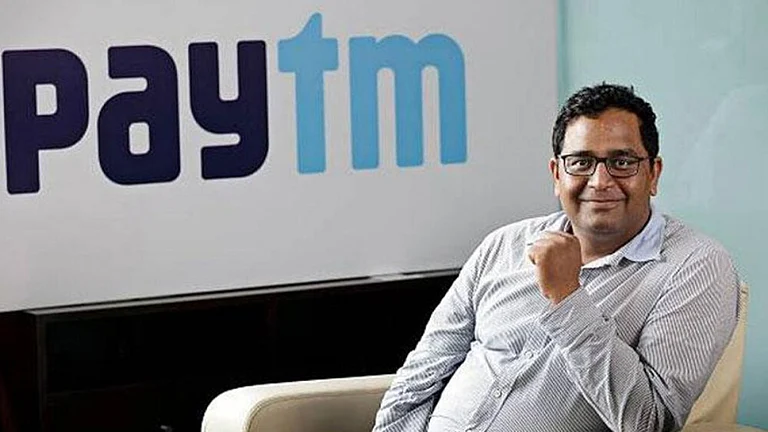
“Our business model is strong and well established now,” said Founder and CEO Vijay Shekhar Sharma during the earnings call. “We are set up to offset through subscription and cross sell of financial services. We are strictly focused on payments and financial services.” This confidence is reflected in improving unit economics. Contribution profit rose 30% YoY to ₹1,249 crore, with contribution margin improving to 57%. Even as the Payment Infrastructure Development Fund (PIDF) concluded in December, the company reiterated its ability to offset the impact through subscription revenue and diversified monetisation.
Advertisement
Paytm management maintained that around a third of the impact is expected to be absorbed immediately, with the remainder offset progressively at the EBITDA level, keeping the margin outlook intact in the mid 50s. Further, global brokerage firm Bernstein said Paytm is expected to remain profitable, even without the extension of the PIDF scheme, supported by steady operating momentum and improving fundamentals.

Sharma said, “We are building Paytm on the strength of our own revenue and profits.” Beyond payments, diversified monetisation is increasingly shaping the model. Distribution of financial services revenue grew 34% YoY during Q3 FY26. Merchant lending continued to show strong momentum, supported by repeat borrowers and rising penetration across the device merchant base. Buy Now Pay Later has scaled steadily since its relaunch, with strong asset quality trends and clear headroom for growth.
Paytm Postpaid, relaunched as a Spend Now Pay Next Month offering across online and offline merchants, has gained traction within months. The Wallet is also set to return, complementing Paytm UPI and Postpaid without being positioned as a standalone growth engine.
Wealth offerings are also showing improving traction. Paytm Money, Vijay Shekhar Sharma said, has seen improving market share and better monetisation, led by Margin Trading Facility and equity broking. “We want to make Paytm Money a top 5 player in the next 3 years,” he said.

Cost discipline continues to support profitability. During the quarter ended December 2025, total operating expenses declined, even as the company invested in sales capacity to expand its merchant footprint. The management reiterated that AI is optimising sales productivity, strengthening collections, and reducing other direct expenses, allowing Paytm to scale efficiently. The company closed the quarter with a cash balance of ₹12,882 crore.
With back to back profitable quarters, strong merchant leadership and a steadily diversifying revenue base, Paytm is executing with clarity and confidence.
As Sharma noted, “Every replica of our business model is proof of our business excellence.”