Tata Motors has cautioned that the outlook for its luxury vehicle business, Jaguar Land Rover (JLR), remains challenging and volatile after a cyberattack and rising trade barriers weighed heavily on performance during FY26.
The automaker, which completed the demerger of its commercial vehicles business and operated as a dedicated personal mobility company during the year, reported a mixed financial performance.
While its domestic passenger vehicle business recorded its strongest-ever sales, JLR faced significant disruptions that affected production and profitability.

1 September 2026
Get the latest issue of Outlook Business

"JLR faced a challenging year with revenue and profit impacted by multiple headwinds, including a pause in production following the cyber incident. We recovered well in the fourth quarter as production returned to normal levels, demonstrating the commitment of our people, suppliers and retail partners," said PB Balaji, CEO of JLR, in a statement.

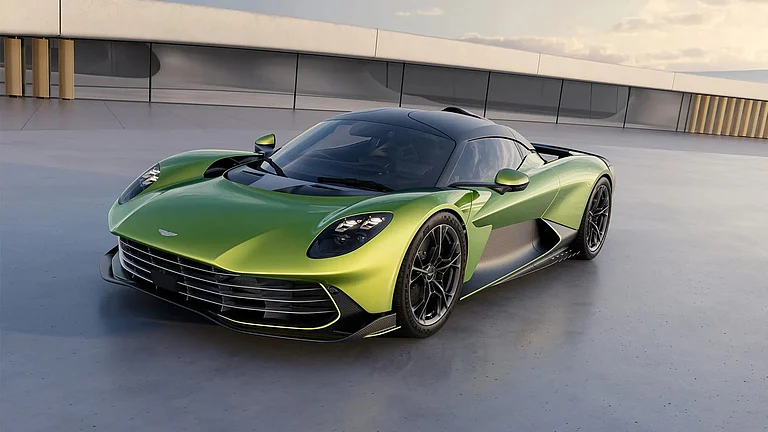

"As we look ahead into FY27, we are focused on driving growth through our well differentiated House of Brands and reducing our break‑even volumes whilst we launch a slew of exciting products starting with the new Range Rover Electric, the unveiling of the first of our EMA products and the eagerly awaited new Jaguar," he added.

JLR and Tata Motors' FY26 Performance
JLR’s revenue declined 20.9% year-on-year to £22.9 billion in FY26. The company attributed the fall to a five-week production shutdown caused by a cyber incident, additional US tariffs on exports from the UK, weak market conditions in China, luxury taxes, higher marketing expenditure, adverse commodity costs and the phased discontinuation of outgoing Jaguar models.
Advertisement
However, the final quarter showed signs of recovery. Consolidated revenue in the March quarter reached ₹1,05,447 crore, while profit before tax and exceptional items stood at ₹7,167 crore as JLR operations gradually normalised and domestic sales reached record levels.
For the full financial year, Tata Motors reported consolidated revenue of ₹3,35,582 crore. EBITDA and EBIT margins stood at 6.8% and 1.1%, respectively.
India Passenger Vehicle Business Hits Record Highs
The company plans substantial investments in its passenger vehicle and electric mobility businesses through FY30, while JLR is focusing on reducing its breakeven volume and preparing for launches including the Range Rover Electric and Jaguar Type 01.
Advertisement
According to a report by The Economic Times (ET), Tata Motors’ passenger vehicle division sold 6.42 lakh cars and SUVs in FY26, marking growth of 15.3% and helping the company secure a 14.1% market share during the second half of the year.

Electric vehicle sales exceeded 92,000 units, rising 43.4% year-on-year and taking cumulative EV sales beyond 2.5 lakh units. Tata Motors retained a 40.2% share of India’s EV market, as per ET.