Rice farming drains groundwater, forcing farmers to dig deeper, costlier borewells.
Government subsidies incentivise water-intensive crops, worsening India’s water stress situation.
Shifting exports and adopting sustainable practices crucial to reduce long-term water pressure.
Rice crops are unsustainably draining India’s already-low aquifers, forcing farmers to borrow heavily to drill ever-deeper borewells, according to Reuters.
Around 50 farmers and eight water and agriculture officials told Reuters that in the rice-basket states of Haryana and Punjab, groundwater was accessible at about 30 feet a decade ago. However, accelerated drainage has pushed the groundwater levels in borewells down to between 80 and 200 feet.

1 September 2026
Get the latest issue of Outlook Business

"Every year, the borewell has to go deeper," Balkar Singh, a 50-year-old farmer in Haryana told Reuters. "It's getting too expensive,” he added.
The government subsidies that incentivise rice cultivation further discourage farmers from switching to less water-intensive crops, Uday Chandra, a South Asia politics expert at Georgetown University in Qatar told Reuters.
This is all the more alarming as the problem surfaces at a time when India has overtaken China as the world’s largest producer of rice in 2025.

Rice Exports and Water Cost
According to a report by the World Economic Forum, rice cultivation is water-intensive which accounts for between 34% and 43% of the world’s irrigation water.
Advertisement
To put this into perspective, according to a ScienceDirect study, water required to produce 1 kg of rice ranges from 800 to 5000 litres, with an average of 2500 litres. This becomes especially concerning in case of India where rice is a staple for more than 65% of its 1.4bn population. That is between 20% to 60% more than the global average, according to farm-policy experts, reported Reuters.
While affluent farmers with larger plots manage to make a profit by navigating government subsidies and affording deeper borewells, it is the subsistence growers who bear the major loss, as every extra cost of cultivation becomes taxing for them.
Advertisement
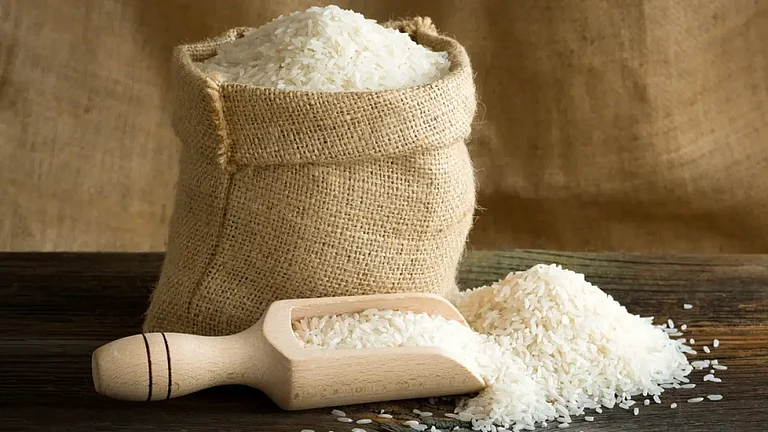
Why Rice Farming Worsens Water Crisis
According to Reuters, the subsidies - some of them a legacy from past decades when India struggled to feed its growing population - include a state-guaranteed minimum price for rice that has climbed by around 70% over the past decade, as well as heavy power subsidies that encourage extracting water for farm use.
The net effect, Avinash Kishore at the International Food Policy Research Institute think-tank in Washington told Reuters, is that one of the world's most water-stressed countries is paying farmers to consume vast amounts of precious groundwater.
In the past, Prime Minister Narendra Modi made an effort to change agricultural laws, including ones that would incentivise the private sector to buy more crops.
However, that sparked concerns that the government might cut back on the amount of grain it buys at guaranteed prices. Millions of farmers protested, paralysing the country in 2020 and forcing Modi to make a rare retreat.
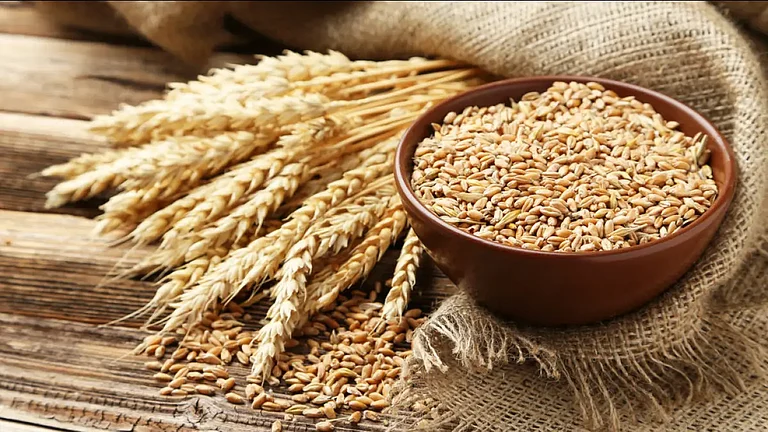
Can India Balance Rice Exports With Sustainable Water Use?
According to a study published in the Journal of Applied and Natural Science in July 2021, India can balance rice exports with water sustainability only by rethinking what and how it exports.
In 2018–19, rice production accounted for a global water footprint of 235,774mn cubic metres, with 41% sourced from blue water such as irrigation and groundwater, both under stress. The annual export of 24,354mn cubic metres of virtual water through rice trade highlights the need to shift to less water-intensive, higher-value crops, improve water harvesting and adopt better agronomic practices to reduce long-term pressure on India’s water resources.