





Budget 2026 LIVE Updates: Deep-Tech Start-ups Seek Higher Budget Support
Ankur Shrivastava, Founder and Managing Partner at Momentum Capital said, “Momentum Capital is expecting India's 2026 budget to prioritize deep-tech start-up support, especially on climate & health-tech innovation.”
He added that current non-dilutive grants of INR 10–50 lakh are insufficient for science-backed breakthroughs, and higher DST-style grants along with credit guarantees for first-of-a-kind deployments are essential to de-risk hardware innovation and scale domestic pilots.
Budget 2026 LIVE Updates: Renewables Sector Pushes Storage, Grid Upgrades
Saurabh Kumar, Vice President, The Global Energy Alliance for People and Planet (GEAPP) India, said that the industry is looking to the Union Budget to close critical gaps in scaling renewable energy as India targets 500 GW by 2030, with a sharper focus on storage, grid efficiency and system flexibility.
“Budget allocations need to focus on Battery Energy Storage Systems (BESS) in order to integrate storage with renewable energy to ensure a reliable power supply and grid stability,” Kumar stated.
He added that support for digitisation, grid-balancing technologies and decentralised renewables will be key to building a resilient clean energy ecosystem.
Budget 2026 LIVE Updates: Tech Sector Seeks AI Incentives, Clear Rules
Annie Banik, Co-Founder & CEO, SmartWinnr, said that the industry expects the Union Budget 2026 to accelerate AI-led job creation and productivity by backing adoption across sectors with targeted incentives for research, skills and responsible deployment.
“A balanced approach that encourages innovation while safeguarding public trust can position India as a global leader in the next phase of digital transformation,” said Banik.
Clear, forward-looking data privacy and ethical AI regulations will be key to sustaining investor confidence and global competitiveness.
Budget 2026 LIVE Updates: HR-Tech Firms Seek Policy Push for AI Skilling, Workforce Innovation
Anish Singh, Co-founder, All Things People (ATP), said that the industry is seeking a forward-looking Budget 2026 that recognises how AI and flexible talent models are reshaping the nature of work, with policy support for HR innovation, AI-led skilling and innovation labs to boost productivity and competitiveness.
“Equally critical is the formal integration of gig and project-based workers through social security, compliance, and continuous learning support,” he asserted. He believes that these steps can help build resilient, future-ready workforces while widening employment opportunities across sectors.
Budget 2026 LIVE Updates: How to Watch Union Budget 2026 Live Coverage
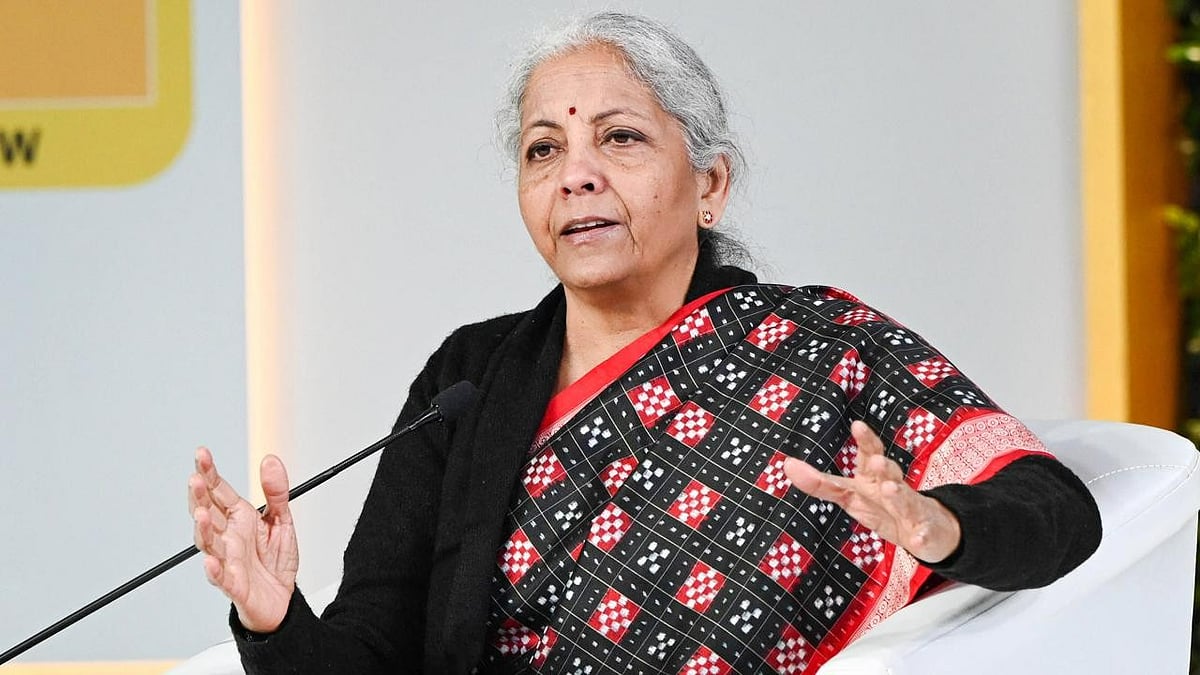
Finance Minister Nirmala Sitharaman will present her ninth consecutive Union Budget on Sunday, February 1, marking the first Sunday presentation in over a decade.
Preparations for the Budget began well in advance, which concluded with the Halwa ceremony on January 27, officially starting the Budget drafting process. The Budget Session began on January 28 with President Droupadi Murmu addressing both Houses of Parliament.
Budget 2026 LIVE Updates: Important Terms You Must Know
As Finance Minister Nirmala Sitharaman presents the Union Budget 2026–27, understanding key budget terminology is essential.
Terms like Capital Expenditure, Fiscal Deficit, Revenue and Capital Receipts, and the Consolidated Fund reveal how the government plans to raise and spend funds.
While familiarity with direct and indirect taxes, cess and Budget Estimates helps decode the fiscal priorities and implications for businesses and citizens.
Budget 2026 LIVE Updates: How India’s Union Budget Is Prepared and Passed
The Union Budget’s journey begins months before presentation, led by the Ministry of Finance in consultation with ministries, NITI Aayog and key stakeholders to align spending priorities with fiscal goals. Once finalised and approved by the Union Cabinet, the traditional Halwa Ceremony signals the start of the confidentiality “lock‑in.” On Budget Day, the Finance Minister presents proposals in Parliament, followed by debates and passage of the Appropriation Bill and Finance Bill.
Budget 2026 LIVE Updates: How Union Budget 2026–27 Is Prepared
The Union Budget preparation process begins months in advance, with the Ministry of Finance collecting revenue and expenditure estimates from ministries, states and autonomous bodies.
Officials then refine projections, consult stakeholders and allocate resources before Cabinet approval. A traditional Halwa Ceremony marks the start of the final confidential phase ahead of presentation in Parliament, where the Finance Minister tables the Budget under Article 112 of the Constitution.
Budget 2026 News LIVE: Why the Railway Budget Was Merged with Union Budget
In 2016, the Indian government decided to merge the separate Railway Budget with the Union Budget — a departure from a 92-year-old practice — based on recommendations from a NITI Aayog committee aimed at simplifying financial planning and aligning railway spending with national priorities.
Since 2017, railway allocations are presented as part of the broader Union Budget, enabling smoother resource allocation and better coordination of infrastructure planning.
Budget 2026 News LIVE: How the Budget Could Influence Silver Demand
According to reports, the Union Budget 2026 policies could directly influence silver prices and demand in India, especially changes to import duties and tax structures.
India imports more than 80% of its silver, so a reduction in customs duty could lower domestic prices and boost purchases by jewellery buyers and investors. Conversely, higher tariffs might push domestic prices up and temper demand among cost-sensitive consumers, particularly in the gems and jewellery sector.
Budget 2026 News LIVE: Revenue vs Capital Budget Explained
As Finance Minister Nirmala Sitharaman prepares to present Budget 2026–27 on February 1, it’s important to understand the difference between the Revenue Budget and Capital Budget.
The Revenue Budget covers everyday government income and expenditure, such as taxes, salaries and subsidies, while the Capital Budget focuses on long-term investments in assets like infrastructure and equipment. Knowing these helps explain how the government balances short-term needs with future growth.
Budget 2026 News LIVE: What Direct and Indirect Taxes Mean for You
Ahead of Union Budget 2026, understanding how direct and indirect taxes work can help taxpayers and businesses anticipate financial impacts.
Direct taxes, like income and corporate tax, are paid directly to the government by individuals and firms, while indirect taxes, such as GST and customs duties, are collected at the point of sale. Knowing the difference helps understand how policy changes affect wallets and the broader economy.
Union Budget 2026 LIVE: Circular Economy Sector Sees Budget as Key to Scale Recycling
Nitin Chitkara, CEO, MMCM, said that the industry views circularity as central to India’s sustainable growth.
“As India moves towards becoming a developed nation, circularity must be treated as core economic infrastructure, not a side policy,” he added.
The Budget 2026 is a crucial opportunity to accelerate a high-circularity ecosystem through GST rationalisation on recycled materials and incentives for formal, traceable recycling. Such measures will strengthen domestic supply chains and position India as an emerging environmental superpower.
Union Budget 2026 LIVE: Deep-Tech Start-ups Seek Faster Financial Support
Vineet Khunger, Co-founder & Head of Finance/Admin/Marketing, IndieVisual, said that the industry needs smoother financial mechanisms to sustain growth.
“Last year’s Union Budget backed the ecosystem with initiatives such as a ₹10,000 crore Fund of Funds for start-ups, reinforcing policy intent to support innovation,” he added.
Practical measures like faster TDS refunds, early-year GST input credit refunds, and broader access to seed funding can turn policy commitments into tangible start-up growth and help build globally competitive technologies.
Union Budget 2026 LIVE: Clean Energy Sector Sees Critical Minerals as Strategic Asset, Expects Support
Saloni Sachdeva Michael, Energy Specialist, India Clean Energy Transition, IEEFA, said that the industry sees critical minerals as strategic for India’s clean energy future. “For India’s clean energy transition, critical minerals are no longer a secondary consideration, they are a strategic necessity,” she added.
Budget 2026 should prioritise processing, recycling and recovery infrastructure, along with targeted incentives and global partnerships. These measures will reduce import dependence, unlock domestic value addition, and strengthen India’s competitiveness in global critical mineral supply chains.
Union Budget 2026 LIVE: Commercial Real Estate Sector Eyes Budget-Driven Urban Growth
Aditya B Yamsanwar, Director, Team One Architects, said that the industry sees urban infrastructure as key to resilient commercial real estate.
“Recent urban infrastructure allocations and the transition of SEZs into more flexible, services-led ecosystems have pushed Indian cities into a more infrastructure-ready phase, supporting resilient Grade-A office absorption,” he noted.
He further believes that the Budget 2026 can further accelerate growth by deepening capital investment, prioritising transit-led business corridors, and enabling integrated development frameworks to create durable, globally competitive commercial districts.
Union Budget 2026 LIVE: Renewable Energy Could Power Viksit Bharat
Experts believe Union Budget 2026 has a crucial role in advancing India’s Viksit Bharat vision by bolstering renewable energy through incentives for grid modernisation, energy storage and domestic manufacturing, according to Mint.
Strengthened fiscal incentives for green hydrogen, solar and storage can accelerate the clean energy transition and improve energy security. Renewables are central to inclusive growth, competitiveness and climate goals as India targets 500 GW capacity by 2030.
Union Budget 2026 LIVE: Energy Sector Seeks Stronger Budget Backing
Vibhuti Garg, Director South Asia, IEEFA, said that the industry expects long-term commitment to renewable energy growth. “The foremost expectation from Union Budget 2026 is continuity and strengthening of policy and financial support for energy storage and the National Critical Minerals Mission,” she added.
Budget allocations should also focus on reskilling fossil fuel-dependent states, supporting industrial diversification, and boosting electrification of commercial transport. These measures will help scale renewables, accelerate clean mobility, and ensure an inclusive energy transition aligned with India’s 2030 climate goals.
Union Budget 2026 LIVE: Digital Sector Seeks Clear AI Policies, Budget Support
Anand Bhadkamkar, Group CFO, LS Digital, said that the industry is looking for stronger guidance as AI, MarTech, and AdTech become central to business operations.
“Last year’s Budget delivered a substantial ₹2,000 crore allocation to the IndiaAI Mission and ₹500 crore for a Centre of Excellence in AI, signalling strong intent,” he shared.
He further believes that clearer policy signals on compliance automation, data governance and domestic technology adoption will help convert intent into long-term investments and global competitiveness.
India Budget 2026 LIVE: Industry Seeks Faster Incentives, Fab Push
Rajul Bohra, Partner, JSA Advocates & Solicitors, said that the policy ecosystem around semiconductors needs sharper incentives to move India beyond assembly towards full-scale chip production and a stronger domestic supply chain.
“It is expected that the budget will come out with incentives which focus on chip production rather than just assembly, alongside faster release of committed incentives as large fab and OSAT projects face financial pressure,” stated Bohra, adding that parallel legal and regulatory reforms will be key to sustaining investor confidence and momentum in this capital-intensive sector.
India Budget 2026 LIVE: Legal Experts Flag Need for Faster Chip Incentives
Rajul Bohra, Partner, JSA Advocates & Solicitors, said that the policy ecosystem around semiconductors needs sharper incentives to move India beyond assembly towards full-scale chip production and a stronger domestic supply chain.
“It is expected that the budget will come out with incentives which focus on chip production rather than just assembly, alongside faster release of committed incentives as large fab and OSAT projects face financial pressure,” Bohra added.
Parallel legal and regulatory reforms will be key to sustaining investor confidence and momentum in this capital-intensive sector.








