
Parekh discussed how GFTN is thinking about building talent and jobs over the long term
The strategy behind partnering with Indian financial institutions going forward
His view on regulation, digital assets and the next phase of fintech growth in India
“Odisha as a fintech hub” is not the first idea that comes to mind for many. The state has long been associated with its rich mineral reserves that have powered industry for decades. But Odisha has also shown a knack for making bold bets on its future.
Over the past week, it took one such step by hosting the country's first Black Swan Summit in Bhubaneswar, signalling an aspirational shift, dubbed by officials as - “moving from mines to a mind-driven economy”.

1 September 2026
Get the latest issue of Outlook Business

But, the decision to bring the summit to Odisha was not impulsive. Rather it was shaped by a rare diplomatic moment, when the Singapore President visited the state in January 2025, which was an unusual departure from the typical itinerary centred around India’s Capital - New Delhi. The visit (as people at the event describe it) placed Odisha firmly on the radar of Singapore’s investors, companies and government, creating a new line of attention between the eastern state and one of Asia’s most mature fintech ecosystems.




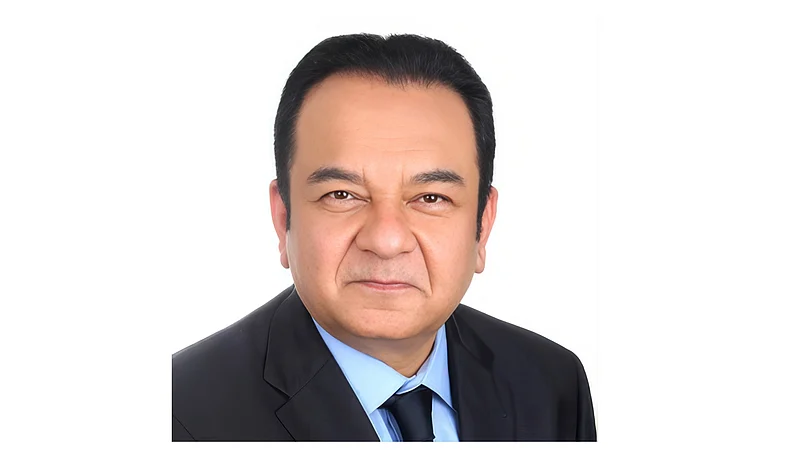
In an exclusive conversation with Outlook Business, Neil Parekh, Deputy Chairman, Global Finance & Technology Network (GFTN) - the organizers of the event, spoke about Odisha’s ambition to build a future-ready knowledge economy without abandoning its traditional strengths. He reflected on GFTN Capital’s partnership with Indian banks going forward, the need for regulatory balance in fast-moving areas such as digital assets, and why the recent correction in fintech valuations could, in fact, lay the groundwork for more sustainable long-term growth.
Advertisement
Edited Excerpts:
Black Swan Summit is coming to India for the first time. Why was Odisha chosen, especially when other states are usually seen as fintech hubs?
There are a few reasons behind that. First and foremost, the Singapore President visited Odisha in early 2025, which brought significant attention from Singaporean investors, companies, and quite frankly, even the Singapore government towards Odisha.
Equally important is the initiative shown by the Odisha government itself. There is a clear push to train and develop young students so they are ready for what I would call the future economy.
Odisha has always been a rich state in terms of natural resources. Historically, a lot of wealth has been extracted from the ground. That is a strength and, in many ways, a God-given gift that one must continue to benefit from. But at the same time, for the broader population, participation in the knowledge economy is going to be critical for the next phase of development.
We have seen countries like Qatar and Abu Dhabi doing something similar, where asset-rich regions build a knowledge-driven ecosystem alongside their traditional strengths. Odisha is adopting a comparable strategy.
And I would also add that Odisha is a state with enormous potential. It can afford to make investments in its people and build a differentiated niche compared to other states. I commend the Odisha government for that.
Advertisement

With funding tightening and valuation resets in fintech, what models do you think will survive best going forward?
My personal view is that correction in frothy valuations is actually a good thing. Some valuations had perhaps gotten ahead of where companies really were. So correction makes sense for the long-term growth of the ecosystem. In any business, there will be a few huge successes, and others that will do okay. I do not see fintech being any different, whether it is based in Odisha, elsewhere in India, or globally. The scale that fintech can work with in India is a huge positive.
Data is extremely important to leverage, and systems built here can potentially be exported across the region and different parts of the world. So I see valuation correction as conducive to long-term sustainable growth. Investors want good returns, but with risk parameters they can understand and put their arms around.
When it comes to India’s fintech ecosystem, UPI is often the main point of discussion. At GFTN, are you working on taking UPI or India’s digital systems further internationally?
I think many things will be discussed over time, but I want to emphasise that this initiative is much more about employment creation and education than anything else. The topmost priority here is to help educate the local population and make them ready for the future economy. That is the foundation.
Now, will that lead to other benefits? Absolutely. Once you build an ecosystem, you build a pipeline. And once you build a pipeline, the direction it develops in is sometimes hard to predict.
Singapore’s fintech ecosystem has evolved over the last 12 years, and while you can plan in one direction, other directions also emerge naturally. That is what we are focused on building first, rather than forcing one narrow outcome.
Your partnership with SBI last year drew attention. What was the thinking behind it?
We decided to set up GFTN Capital because within the broader GFTN ecosystem, we felt we understood how different players were creating new avenues for growth.
Many companies reached out to us when GFTN was being established and said they would like us to be part of their capital stack as they grow forward. The need for capital is obvious, but what is also true is that the most successful FinTech can choose their investors. They want the right partners. They would want us on their capital stack because the advice and broader direction given by leaders here, based on many years of experience, can be of immense value. And it is not just the management. Our board consists of many former central bank governors. Our Chairman is the longest-serving Managing Director of the Monetary Authority of Singapore. So the depth of perspective is something companies value.
From SBI’s side, we spoke to almost 30 potential partners. We chose SBI because they have made successful investments and because they are focused on areas that we want to focus on, including fintech, digital assets, and related innovation. We felt that doing the first fund with SBI as equal partners made sense, because both sides bring a lot to the table.
Could we see more such partnerships with Indian financial institutions going forward?
Potentially, yes. There is no reason not to explore those. But true partnerships only work when both sides feel they are bringing enough value to the table. It has to be aligned.
We have also signed an MoU to explore whether we want to do something with Accion. They have an impact-focused lens. We are exploring with them, and they are exploring with us. That could become another direction. So yes, similar initiatives are possible, but they must make sense for both parties.

Q: The theme of Black Swan is jobs. How do you scale employment in such a skill-intensive specialised ecosystem like Fintech?
There is a commitment to train a minimum of 7,000 students (over the next five years) at the Asian Institute of Digital Finance, which is a very highly acclaimed institute in Singapore. It is part of the National University of Singapore. That knowledge will hopefully create a multiplier effect. It will expand beyond those students into the broader ecosystem, and when that happens, it will create many jobs. Personally, I am optimistic that more than 7,000 students will ultimately be trained. But it is important to set a realistic goal first and then expand. Building this ecosystem of talent is the key, and that itself will lead to job creation.