Union Budget explains how the government plans to raise and spend money in the coming year
Key terms like revenue, expenditure, deficit, taxes and funds help people understand budget decisions
Funds like the Consolidated Fund and Contingency Fund show how revenue is collected and emergencies are managed
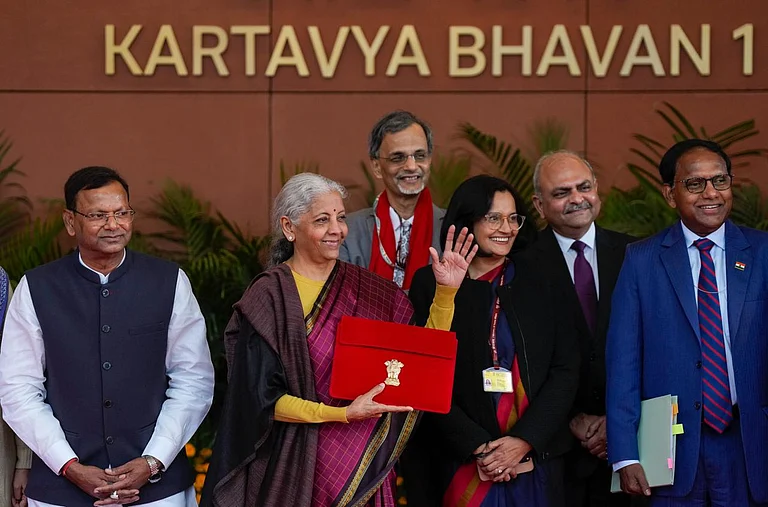
Finance Minister Nirmala Sitharaman is expected to present the Union Budget for 2026–27 on February 1, marking her ninth budget and the second full budget of the Modi government’s third term. However, the date is tentative as it falls on a Sunday, a restricted holiday, with the final schedule to be confirmed by the Cabinet Committee on Parliamentary Affairs in January 2026.
The budget outlines how the government plans to earn and spend money in the coming year, highlighting key economic priorities. Ahead of the presentation, it is important for citizens, businesses and students to know important budget terms.

1 September 2026
Get the latest issue of Outlook Business

Key Budget Terms Explained :
Annual Financial Statement: - The annual budget statement is essentially the blueprint of the budget. A document showing expected income (receipts) and spending (expenditures) by the government in the financial year.
Budget Estimates: - It shows how the government plans to distribute funds among ministries, departments, sectors and schemes in the financial year.
Advertisement
Capital Expenditure: - Capital expenditure or CAPEX, is the money the government spends on long-term assets like roads, factories and infrastructure that help the economy grow.
Capital Receipts & Cess: Capital receipts are money the government gets from borrowing or selling assets. Meanwhile, cess is an extra tax used for funds like education or healthcare.
Consolidated Fund: - The main government treasury that holds all revenues, including taxes and borrowings and from which all spending is made
Contingency Fund: - This fund is reserved for emergency and unforeseen like situation. It is managed by the President of India. Withdrawals from this fund require parliamentary approval and repayment from the Consolidated Fund.
Advertisement
Taxes: - Direct taxes are paid straight by individuals or companies, like income tax and corporate tax, while indirect taxes are added to goods and services, such as GST, VAT and customs duty.
Divestment & Finance Bill : Divestment is when the government sells its stake in public sector companies or assets to raise money, while the Finance Bill proposes changes in taxes and duties alongside the Budget.
Fiscal Terms & Inflation: Fiscal deficit is the gap between government spending and income, shown as a percentage of GDP. On the other hand, fiscal policy is how the government uses spending and taxes to influence the economy, while inflation is the rise in prices that reduces the value of money.
Tax Regimes: The old tax regime had fewer slabs with higher rates and many deductions, while the new tax regime, introduced in 2022, has more slabs with lower rates and a simpler structure, becoming the default from 2023–24.

Rebate & Revenue Deficit: A rebate is a tax refund given when an individual’s tax liability is lower than the tax already paid, while a revenue deficit occurs when the Government’s revenue expenditure is higher than its revenue receipts.
Revenue Expenditure & Receipt: Revenue expenditure covers the Government’s day-to-day operational spending such as salaries and subsidies, while revenue receipts are the earnings it receives from taxes, fines and services.
TCS, Deductions & Surcharge: TCS is tax collected by sellers from buyers, On the other hand, tax deductions reduce taxable income through eligible investments. Meanwhile, surcharge is an extra tax charged on higher-income taxpayers.