




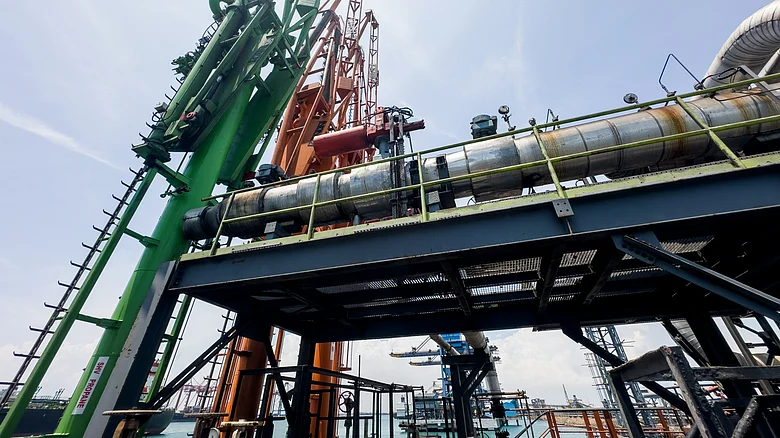

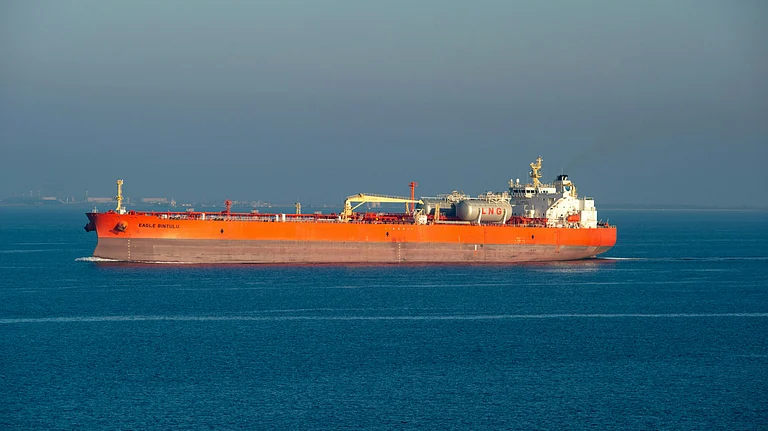
West Asia conflict disrupts LNG shipments through Strait of Hormuz, affecting India’s supplies.
Government diverts natural gas supplies to priority sectors under Essential Commodities Act.
Industries face curbs as India prioritises households, transport CNG and fertiliser production.
The ongoing conflict in West Asia is impacting the shipments of liquefied natural gas (LNG) through the Strait of Hormuz and key suppliers invoking the force majeure clause, the government has ordered the diversion of natural gas supplies to priority sectors of the economy.

1 October 2026
Get the latest issue of Outlook Business

What is the Essential Commodities Act
Issued under the Natural Gas (Supply Regulation) Order 2026, the move derives its authority from the Essential Commodities Act, 1955 that empowers the Centre to regulate the supply, distribution and trade of petroleum products to ensure equitable distribution.
Under the order, four sectors have been accorded the highest priority and will receive 100% of their average gas consumption over the past six months.
These include domestic piped natural gas (PNG), compressed natural gas (CNG) for transport, liquefied petroleum gas (LPG) production including shrinkage requirements and pipeline compressor fuel and other essential operational requirements. Fertiliser plants have been placed under the second priority category and will receive 70% of their average has consumption during the past six months, subject to operational availability. The third priority sector covers tea industries, manufacturing and other industrial consumers connected to the national gas grid, which will receive 80% of their past six-month average consumption. The fourth priority category includes industrial and commercial consumers served by city gas distribution (CGD) companies, who will also receive 80% of their average gas consumption during the same period.
Advertisement
To ensure supplies to priority sectors, gas allocation to some industrial users will be curtailed.
“The gas required to meet the priorities shall be through full or partial curtailment of gas supplied in the following order of priority: petrochemical facilities not limited to ONGC Petro additions Limited, GAIL Pata Petrochemical Complex, Reliance O2C and other high-pressure high-temperature gas consumers, and power plants as required,” Business Standard reported citing the order.
In addition, the Centre has ordered oil refining companies to absorb part of the disruption impact by the reducing gas allocation to refineries to about 65% of their past six-month average consumption, subject to operational feasibility.
Advertisement
Growing Gas Demand
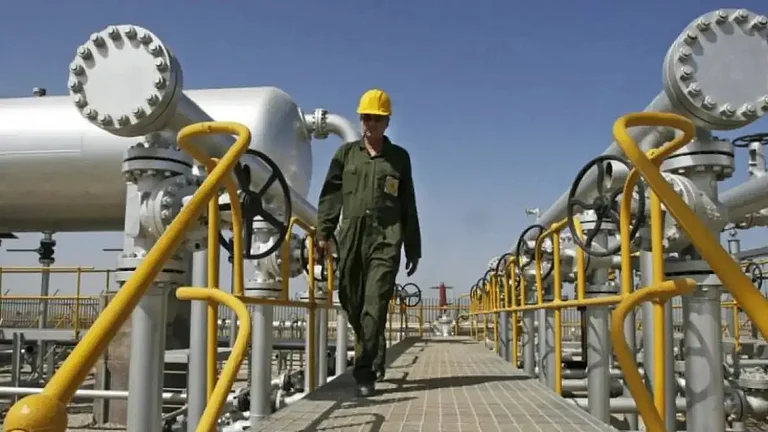
According to a June 2025 report by India Brand Equity Foundation (IBEF), India’s natural gas consumption is projected to increase by about 60% by 2030 and more than double by 2040, driven by increase usage in city gas distribution, transportation and industrial sectors. According to a study by the Petroleum and Natural Gas Regulatory Board (PNGRB), consumption is expected to grow from 187mn standard cubic metres per day (mmscmd) in 2024-24 to 297 mmscmd by 2030 and 496 mmscmd by 2040 under the ‘Good-to-Go’ scenario, natural gas usage could reach 365 mmscmd by 2030 and 630 mmscmd by 2040.
The IBEF report further added that City Gas Distribution (CGD), covering compressed natural gas (CNG) for vehicles and piped natural gas for households and industries, will become the primary demand driver, contributing 87 mmscmd by 2030 and 129 mmscmd by 2040 under the base case. CGD is set to account for 29% of total demand in 2030 and 44% by 2040. The government aims to raise natural gas’s share in the energy mix from 7% to 15% by 2030 to support the net zero target by 2070.
Commercial LPG Shortage Surfaces
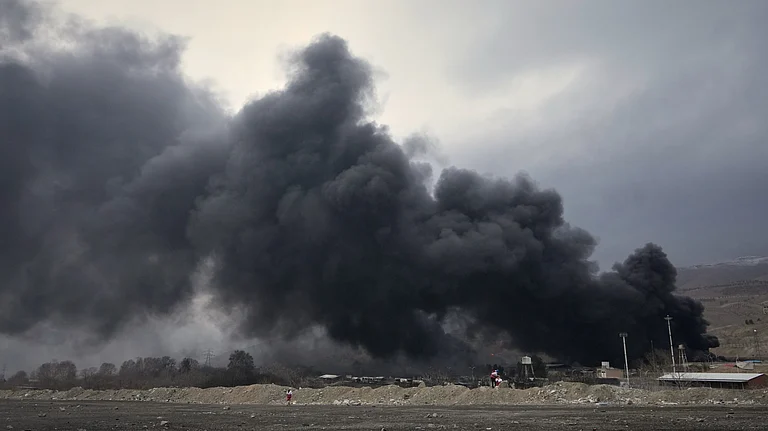
Meanwhile, hotels and restaurants in Bengaluru reported a sudden and complete halt in the supply of commercial gas cylinders to them. PC Rao, Honorary President of the Bangalore Hotels Association, said hotel owners are not willing to suspend operations, however, this move has made it inevitable for most of them to shut down.
The Federation of Hotel and Restaurant Association of India (FHRAI) has flagged the shortage of commercial cooking gas cylinders and asked the government to intervene in the matter. The association also wrote to the Minister of Petroleum flagging “widespread disruption at the ground level”. Similarly, PTI reported that the Pune Municipal Corporation has temporarily shut the crematoriums in the city following restrictions on the use of LPG components such as propane and butane. According to the Pune civic body, the Ministry of Petroleum and Natural Gas issued an order on March 5 directing that available propane and butane be prioritised for domestic LPG supply across the country.
The oil ministry has constituted a committee to examine supply issues after a sudden shortage of commercial LPG cylinders alarmed the hospitality sector.
Restaurant associations have warned that eateries could close within days if supplies are not restored.











